Loading...
Analysis will be generated on first visit.
Scores and timeline are available below. The page will refresh automatically when ready.
Emomali Rahmon vs Napoleon Bonaparte
Napoleon Bonaparte leads by 16.4 pts · 2 figures compared
…

Emomali Rahmon
Politician · Modern
66.0Total
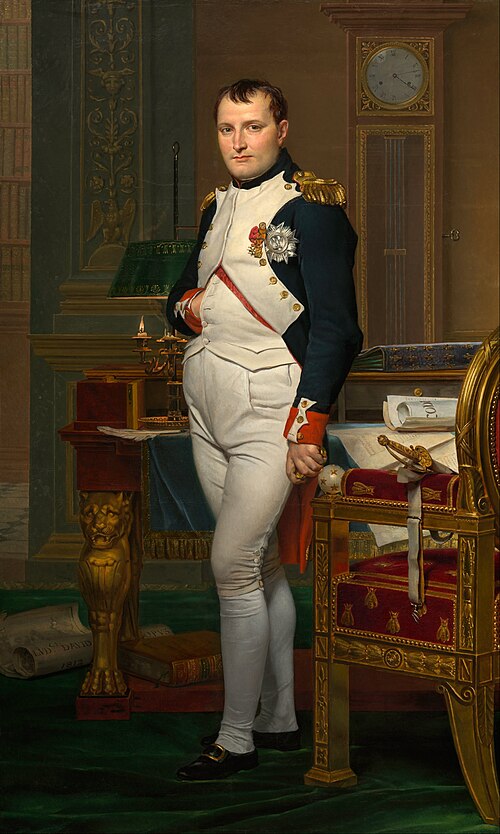
Napoleon Bonaparte
General · Modern
82.4Total
Basic Information
Born
1952
1769
Died
—
1821
Era
Modern
Modern
Nationality
Tajikistan
France
Occupation
Politician
General
Civilization
Eastern
Western
Score Comparison
Military (10%)
27.4
94.0
Political (20%)
72.0
75.0
Influence (20%)
74.8
82.0
Legacy (20%)
66.8
78.0
Leadership (15%)
80.9
80.0
Strategy (15%)
55.9
93.0
TOTAL
66.0
82.4
Rankings
🥇
Napoleon BonaparteLeader
Mil: 94.0Pol: 75.0Inf: 82.0
82.4
🥈
Emomali Rahmon
Mil: 27.4Pol: 72.0Inf: 74.8
66.0
+16.4 behind
How This Comparison Works
Algorithm
Each figure is scored on 6 dimensions (0—100 scale) based on structured historical data: Military (10%), Political (20%), Influence (20%), Legacy (20%), Leadership (15%), Strategy (15%). The weighted total produces the final ranking.
Data Sources
Scores are computed from structured sub-indicators in the database. Scale factors adjust for era (Ancient ×0.85, Modern ×1.0) and civilization size (Eastern ×1.05, Other ×0.80) to account for differences in population and military scale.
Maximum 3 Figures
Comparisons are limited to 2—3 figures to ensure readability and statistical meaningfulness.
Error Margins
±5 points per dimension — Sub-scores are derived from historical records with inherent uncertainty. Two figures within 5 points on a dimension should be considered roughly equivalent in that area.
Total Score Accuracy
±3 points overall — The weighted combination of 6 dimensions produces a total score with approximately ±3 points of uncertainty. Differences of less than 3 points are not statistically significant— the figures are effectively tied.
Known Limitations
- Historical records are incomplete and uneven across civilizations
- Figures from oral-tradition societies may be underrepresented
- Occupation labels can misclassify multi-role figures
- Scores measure capability and impact, not moral character
- Quantitative scoring is a comparison tool, not absolute truth
Capability Radar
Military (10%) — Battles & Warfare
Battles
5
95
Win Rate
5
90
Expansion
5
95
Political (20%) — Governance & Reform
Reform
55
95
Diplomacy
60
80
Economy
50
85
Influence (20%) — Cultural & Global Reach
Cultural
30
85
Global
30
90
Legacy (20%) — Historical Impact
Historical
40
95
Longevity
45
90
Leadership (15%) — Power & Stability
Tenure
85
85
Stability
65
70
Strategy (15%) — Tactics & Innovation
Strategy
5
95
Tactics
5
98
Reform
10
92
Analysis will be generated on first visit.
Scores and timeline are available below. The page will refresh automatically when ready.
Emomali Rahmon — Complete Timeline
1992 AD
Became President of TajikistanPolitical Action◆ Major
Emomali Rahmon was elected as Chairman of the Supreme Soviet of Tajikistan, effectively becoming the head of state during the Tajik Civil War. He later became president in 1994. His rise to power came amid a brutal civil war that pitted the government against Islamist and democratic opposition forces.
Civil WarRise to PowerPost-Soviet Transition
Impact: national
1997 AD
Ended the Tajik Civil WarPolitical Action◆ Major
Rahmon signed a peace agreement with the United Tajik Opposition, ending the five-year civil war that had killed tens of thousands. The agreement included power-sharing arrangements and amnesty for opposition fighters. This allowed Rahmon to consolidate power and begin reconstruction.
Peace AgreementCivil War EndReconciliation
Impact: nationalconstructive
2003 AD
Consolidated Authoritarian RulePolitical Action◆ Major
Rahmon held a referendum that removed term limits for the presidency, allowing him to remain in power indefinitely. He also purged political rivals and consolidated control over the security forces. This marked the transition from post-war reconstruction to authoritarian consolidation.
Constitutional AmendmentAuthoritarianismPower Consolidation
Impact: nationaldestructive
2010 AD
Implemented Infrastructure ProjectsOther◆ Major
Rahmon oversaw major infrastructure projects, including the Rogun Dam, which aimed to make Tajikistan energy independent. He also built roads and tunnels connecting the country's regions. These projects were funded by foreign investment and loans, but faced environmental and financial challenges.
InfrastructureEnergy IndependenceDevelopment
Impact: nationalconstructive
2015 AD
Suppressed 2015 Military UprisingPolitical Action◆ Major
Rahmon's government suppressed a military uprising led by former Deputy Defense Minister Abduhalim Nazarzoda. The uprising was linked to the banned Islamic Renaissance Party. The crackdown led to the arrest of opposition figures and further consolidation of Rahmon's power.
Military UprisingRepressionPolitical Opposition
Impact: nationaldestructive
Similar Comparisons
Comments & Discussion
No comments yet. Be the first to share your thoughts!