Loading...
This comparison has not been analyzed yet.
One-time AI generation (~1 minute). Scores and timeline are already available below.
Egils Levits vs Pascal Lissouba
Egils Levits leads by 6.5 pts · 2 figures compared
…

Egils Levits
Politician · Modern
51.6Total
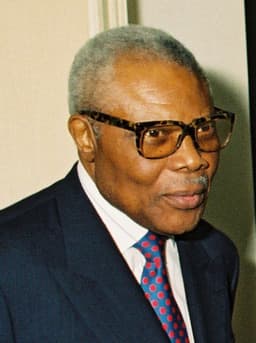
Pascal Lissouba
Politician · Modern
45.1Total
Basic Information
Born
1955
1931
Died
—
—
Era
Modern
Modern
Nationality
Latvia
Congo-Brazzaville
Occupation
Politician
Politician
Civilization
Western
Other
Score Comparison
Military (10%)
47.8
50.0
Political (20%)
53.8
39.4
Influence (20%)
54.1
47.1
Legacy (20%)
44.2
37.5
Leadership (15%)
66.0
58.8
Strategy (15%)
42.7
42.5
TOTAL
51.6
45.1
Egils Levits — Complete Timeline
2004 AD
Service as judge at the European Court of JusticePolitical Action◆ Major
Levits served as a judge at the European Court of Justice from 2004 to 2019, where he participated in rulings on EU law. His tenure included cases on fundamental rights, competition law, and the internal market, contributing to the development of EU jurisprudence.
European Court of JusticeEU LawJudicial Service
Impact: regionalconstructive
2019 AD
Election as President of LatviaPolitical Action◆ Major
Egils Levits was elected President of Latvia in May 2019 by the Saeima, winning 61 votes out of 100. He was a former judge at the European Court of Justice and a member of the New Unity party, and his election was seen as a continuation of pro-European policies.
Latvian PoliticsElectionEuropean Integration
Impact: national
2020 AD
Advocacy for digitalization and e-governmentReform
As president, Levits promoted digitalization and e-government initiatives in Latvia, including the development of a digital identity system and online public services. His efforts aimed to improve efficiency and transparency in government operations.
Latvian PoliticsDigitalizationE-Government
Impact: nationalconstructive
Pascal Lissouba — Complete Timeline
1992 AD
Elected President of Congo-BrazzavillePolitical Action◆ Major
Lissouba won the first multi-party presidential election in Congo-Brazzaville since independence, defeating Denis Sassou-Nguesso. His victory marked a transition from Marxist one-party rule to democratic governance.
ElectionDemocracyCongo-Brazzaville
Impact: nationalprogressive
1997 AD
Overthrown in Civil WarWar◆ Major
Lissouba was overthrown by forces loyal to Denis Sassou-Nguesso during the Republic of Congo Civil War. The conflict involved ethnic militias and foreign intervention, resulting in Sassou-Nguesso's return to power.
Civil WarCoupCongo-Brazzaville
Impact: nationaldestructive
This comparison has not been analyzed yet.
One-time AI generation (~1 minute). Scores and timeline are already available below.
Rankings
🥇
Egils LevitsLeader
Mil: 47.8Pol: 53.8Inf: 54.1
51.6
🥈
Pascal Lissouba
Mil: 50.0Pol: 39.4Inf: 47.1
45.1
+6.5 behind
How This Comparison Works
Algorithm
Each figure is scored on 6 dimensions (0—100 scale) based on structured historical data: Military (10%), Political (20%), Influence (20%), Legacy (20%), Leadership (15%), Strategy (15%). The weighted total produces the final ranking.
Data Sources
Scores are computed from structured sub-indicators in the database. Scale factors adjust for era (Ancient ×0.85, Modern ×1.0) and civilization size (Eastern ×1.05, Other ×0.80) to account for differences in population and military scale.
Maximum 3 Figures
Comparisons are limited to 2—3 figures to ensure readability and statistical meaningfulness.
Error Margins
±5 points per dimension — Sub-scores are derived from historical records with inherent uncertainty. Two figures within 5 points on a dimension should be considered roughly equivalent in that area.
Total Score Accuracy
±3 points overall — The weighted combination of 6 dimensions produces a total score with approximately ±3 points of uncertainty. Differences of less than 3 points are not statistically significant— the figures are effectively tied.
Known Limitations
- Historical records are incomplete and uneven across civilizations
- Figures from oral-tradition societies may be underrepresented
- Occupation labels can misclassify multi-role figures
- Scores measure capability and impact, not moral character
- Quantitative scoring is a comparison tool, not absolute truth
Capability Radar
Military (10%) — Battles & Warfare
Battles
31
23
Win Rate
32
25
Expansion
36
27
Political (20%) — Governance & Reform
Reform
60
35
Diplomacy
65
30
Economy
50
25
Influence (20%) — Cultural & Global Reach
Cultural
30
10
Global
25
10
Legacy (20%) — Historical Impact
Historical
35
15
Longevity
30
10
Leadership (15%) — Power & Stability
Tenure
55
40
Stability
60
15
Strategy (15%) — Tactics & Innovation
Strategy
39
30
Tactics
40
31
Reform
44
36
Similar Comparisons
Comments & Discussion
No comments yet. Be the first to share your thoughts!