Loading...
This comparison has not been analyzed yet.
One-time AI generation (~1 minute). Scores and timeline are already available below.
Edward VIII vs Sawai Madho Singh I
Sawai Madho Singh I leads by 14.9 pts · 2 figures compared
…

Edward VIII
Emperor · Modern
39.1Total
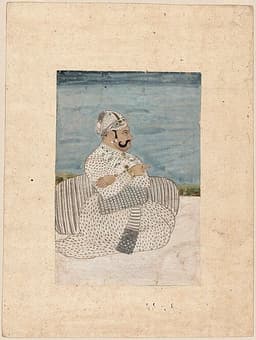
Sawai Madho Singh I
Emperor · Modern
54.0Total
Basic Information
Born
1894
1728
Died
1972
1768
Era
Modern
Modern
Nationality
United Kingdom
India
Occupation
Emperor
Emperor
Civilization
Western
Indian
Score Comparison
Military (10%)
12.7
45.0
Political (20%)
29.3
60.0
Influence (20%)
51.0
54.1
Legacy (20%)
40.0
45.0
Leadership (15%)
31.2
77.2
Strategy (15%)
60.0
41.7
TOTAL
39.1
54.0
Edward VIII — Complete Timeline
1936 AD
Abdication CrisisPolitical Action
Edward VIII abdicated the British throne on December 11, 1936, after a constitutional crisis arose from his intention to marry Wallis Simpson, a twice-divorced American. His reign lasted 326 days, making him the only British monarch to voluntarily abdicate.
AbdicationConstitutional CrisisMonarchy
Impact: national
Instrument of Abdication SignedPolitical Action◆ Major
Edward VIII signed the Instrument of Abdication at Fort Belvedere on December 10, 1936, in the presence of his three brothers. The document was then ratified by Parliament, formally ending his reign and passing the crown to his brother George VI.
AbdicationLegal DocumentSuccession
Impact: national
1940 AD
Appointed Governor of the BahamasPolitical Action
Edward VIII was appointed Governor of the Bahamas by Prime Minister Winston Churchill during World War II. He served in this colonial administrative role from 1940 to 1945, a position that removed him from Europe during the war and limited his political influence.
GovernorshipWorld War IIExile
Impact: regional
Sawai Madho Singh I — Complete Timeline
1750 AD
Accession to the throne of JaipurPolitical Action◆ Major
Sawai Madho Singh I succeeded his father Jai Singh II as the Maharaja of Jaipur. His reign was marked by military campaigns and architectural projects. He ruled until his death in 1768.
SuccessionRoyal Rule
Impact: regional
1760 AD
Construction of Madho Niwas KothiCultural
Sawai Madho Singh I built the Madho Niwas Kothi, a palace within the City Palace complex in Jaipur. The structure served as a residential and administrative building. It added to the architectural heritage of Jaipur.
ArchitecturePalace Construction
constructive
1761 AD
Battle of BhatwaraWar◆ Major
Sawai Madho Singh I fought the Battle of Bhatwara against the Maratha forces. The battle was part of the ongoing conflict between the Rajputs and the Marathas. Madho Singh's forces were defeated, leading to Jaipur paying tribute to the Marathas.
Maratha-Rajput WarDefeatTribute
Impact: regionaldestructive
1763 AD
Founding of Sawai MadhopurCultural◆ Major
Sawai Madho Singh I founded the city of Sawai Madhopur in Rajasthan. The city was established as a new capital and administrative center. It was named after him and became a significant urban settlement in the region.
City FoundingUrban Development
Impact: regionalconstructive
This comparison has not been analyzed yet.
One-time AI generation (~1 minute). Scores and timeline are already available below.
Rankings
🥇
Sawai Madho Singh ILeader
Mil: 45.0Pol: 60.0Inf: 54.1
54.0
🥈
Edward VIII
Mil: 12.7Pol: 29.3Inf: 51.0
39.1
+14.9 behind
How This Comparison Works
Algorithm
Each figure is scored on 6 dimensions (0—100 scale) based on structured historical data: Military (10%), Political (20%), Influence (20%), Legacy (20%), Leadership (15%), Strategy (15%). The weighted total produces the final ranking.
Data Sources
Scores are computed from structured sub-indicators in the database. Scale factors adjust for era (Ancient ×0.85, Modern ×1.0) and civilization size (Eastern ×1.05, Other ×0.80) to account for differences in population and military scale.
Maximum 3 Figures
Comparisons are limited to 2—3 figures to ensure readability and statistical meaningfulness.
Error Margins
±5 points per dimension — Sub-scores are derived from historical records with inherent uncertainty. Two figures within 5 points on a dimension should be considered roughly equivalent in that area.
Total Score Accuracy
±3 points overall — The weighted combination of 6 dimensions produces a total score with approximately ±3 points of uncertainty. Differences of less than 3 points are not statistically significant— the figures are effectively tied.
Known Limitations
- Historical records are incomplete and uneven across civilizations
- Figures from oral-tradition societies may be underrepresented
- Occupation labels can misclassify multi-role figures
- Scores measure capability and impact, not moral character
- Quantitative scoring is a comparison tool, not absolute truth
Capability Radar
Military (10%) — Battles & Warfare
Battles
35
35
Win Rate
40
40
Expansion
44
20
Political (20%) — Governance & Reform
Reform
5
55
Diplomacy
15
50
Economy
5
60
Influence (20%) — Cultural & Global Reach
Cultural
20
45
Global
25
20
Legacy (20%) — Historical Impact
Historical
30
40
Longevity
20
30
Leadership (15%) — Power & Stability
Tenure
10
60
Stability
5
55
Strategy (15%) — Tactics & Innovation
Strategy
46
35
Tactics
46
30
Reform
53
25
Similar Comparisons
Comments & Discussion
No comments yet. Be the first to share your thoughts!