Loading...
Edward the Black Prince vs Qin Qiong
Edward the Black Prince leads by 5.0 pts · 2 figures compared
…

Edward the Black Prince
General · Medieval
52.0Total
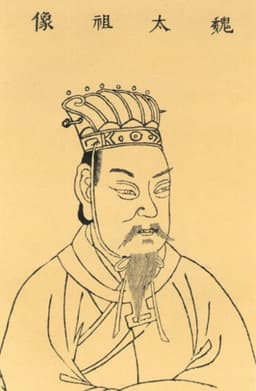
Qin Qiong
General · Medieval
47.0Total
Basic Information
Born
1330
571
Died
1376
638
Era
Medieval
Medieval
Nationality
England
China
Occupation
General
General
Civilization
Western
Eastern
Score Comparison
Military (10%)
74.0
70.0
Political (20%)
27.9
35.0
Influence (20%)
56.4
51.0
Legacy (20%)
48.3
45.8
Leadership (15%)
50.7
35.4
Strategy (15%)
66.3
52.5
TOTAL
52.0
47.0
Edward the Black Prince — Complete Timeline
1346 AD
Battle of CrécyWar
Edward the Black Prince commanded the vanguard of the English army at the Battle of Cr
Hundred Years' WarBattle
Impact: regional
1355 AD
Chevauchée of 1355War◆ Major
Edward led a chevauch
Hundred Years' WarRaid
Impact: regionaldestructive
1356 AD
Battle of PoitiersWar
Edward led the English army to victory at the Battle of Poitiers. The French king, John II, was captured, and Edward's ransom demands enriched England and weakened France.
Hundred Years' WarBattleCapture
Impact: regional
1362 AD
Principality of AquitainePolitical Action◆ Major
Edward was granted the Principality of Aquitaine by his father, King Edward III. He ruled the territory as a semi-independent prince, but his heavy taxation led to rebellion and the loss of the territory.
AquitainePolitics
Impact: regional
1370 AD
Siege of LimogesWar◆ Major
Edward besieged and captured Limoges, which had rebelled against English rule. The city was sacked, and many inhabitants were killed, tarnishing Edward's reputation for chivalry.
Hundred Years' WarSiegeAtrocity
Impact: regionaldestructive
Qin Qiong — Complete Timeline
626 AD
Participated in the Xuanwu Gate IncidentPolitical Action
Qin Qiong was a key supporter of Li Shimin (later Emperor Taizong) during the Xuanwu Gate Incident. He helped Li Shimin kill his brothers and seize the throne, becoming a trusted general.
CoupTang dynastyPower struggle
Impact: national
630 AD
Defeated the Eastern Turks at the Battle of YinshanWar◆ Major
Qin Qiong commanded a Tang army that defeated the Eastern Turkic Khaganate at the Battle of Yinshan. This victory contributed to the collapse of the Eastern Turkic state and Tang dominance.
Tang-Turkic warsBattleSteppe
Impact: regional
Expert Analysis
Origins
Edward of Woodstock, known as the Black Prince, was born in 1330 at Woodstock Palace, England, as the eldest son of King Edward III and Philippa of Hainault. He was trained in chivalry and warfare from a young age, participating in tournaments and campaigns alongside his father. His education emphasized military tactics and courtly manners, preparing him for his role as a prince and commander.
Qin Qiong (also known as Qin Shubao) was born around 571 in the Sui dynasty China, in what is now Shandong. He initially served as a low-ranking officer under the Sui dynasty, but his martial skills earned him recognition. He later joined the rebel forces of Li Shimin (later Emperor Taizong) during the collapse of the Sui, becoming a key general in the founding of the Tang dynasty.
Rise to Power
Edward the Black Prince rose to prominence at the Battle of Crécy in 1346, where at age 16 he commanded the vanguard. Despite being surrounded by French forces, he held his ground with the support of English longbowmen, achieving a decisive victory. This established his reputation as a capable military leader. His greatest moment came at the Battle of Poitiers in 1356, where he captured King John II of France, leading to the Treaty of Brétigny in 1360. This victory brought immense ransom and prestige, making him a celebrated figure across Europe.
Qin Qiong rose to power through his service to Li Shimin during the Tang dynasty's founding. He participated in the Xuanwu Gate Incident in 626, where he helped Li Shimin assassinate his brothers Li Jiancheng and Li Yuanji to seize the throne. This act earned him high favor under Emperor Taizong. He later commanded forces against the Eastern Turks, scoring a major victory at the Battle of Yinshan in 630, which broke the Eastern Turkic Khaganate and secured Tang's northern borders.
Leadership & Governance
Edward the Black Prince's leadership style was aggressive and chivalric, typical of medieval knights. He led from the front, inspiring his men through personal bravery. However, his governance of Aquitaine from 1362 was marked by heavy taxation to fund his campaigns, leading to resentment and rebellion. His siege of Limoges in 1370, where he ordered the massacre of inhabitants, demonstrated a ruthless side that tarnished his chivalric image.
Qin Qiong's leadership was more disciplined and focused on loyalty to his emperor. He was known for his personal courage, but his political influence was limited; he served as a military executor rather than a strategist. His governance role was minimal, as he primarily operated as a field commander. His decision to support Li Shimin in the Xuanwu Gate Incident showed his commitment to his patron, but it also involved fratricide, a dark aspect of his career.
Triumph & Tragedy
Edward's triumphs include the victories at Crécy and Poitiers, which secured English dominance in the Hundred Years' War for decades. His capture of the French king was a stunning achievement. However, his later years were tragic: his heavy taxation in Aquitaine led to the loss of support, and his health declined due to dysentery. He died in 1376, a year before his father, never becoming king. His ransom demands enriched England but also drained French resources, causing long-term resentment.
Qin Qiong's triumph was his role in the Xuanwu Gate Incident and the defeat of the Eastern Turks, which solidified the Tang dynasty's power. He was deified as a door god in Chinese folk religion, a rare honor. However, his tragedy lies in his limited historical record; despite his martial prowess, he did not achieve high political office. His later years were overshadowed by other generals, and he died around 638, with no major failures recorded but also no independent command of great significance.
Character & Destiny
Edward the Black Prince was characterized by his chivalric ideals and martial ambition. His destiny was shaped by his early success, which led to overreach in Aquitaine. His decision to massacre at Limoges damaged his reputation, and his illness prevented him from capitalizing on his victories. Historians note that his military score of 74.0 reflects his battlefield prowess, but his political score of 27.9 indicates poor governance.
Qin Qiong's character is defined by loyalty and bravery. His destiny was to serve a greater emperor, and his deification reflects his cultural impact. However, his leadership score of 35.4 suggests he was more a follower than a leader. His strategic score of 52.5 shows competence but not genius. His influence score of 51.0 is boosted by his folkloric status.
Legacy
Edward the Black Prince's legacy is complex. He is remembered as a symbol of chivalry, but also of brutality. His military innovations, such as the use of longbowmen and chevauchée tactics, influenced English warfare. His legacy score of 48.3 is moderate. He left no surviving legitimate son (his son Richard II became king but was deposed), and his reputation fluctuates between hero and villain.
Qin Qiong's legacy is more positive in Chinese culture. He is worshipped as a door god, a practice that continues today. His military contributions to the Tang dynasty are recognized, but his individual impact is overshadowed by Emperor Taizong. His legacy score of 45.8 reflects his cultural rather than political impact.
Conclusion
While both generals were skilled warriors, Edward the Black Prince had a greater impact on history due to his decisive victories that altered the course of the Hundred Years' War. His military score of 74.0 outpaces Qin Qiong's 70.0, and his strategic score of 66.3 is higher than Qin's 52.5. Edward's actions directly led to the capture of a king and a major treaty, while Qin's contributions, though significant, were within a larger imperial machine. Edward's influence on European warfare and his role in the conflict's trajectory give him a slight edge. Therefore, Edward the Black Prince is the more impactful general.
Rankings
🥇
Edward the Black PrinceLeader
Mil: 74.0Pol: 27.9Inf: 56.4
52.0
🥈
Qin Qiong
Mil: 70.0Pol: 35.0Inf: 51.0
47.0
+5.0 behind
How This Comparison Works
Algorithm
Each figure is scored on 6 dimensions (0—100 scale) based on structured historical data: Military (10%), Political (20%), Influence (20%), Legacy (20%), Leadership (15%), Strategy (15%). The weighted total produces the final ranking.
Data Sources
Scores are computed from structured sub-indicators in the database. Scale factors adjust for era (Ancient ×0.85, Modern ×1.0) and civilization size (Eastern ×1.05, Other ×0.80) to account for differences in population and military scale.
Maximum 3 Figures
Comparisons are limited to 2—3 figures to ensure readability and statistical meaningfulness.
Error Margins
±5 points per dimension — Sub-scores are derived from historical records with inherent uncertainty. Two figures within 5 points on a dimension should be considered roughly equivalent in that area.
Total Score Accuracy
±3 points overall — The weighted combination of 6 dimensions produces a total score with approximately ±3 points of uncertainty. Differences of less than 3 points are not statistically significant— the figures are effectively tied.
Known Limitations
- Historical records are incomplete and uneven across civilizations
- Figures from oral-tradition societies may be underrepresented
- Occupation labels can misclassify multi-role figures
- Scores measure capability and impact, not moral character
- Quantitative scoring is a comparison tool, not absolute truth
Capability Radar
Military (10%) — Battles & Warfare
Battles
75
55
Win Rate
80
60
Expansion
60
30
Political (20%) — Governance & Reform
Reform
20
10
Diplomacy
35
15
Economy
25
10
Influence (20%) — Cultural & Global Reach
Cultural
55
45
Global
45
30
Legacy (20%) — Historical Impact
Historical
60
50
Longevity
50
55
Leadership (15%) — Power & Stability
Tenure
40
20
Stability
30
15
Strategy (15%) — Tactics & Innovation
Strategy
70
50
Tactics
85
65
Reform
30
10
Similar Comparisons
Comments & Discussion
No comments yet. Be the first to share your thoughts!