Loading...
This comparison has not been analyzed yet.
One-time AI generation (~1 minute). Scores and timeline are already available below.
Edward Seaga vs Pranab Mukherjee
Pranab Mukherjee leads by 3.5 pts · 2 figures compared
…
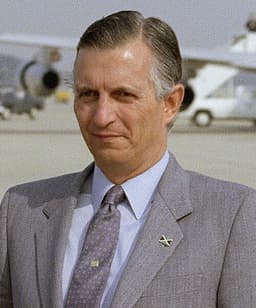
Edward Seaga
Politician · Modern
54.1Total

Pranab Mukherjee
Politician · Modern
57.6Total
Basic Information
Born
1930
1935
Died
—
—
Era
Modern
Modern
Nationality
Jamaica
India
Occupation
Politician
Politician
Civilization
Western
Indian
Score Comparison
Military (10%)
38.5
41.8
Political (20%)
53.8
55.0
Influence (20%)
55.7
60.0
Legacy (20%)
45.8
50.0
Leadership (15%)
72.0
78.0
Strategy (15%)
60.0
60.0
TOTAL
54.1
57.6
Edward Seaga — Complete Timeline
1980 AD
Elected Prime Minister of JamaicaPolitical Action◆ Major
Seaga led the Jamaica Labour Party (JLP) to a landslide victory in the 1980 general election, defeating Michael Manley's PNP. His election marked a shift toward pro-US, free-market policies.
Election VictoryJLPFree Market
Impact: nationalconstructive
1981 AD
Implemented Structural Adjustment ProgramsReform◆ Major
Seaga's government implemented IMF-backed structural adjustment programs, cutting public spending, devaluing the currency, and privatizing state enterprises. These policies aimed to stabilize the economy but led to high unemployment and social hardship.
IMFStructural AdjustmentEconomic ReformAusterity
Impact: nationaldestructive
Strengthened Ties with the United StatesPolitical Action◆ Major
Seaga aligned Jamaica closely with the United States, supporting US foreign policy in the Caribbean and Central America. He was a key ally of President Ronald Reagan and received increased US aid.
Foreign PolicyUS AllianceCold WarReagan
Impact: regionalconstructive
1989 AD
Lost the 1989 General ElectionPolitical Action◆ Major
Seaga's JLP was defeated by Michael Manley's PNP in the 1989 general election. The loss was attributed to economic hardship and public dissatisfaction with austerity measures.
Election DefeatEconomic Hardship
Impact: nationaltragic
Pranab Mukherjee — Complete Timeline
1982 AD
Appointed Finance MinisterPolitical Action◆ Major
Pranab Mukherjee was appointed as India's Finance Minister under Prime Minister Indira Gandhi. He presented several budgets and played a key role in economic policy during the 1980s.
FinanceBudgetCongress
Impact: nationalconstructive
1995 AD
Served as External Affairs MinisterPolitical Action◆ Major
Pranab Mukherjee served as India's External Affairs Minister from 1995 to 1996 under Prime Minister P.V. Narasimha Rao. He handled India's foreign relations during a period of post-Cold War realignment.
DiplomacyForeign PolicyCongress
Impact: nationalconstructive
2009 AD
Presented Union Budget 2009-10Political Action◆ Major
As Finance Minister in the UPA government, Pranab Mukherjee presented the Union Budget for 2009-10, focusing on economic recovery from the global financial crisis. He introduced measures to boost growth and social welfare.
BudgetEconomyUPA
Impact: nationalconstructive
2012 AD
Elected President of IndiaPolitical Action◆ Major
Pranab Mukherjee was elected as the 13th President of India, securing a landslide victory. He served from 2012 to 2017, becoming a respected constitutional figure known for his statesmanship.
PresidencyElectionConstitutional
Impact: nationalconstructive
2019 AD
Awarded Bharat RatnaCultural◆ Major
Pranab Mukherjee was awarded the Bharat Ratna, India's highest civilian award, in recognition of his distinguished service to the nation as a parliamentarian and minister. The award was announced posthumously after his death in 2020.
AwardHonorCivilian
Impact: nationalconstructive
This comparison has not been analyzed yet.
One-time AI generation (~1 minute). Scores and timeline are already available below.
Rankings
🥇
Pranab MukherjeeLeader
Mil: 41.8Pol: 55.0Inf: 60.0
57.6
🥈
Edward Seaga
Mil: 38.5Pol: 53.8Inf: 55.7
54.1
+3.5 behind
How This Comparison Works
Algorithm
Each figure is scored on 6 dimensions (0—100 scale) based on structured historical data: Military (10%), Political (20%), Influence (20%), Legacy (20%), Leadership (15%), Strategy (15%). The weighted total produces the final ranking.
Data Sources
Scores are computed from structured sub-indicators in the database. Scale factors adjust for era (Ancient ×0.85, Modern ×1.0) and civilization size (Eastern ×1.05, Other ×0.80) to account for differences in population and military scale.
Maximum 3 Figures
Comparisons are limited to 2—3 figures to ensure readability and statistical meaningfulness.
Error Margins
±5 points per dimension — Sub-scores are derived from historical records with inherent uncertainty. Two figures within 5 points on a dimension should be considered roughly equivalent in that area.
Total Score Accuracy
±3 points overall — The weighted combination of 6 dimensions produces a total score with approximately ±3 points of uncertainty. Differences of less than 3 points are not statistically significant— the figures are effectively tied.
Known Limitations
- Historical records are incomplete and uneven across civilizations
- Figures from oral-tradition societies may be underrepresented
- Occupation labels can misclassify multi-role figures
- Scores measure capability and impact, not moral character
- Quantitative scoring is a comparison tool, not absolute truth
Capability Radar
Military (10%) — Battles & Warfare
Battles
50
41
Win Rate
48
46
Expansion
53
52
Political (20%) — Governance & Reform
Reform
60
60
Diplomacy
55
70
Economy
60
55
Influence (20%) — Cultural & Global Reach
Cultural
40
40
Global
35
50
Legacy (20%) — Historical Impact
Historical
45
50
Longevity
30
45
Leadership (15%) — Power & Stability
Tenure
65
75
Stability
45
65
Strategy (15%) — Tactics & Innovation
Strategy
59
53
Tactics
61
58
Reform
60
57
Similar Comparisons
Comments & Discussion
No comments yet. Be the first to share your thoughts!