Loading...
Edouard Philippe vs Natsagiin Bagabandi
Natsagiin Bagabandi leads by 0.1 pts · 2 figures compared
…
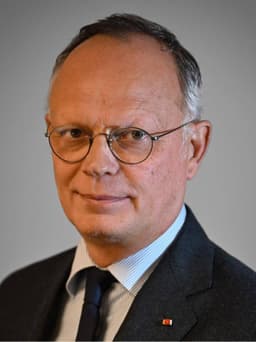
Edouard Philippe
Politician · Modern
48.3Total

Natsagiin Bagabandi
Politician · Modern
48.4Total
Basic Information
Born
1970
1950
Died
—
—
Era
Modern
Modern
Nationality
France
Mongolia
Occupation
Politician
Politician
Civilization
Western
Eastern
Score Comparison
Military (10%)
23.5
13.0
Political (20%)
54.7
68.0
Influence (20%)
50.2
49.4
Legacy (20%)
37.5
40.8
Leadership (15%)
65.7
72.0
Strategy (15%)
60.0
35.6
TOTAL
48.3
48.4
Edouard Philippe — Complete Timeline
2017 AD
Implementation of Labor Market Reforms (Ordonnances Travail)Reform◆ Major
Philippe's government enacted labor code reforms by executive order, aiming to increase flexibility for employers. The reforms reduced collective bargaining power and simplified rules for hiring and firing, sparking protests from unions.
Labor ReformEconomic PolicyProtests
Impact: nationalconstructive
Appointment as Prime Minister of FrancePolitical Action◆ Major
Edouard Philippe was appointed Prime Minister by President Emmanuel Macron. He led the government of the newly formed La R
Prime MinisterMacronGovernment Formation
Impact: nationalconstructive
2020 AD
Resignation over COVID-19 ManagementPolitical Action
Edouard Philippe resigned as Prime Minister, replaced by Jean Castex. His resignation followed a government reshuffle and was partly attributed to the handling of the COVID-19 pandemic, though he remained a close ally of Macron.
ResignationCOVID-19Government Reshuffle
Impact: national
Election as Mayor of Le HavrePolitical Action
Philippe was elected Mayor of Le Havre, a position he had previously held. He won the municipal election, solidifying his local political base after leaving the prime minister's office.
MayorLocal PoliticsLe Havre
constructive
Natsagiin Bagabandi — Complete Timeline
1997 AD
Election as President of MongoliaPolitical Action◆ Major
Natsagiin Bagabandi was elected president of Mongolia as the candidate of the Mongolian People's Revolutionary Party (MPRP). His victory marked the return of the former communist party to power through democratic elections.
Presidential ElectionMPRPMongolia
Impact: national
2000 AD
Economic Growth and Mining DevelopmentReform◆ Major
During Bagabandi's presidency, Mongolia experienced economic growth driven by mining sector development. His government pursued policies to attract foreign investment, though concerns about corruption and inequality emerged.
Economic GrowthMiningForeign Investment
Impact: nationalconstructive
2001 AD
Re-election as PresidentPolitical Action
Bagabandi was re-elected for a second term, continuing his presidency. His re-election reflected the MPRP's continued popularity and stability in Mongolian politics.
Re-electionMPRPPolitical Stability
Impact: national
Expert Analysis
Origins
Edouard Philippe was born on November 28, 1970, in Rouen, France. His father was a French teacher and his mother a homemaker. He studied at Sciences Po and the École Nationale d'Administration (ENA), graduating in 1996. Philippe began his career as a civil servant, working for the Conseil d'État, and later entered politics as a member of the Union for a Popular Movement (UMP).
Natsagiin Bagabandi was born on April 22, 1950, in Yaruugiin, Mongolia. He grew up in a rural family and studied at the Moscow State University, earning a degree in physics. He later joined the Mongolian People's Revolutionary Party (MPRP) and worked as a lecturer at the Mongolian State University. Bagabandi rose through the party ranks, becoming a member of the Central Committee in 1988.
Rise to Power
Philippe's rise accelerated when he became Mayor of Le Havre in 2010, a position he held until 2017. In 2017, President Emmanuel Macron appointed him Prime Minister of France. Philippe led the government of the newly formed La République En Marche! party, despite being a former member of the center-right Les Républicains. His appointment was seen as a strategic move to broaden Macron's coalition.
Bagabandi was elected President of Mongolia in 1997 as the candidate of the MPRP. His victory marked the return of the former communist party to power after a period of democratic transition. He was re-elected in 2001, consolidating his influence. Bagabandi's rise was rooted in his party's strong organization and his appeal to rural voters.
Leadership & Governance
Philippe's leadership style was pragmatic and technocratic. He focused on implementing Macron's reform agenda, notably the labor market reforms (Ordonnances Travail) enacted in 2017. These reforms aimed to increase flexibility for employers by reducing collective bargaining power and simplifying dismissal procedures. The reforms were passed by executive order, bypassing parliament, which drew criticism from unions and left-wing parties. Philippe also oversaw the reduction of the corporate tax rate from 33.3% to 25% by 2022.
Bagabandi governed as a consensus-builder within the MPRP. His administration pursued economic growth through mining sector development, attracting foreign investment in copper and gold mining. Mongolia's GDP grew at an average rate of 6.5% during his first term. However, corruption scandals tainted his government, and inequality increased. Bagabandi's approach was more cautious than Philippe's, favoring stability over rapid reform.
Triumph & Tragedy
Philippe's greatest success was the passage of the labor reforms, which contributed to a decrease in unemployment from 9.4% in 2017 to 8.5% in 2020. He also managed the government's response to the Yellow Vest protests, deploying concessions such as increased minimum wage. However, his resignation in July 2020 was partly attributed to criticism over his handling of the COVID-19 pandemic, including a shortage of masks and testing capacity. Philippe scored 65.7 in leadership and 60.0 in strategy.
Bagabandi's triumph was overseeing Mongolia's economic boom, with GDP per capita rising from $400 in 1997 to $1,200 in 2005. He also maintained political stability during a turbulent period. However, his legacy is marred by the 2004 parliamentary election crisis, where allegations of fraud led to protests and a power-sharing agreement. Bagabandi's political score of 68.0 reflects his ability to win elections, but his strategy score of 35.6 indicates limited long-term planning.
Character & Destiny
Philippe was known for his intellectual rigor and calm demeanor. He often delegated authority to his ministers, trusting their expertise. This style allowed him to navigate complex coalition dynamics but also led to perceptions of being aloof. His decision to resign after the pandemic response criticism demonstrated his sense of accountability.
Bagabandi was a cautious leader, prioritizing party unity and stability. He avoided bold initiatives, preferring incremental change. His character helped him survive political shifts but limited his transformative impact. Historians note his failure to address corruption or diversify the economy beyond mining.
Legacy
Philippe's legacy lies in the labor reforms, which have been partially retained by subsequent governments. He also set a precedent for a technocratic prime minister under a powerful president. However, his influence is limited by the short duration of his tenure (3 years). His total score of 48.3 reflects moderate impact.
Bagabandi is remembered as a stabilizing figure during Mongolia's democratic consolidation. His economic policies laid the groundwork for the mining boom, but his failure to combat corruption weakened institutions. Bagabandi's total score of 48.4 slightly edges Philippe's, but the gap is negligible.
Conclusion
While Bagabandi's total score of 48.4 is marginally higher than Philippe's 48.3, the difference is statistically insignificant. However, Bagabandi's longer tenure (8 years vs. 3 years) and his role in Mongolia's economic transformation give him a slight edge in impact. Philippe's reforms were more immediate but less enduring. Therefore, Natsagiin Bagabandi has had a greater impact, though both are mid-tier political figures.
Rankings
🥇
Natsagiin BagabandiLeader
Mil: 13.0Pol: 68.0Inf: 49.4
48.4
🥈
Edouard Philippe
Mil: 23.5Pol: 54.7Inf: 50.2
48.3
+0.1 behind
How This Comparison Works
Algorithm
Each figure is scored on 6 dimensions (0—100 scale) based on structured historical data: Military (10%), Political (20%), Influence (20%), Legacy (20%), Leadership (15%), Strategy (15%). The weighted total produces the final ranking.
Data Sources
Scores are computed from structured sub-indicators in the database. Scale factors adjust for era (Ancient ×0.85, Modern ×1.0) and civilization size (Eastern ×1.05, Other ×0.80) to account for differences in population and military scale.
Maximum 3 Figures
Comparisons are limited to 2—3 figures to ensure readability and statistical meaningfulness.
Error Margins
±5 points per dimension — Sub-scores are derived from historical records with inherent uncertainty. Two figures within 5 points on a dimension should be considered roughly equivalent in that area.
Total Score Accuracy
±3 points overall — The weighted combination of 6 dimensions produces a total score with approximately ±3 points of uncertainty. Differences of less than 3 points are not statistically significant— the figures are effectively tied.
Known Limitations
- Historical records are incomplete and uneven across civilizations
- Figures from oral-tradition societies may be underrepresented
- Occupation labels can misclassify multi-role figures
- Scores measure capability and impact, not moral character
- Quantitative scoring is a comparison tool, not absolute truth
Capability Radar
Military (10%) — Battles & Warfare
Battles
48
16
Win Rate
53
16
Expansion
55
19
Political (20%) — Governance & Reform
Reform
40
45
Diplomacy
45
55
Economy
40
40
Influence (20%) — Cultural & Global Reach
Cultural
10
20
Global
20
15
Legacy (20%) — Historical Impact
Historical
15
25
Longevity
10
20
Leadership (15%) — Power & Stability
Tenure
30
65
Stability
35
60
Strategy (15%) — Tactics & Innovation
Strategy
54
23
Tactics
60
27
Reform
60
27
Similar Comparisons
Comments & Discussion
No comments yet. Be the first to share your thoughts!