Loading...
This comparison has not been analyzed yet.
One-time AI generation (~1 minute). Scores and timeline are already available below.
Eddie Barker vs William Ewart Gladstone
William Ewart Gladstone leads by 22.8 pts · 2 figures compared
…

Eddie Barker
Politician · Modern
42.4Total
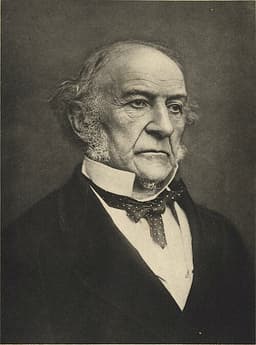
William Ewart Gladstone
Politician · Modern
65.2Total
Basic Information
Born
1920
1809
Died
—
1898
Era
Modern
Modern
Nationality
Singapore
United Kingdom
Occupation
Politician
Politician
Civilization
Eastern
Western
Score Comparison
Military (10%)
11.7
50.0
Political (20%)
40.8
78.0
Influence (20%)
49.4
65.0
Legacy (20%)
41.7
65.0
Leadership (15%)
58.8
78.0
Strategy (15%)
35.6
42.5
TOTAL
42.4
65.2
Eddie Barker — Complete Timeline
1965 AD
Drafted the Separation Agreement from MalaysiaPolitical Action◆ Major
Eddie Barker, as Minister for Law, drafted the legal documents for Singapore's separation from Malaysia. The agreement outlined the terms of independence, including the division of assets and the continuation of the common market.
SeparationIndependenceLegal Drafting
Impact: national
Served as Singapore's First Minister for LawPolitical Action◆ Major
Eddie Barker was appointed Singapore's first Minister for Law after independence. He oversaw the establishment of the legal framework for the new nation, including the Constitution and the judiciary system.
Law MinisterConstitutionJudiciary
Impact: nationalconstructive
Negotiated the Separation Terms with MalaysiaPolitical Action◆ Major
Eddie Barker was part of the Singapore delegation that negotiated the separation terms with Malaysian leaders. His legal expertise ensured a smooth transition and the protection of Singapore's interests in the agreement.
NegotiationSeparationDiplomacy
Impact: regional
1967 AD
Served as Acting Prime MinisterPolitical Action
Eddie Barker served as Acting Prime Minister of Singapore during Lee Kuan Yew's absence. He handled routine governance and maintained stability, demonstrating the depth of the PAP leadership team.
Acting Prime MinisterGovernanceLeadership
Impact: nationalconstructive
William Ewart Gladstone — Complete Timeline
1846 AD
Repeal of the Corn LawsReform◆ Major
As a minister in Sir Robert Peel's government, Gladstone supported the repeal of tariffs on imported grain. The repeal lowered food prices and marked a shift toward free trade, though it split the Conservative Party.
Free TradeEconomic ReformConservative Party
Impact: nationalconstructive
1870 AD
Education Act of 1870Reform◆ Major
Gladstone's government passed the Elementary Education Act, establishing school boards and providing state-funded elementary education in England and Wales. The act laid the foundation for universal primary education.
Education ReformSocial PolicyLiberal Government
Impact: nationalconstructive
1879 AD
Midlothian CampaignPolitical Action◆ Major
Gladstone conducted a series of public speeches in Midlothian, Scotland, attacking the foreign policy of Benjamin Disraeli's government. The campaign is considered the first modern political campaign, using mass rallies and media to sway public opinion.
Political CampaignPublic SpeakingLiberal Party
Impact: national
1884 AD
Third Reform ActReform◆ Major
Gladstone's government extended the franchise to agricultural laborers and others in rural areas, standardizing the voting qualification across counties and boroughs. The act added about two million men to the electorate.
Electoral ReformDemocracyLiberal Government
Impact: nationalconstructive
1886 AD
First Irish Home Rule BillPolitical Action◆ Major
Gladstone introduced the Government of Ireland Bill in the House of Commons, proposing a devolved parliament in Dublin. The bill split the Liberal Party and was defeated in the Commons, leading to the fall of his second government.
Irish Home RuleLiberal Party SplitLegislation
Impact: national
1893 AD
Second Irish Home Rule BillPolitical Action◆ Major
Gladstone introduced a second Home Rule Bill, which passed the House of Commons but was rejected by the House of Lords. The defeat demonstrated the Lords' veto power and delayed Irish self-government for decades.
Irish Home RuleHouse of LordsLegislation
Impact: national
1894 AD
Resignation over Budget DefeatPolitical Action
Gladstone resigned as Prime Minister after the House of Lords defeated his budget proposal, which included increased death duties. His resignation ended his fourth and final premiership, and he was succeeded by Lord Rosebery.
ResignationBudgetHouse of Lords
Impact: national
This comparison has not been analyzed yet.
One-time AI generation (~1 minute). Scores and timeline are already available below.
Rankings
🥇
William Ewart GladstoneLeader
Mil: 50.0Pol: 78.0Inf: 65.0
65.2
🥈
Eddie Barker
Mil: 11.7Pol: 40.8Inf: 49.4
42.4
+22.8 behind
How This Comparison Works
Algorithm
Each figure is scored on 6 dimensions (0—100 scale) based on structured historical data: Military (10%), Political (20%), Influence (20%), Legacy (20%), Leadership (15%), Strategy (15%). The weighted total produces the final ranking.
Data Sources
Scores are computed from structured sub-indicators in the database. Scale factors adjust for era (Ancient ×0.85, Modern ×1.0) and civilization size (Eastern ×1.05, Other ×0.80) to account for differences in population and military scale.
Maximum 3 Figures
Comparisons are limited to 2—3 figures to ensure readability and statistical meaningfulness.
Error Margins
±5 points per dimension — Sub-scores are derived from historical records with inherent uncertainty. Two figures within 5 points on a dimension should be considered roughly equivalent in that area.
Total Score Accuracy
±3 points overall — The weighted combination of 6 dimensions produces a total score with approximately ±3 points of uncertainty. Differences of less than 3 points are not statistically significant— the figures are effectively tied.
Known Limitations
- Historical records are incomplete and uneven across civilizations
- Figures from oral-tradition societies may be underrepresented
- Occupation labels can misclassify multi-role figures
- Scores measure capability and impact, not moral character
- Quantitative scoring is a comparison tool, not absolute truth
Capability Radar
Military (10%) — Battles & Warfare
Battles
13
26
Win Rate
18
32
Expansion
22
36
Political (20%) — Governance & Reform
Reform
40
90
Diplomacy
35
85
Economy
20
88
Influence (20%) — Cultural & Global Reach
Cultural
10
70
Global
25
75
Legacy (20%) — Historical Impact
Historical
30
80
Longevity
20
75
Leadership (15%) — Power & Stability
Tenure
30
85
Stability
25
75
Strategy (15%) — Tactics & Innovation
Strategy
21
37
Tactics
26
40
Reform
30
46
Similar Comparisons
Comments & Discussion
No comments yet. Be the first to share your thoughts!