Loading...
This comparison has not been analyzed yet.
One-time AI generation (~1 minute). Scores and timeline are already available below.
Durgadas Rathore vs Maximiliano Hernandez Martinez
Durgadas Rathore leads by 17.1 pts · 2 figures compared
…
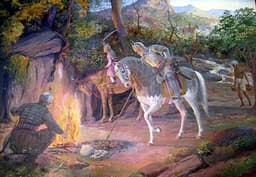
Durgadas Rathore
General · Modern
62.7Total

Maximiliano Hernandez Martinez
General · Modern
45.6Total
Basic Information
Born
1638
1882
Died
1718
1966
Era
Modern
Modern
Nationality
India
El Salvador
Occupation
General
General
Civilization
Indian
Western
Score Comparison
Military (10%)
60.0
50.0
Political (20%)
60.0
39.4
Influence (20%)
72.0
50.2
Legacy (20%)
55.0
40.0
Leadership (15%)
62.0
64.5
Strategy (15%)
66.9
25.0
TOTAL
62.7
45.6
Durgadas Rathore — Complete Timeline
1658 AD
Battle of DharmatpurWar◆ Major
Durgadas Rathore led Rajput forces against the Mughal army under Aurangzeb's general Jaswant Singh. The battle was part of the struggle for Marwar's independence after the death of Maharaja Jaswant Singh II. Durgadas's forces were defeated, but he escaped to continue resistance.
Mughal-Rajput WarsMarwar Independence
Impact: regional
1679 AD
Rescue of Ajit SinghPolitical Action
Durgadas Rathore rescued the infant Maharaja Ajit Singh of Marwar from Delhi, where he was held by Aurangzeb. He smuggled the prince to safety in the hills, preserving the Rathore line and continuing the resistance against Mughal annexation of Marwar.
Marwar IndependenceRajput Resistance
Impact: regionalconstructive
1707 AD
Battle of JodhpurWar
After Aurangzeb's death, Durgadas Rathore led Rajput forces to recapture Jodhpur from Mughal control. The battle resulted in the restoration of Ajit Singh as Maharaja of Marwar, ending decades of Mughal occupation and securing Marwar's independence.
Marwar IndependenceRajput Victory
Impact: regionalconstructive
Maximiliano Hernandez Martinez — Complete Timeline
1931 AD
Seized Power in a CoupPolitical Action◆ Major
Maximiliano Hernandez Martinez led a military coup that overthrew President Arturo Araujo. He established a dictatorship that lasted until 1944, ruling El Salvador with an iron fist and suppressing dissent through violence.
CoupDictatorshipEl Salvador
Impact: nationaldestructive
1932 AD
Ordered the Massacre of Indigenous Peasants (La Matanza)War
Martinez ordered the military to suppress a peasant and indigenous uprising in western El Salvador. The army killed an estimated 10,000 to 40,000 people, mostly Pipil indigenous people, in what became known as La Matanza. This event consolidated his power and terrorized the population.
MassacreIndigenousRepression
Impact: nationaltragic
Implemented Theosophical PoliciesReform
Martinez, a follower of theosophy, enacted policies based on his esoteric beliefs. He banned certain foods, promoted spiritualism, and claimed to communicate with spirits. These policies were widely ridiculed but reflected his unique ideological influence on governance.
TheosophyEsotericPolicy
Impact: national
1944 AD
Overthrown by a General StrikePolitical Action◆ Major
A nationwide general strike, led by students, professionals, and workers, forced Martinez to resign and flee El Salvador. The strike was a rare example of nonviolent resistance ending a dictatorship in Central America.
General StrikeResignationNonviolent Resistance
Impact: nationalconstructive
This comparison has not been analyzed yet.
One-time AI generation (~1 minute). Scores and timeline are already available below.
Rankings
🥇
Durgadas RathoreLeader
Mil: 60.0Pol: 60.0Inf: 72.0
62.7
🥈
Maximiliano Hernandez Martinez
Mil: 50.0Pol: 39.4Inf: 50.2
45.6
+17.1 behind
How This Comparison Works
Algorithm
Each figure is scored on 6 dimensions (0—100 scale) based on structured historical data: Military (10%), Political (20%), Influence (20%), Legacy (20%), Leadership (15%), Strategy (15%). The weighted total produces the final ranking.
Data Sources
Scores are computed from structured sub-indicators in the database. Scale factors adjust for era (Ancient ×0.85, Modern ×1.0) and civilization size (Eastern ×1.05, Other ×0.80) to account for differences in population and military scale.
Maximum 3 Figures
Comparisons are limited to 2—3 figures to ensure readability and statistical meaningfulness.
Error Margins
±5 points per dimension — Sub-scores are derived from historical records with inherent uncertainty. Two figures within 5 points on a dimension should be considered roughly equivalent in that area.
Total Score Accuracy
±3 points overall — The weighted combination of 6 dimensions produces a total score with approximately ±3 points of uncertainty. Differences of less than 3 points are not statistically significant— the figures are effectively tied.
Known Limitations
- Historical records are incomplete and uneven across civilizations
- Figures from oral-tradition societies may be underrepresented
- Occupation labels can misclassify multi-role figures
- Scores measure capability and impact, not moral character
- Quantitative scoring is a comparison tool, not absolute truth
Capability Radar
Military (10%) — Battles & Warfare
Battles
70
15
Win Rate
75
20
Expansion
55
10
Political (20%) — Governance & Reform
Reform
55
30
Diplomacy
75
25
Economy
50
20
Influence (20%) — Cultural & Global Reach
Cultural
65
20
Global
40
10
Legacy (20%) — Historical Impact
Historical
70
25
Longevity
60
15
Leadership (15%) — Power & Stability
Tenure
65
55
Stability
60
15
Strategy (15%) — Tactics & Innovation
Strategy
78
10
Tactics
80
10
Reform
60
15
Similar Comparisons
Comments & Discussion
No comments yet. Be the first to share your thoughts!