Loading...
Duke of Zhou vs Mustafa Kemal Ataturk
Mustafa Kemal Ataturk leads by 1.2 pts · 2 figures compared
…

Duke of Zhou
Politician · Ancient
78.8Total
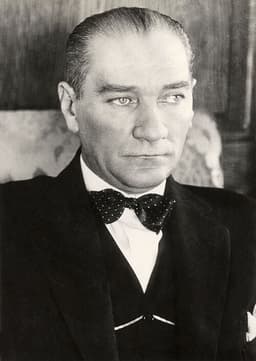
Mustafa Kemal Ataturk
Politician · Modern
80.0Total
Basic Information
Born
-1090
1881
Died
-1030
1938
Era
Ancient
Modern
Nationality
Zhou China
Turkey
Occupation
Politician
Politician
Civilization
Eastern
Middle Eastern
Score Comparison
Military (10%)
60.0
75.0
Political (20%)
72.0
85.0
Influence (20%)
92.0
75.0
Legacy (20%)
87.0
90.0
Leadership (15%)
78.0
80.0
Strategy (15%)
55.0
65.0
TOTAL
78.8
80.0
Duke of Zhou — Complete Timeline
1042 BC
Regency for King Cheng of ZhouPolitical Action◆ Major
After King Wu's death, the Duke of Zhou served as regent for the young King Cheng. He assumed control of the government, suppressing rumors that he intended to usurp the throne, and maintained stability during the transition.
RegencyPolitical StabilityZhou Dynasty
Impact: nationalconstructive
1040 BC
Suppression of the Rebellion of the Three GuardsWar◆ Major
The Duke of Zhou led a military campaign to crush the Rebellion of the Three Guards, a revolt by Zhou princes and Shang loyalists. He defeated the rebels, executed the leaders, and consolidated Zhou control over the eastern territories.
Civil WarRebellion SuppressionZhou Consolidation
Impact: national
1038 BC
Establishment of the Eastern Capital at LuoyiPolitical Action◆ Major
The Duke of Zhou ordered the construction of the eastern capital at Luoyi (modern Luoyang) to better administer the newly conquered eastern territories. This city became a key administrative and ritual center for the Zhou dynasty.
Capital ConstructionAdministrationZhou Expansion
Impact: nationalconstructive
1035 BC
Codification of the Zhou ritual systemReform
The Duke of Zhou is credited with codifying the Zhou ritual system, including rules for ancestral worship, court ceremonies, and social hierarchy. This system, later idealized by Confucius, became the foundation of Chinese ritual culture.
Ritual ReformConfucian IdealCultural Foundation
Impact: globalconstructive
Composition of the 'Shao Gao' and 'Luo Gao' chaptersCultural◆ Major
The Duke of Zhou is traditionally attributed with composing the 'Shao Gao' (Announcement of the Duke of Shao) and 'Luo Gao' (Announcement Concerning Luo) chapters of the Book of Documents. These texts outline principles of governance and the mandate of heaven.
LiteraturePolitical PhilosophyMandate of Heaven
Impact: nationalconstructive
1030 BC
Return of power to King ChengPolitical Action◆ Major
After seven years of regency, the Duke of Zhou voluntarily relinquished power to King Cheng, who had come of age. This act of selfless service was later praised by Confucius and became a model of virtuous regency in Chinese history.
Regency EndVirtuous ConductConfucian Model
Impact: nationalconstructive
Mustafa Kemal Ataturk — Complete Timeline
1915 AD
Battle of GallipoliWar
As a colonel, Mustafa Kemal commanded Ottoman forces at Gallipoli, successfully repelling Allied landings. His leadership at critical points like Chunuk Bair made him a national hero and laid the foundation for his political career.
World War IOttoman EmpireMilitary Victory
Impact: regional
1919 AD
Turkish War of IndependenceWar
Kemal organized and led the Turkish National Movement against the Allied occupation of Anatolia and the Treaty of S
Independence WarNational MovementAnkara
Impact: nationalconstructive
1922 AD
Abolition of the SultanatePolitical Action◆ Major
The Grand National Assembly of Turkey, under Kemal's leadership, abolished the Ottoman Sultanate, ending 600 years of imperial rule. This severed the link with the old regime and paved the way for the proclamation of the Republic.
SultanateRepublicPolitical Reform
Impact: nationalprogressive
1923 AD
Proclamation of the Republic of TurkeyPolitical Action
Kemal declared Turkey a republic, becoming its first president. He moved the capital to Ankara and initiated a series of radical reforms to modernize and secularize the state, including the adoption of a new legal code and the Latin alphabet.
RepublicModernizationSecularism
Impact: globalprogressive
1925 AD
Adoption of the Hat LawReform◆ Major
Kemal introduced the Hat Law, banning the fez and encouraging Western-style hats. This was part of his broader cultural revolution to secularize and Westernize Turkish society, symbolizing the break with Ottoman traditions.
Cultural ReformSecularismWesternization
Impact: nationalprogressive
1934 AD
Granting of Women's SuffrageReform◆ Major
Kemal's government granted women the right to vote and stand for election in national elections, ahead of many European countries. This reform was part of his commitment to gender equality and modernization of Turkish society.
Women's RightsSuffrageModernization
Impact: nationalprogressive
Expert Analysis
Origins
Mustafa Kemal Atatürk (1881–1938) was born in Thessaloniki, then part of the Ottoman Empire. He came of age as the empire was crumbling, witnessing nationalist uprisings and military defeats. His military education shaped his secular, modernist worldview. The Duke of Zhou (11th century BCE) was a member of the Zhou royal family, brother of King Wu of Zhou. After King Wu's death, he served as regent for his young nephew King Cheng, consolidating the new dynasty's rule. Both emerged from periods of transition and chaos.
Rise to Power
Atatürk rose through military ranks, distinguished by his leadership at Gallipoli (1915), where he halted the Allied advance. Following WWI, he organized resistance to the Allied occupation of Anatolia, leading the Turkish War of Independence (1919–1923). He outmaneuvered both foreign powers and the Ottoman sultan, eventually proclaiming the Republic of Turkey in 1923. The Duke of Zhou's rise was more familial: he was appointed regent after King Wu's death, a role he used to stabilize the dynasty. He suppressed the Rebellion of the Three Guards (led by his own brothers), proving his political and military acumen.
Leadership & Governance
Atatürk implemented sweeping reforms: abolition of the sultanate (1922) and caliphate (1924), adoption of a secular civil code, Latin alphabet, women's suffrage, and Western dress (Hat Law, 1925). He centralized power but also established a parliamentary republic. His governance was authoritarian, yet transformative. The Duke of Zhou codified the Zhou ritual system, creating a framework for governance based on hierarchy, filial piety, and moral virtue. He established the Eastern Capital at Luoyi and authored key chapters of the Book of Documents. His approach emphasized ritual and precedent over legalism.
Triumph & Tragedy
Atatürk's triumphs include the military victories at Gallipoli and in the War of Independence, and the successful creation of a secular nation-state. His tragedy lies in the cultural dislocation caused by rapid reforms and the suppression of religious and minority identities. The Duke of Zhou's triumph was the consolidation of the Zhou dynasty, which lasted 800 years. His tragedy may be the labor of his work—he never ruled as king, only as steward, and his legacy was later idealized by Confucius, overshadowing his own human struggles.
Character & Destiny
Atatürk was a decisive, charismatic leader with a vision for a modern, Westernized Turkey. He was disciplined, pragmatic, and often ruthless. His destiny was to be the father of a nation. The Duke of Zhou was revered as a paragon of virtue, selfless and wise. Confucius lauded him as the ideal statesman. His destiny was to be the architect of a political system that would influence China for millennia.
Legacy
Atatürk's legacy is indelible: modern Turkey, secularism, and a national identity. His image and ideology remain central to Turkish politics. The Duke of Zhou's legacy is foundational to Chinese political philosophy; he is a symbol of good governance, ritual propriety, and loyalty. Both are revered but in different contexts: Atatürk as a transformative modernizer, the Duke as a conservative stabilizer.
Conclusion
Atatürk scores higher overall (1.2 point gap), reflecting his more dramatic, sweeping changes in a shorter period. The Duke of Zhou's influence is deeper but more gradual. Atatürk's scores: M=75, P=85, I=75, L=90, D=80, S=65, T=80. Duke: M=60, P=72, I=92, L=87, D=78, S=55, T=79. Atatürk leads in Military, Political, and Strategic scores; the Duke leads in Influence and Legacy. For sheer transformative impact, Atatürk edges out the Duke.
Rankings
🥇
Mustafa Kemal AtaturkLeader
Mil: 75.0Pol: 85.0Inf: 75.0
80.0
🥈
Duke of Zhou
Mil: 60.0Pol: 72.0Inf: 92.0
78.8
+1.2 behind
How This Comparison Works
Algorithm
Each figure is scored on 6 dimensions (0—100 scale) based on structured historical data: Military (10%), Political (20%), Influence (20%), Legacy (20%), Leadership (15%), Strategy (15%). The weighted total produces the final ranking.
Data Sources
Scores are computed from structured sub-indicators in the database. Scale factors adjust for era (Ancient ×0.85, Modern ×1.0) and civilization size (Eastern ×1.05, Other ×0.80) to account for differences in population and military scale.
Maximum 3 Figures
Comparisons are limited to 2—3 figures to ensure readability and statistical meaningfulness.
Error Margins
±5 points per dimension — Sub-scores are derived from historical records with inherent uncertainty. Two figures within 5 points on a dimension should be considered roughly equivalent in that area.
Total Score Accuracy
±3 points overall — The weighted combination of 6 dimensions produces a total score with approximately ±3 points of uncertainty. Differences of less than 3 points are not statistically significant— the figures are effectively tied.
Known Limitations
- Historical records are incomplete and uneven across civilizations
- Figures from oral-tradition societies may be underrepresented
- Occupation labels can misclassify multi-role figures
- Scores measure capability and impact, not moral character
- Quantitative scoring is a comparison tool, not absolute truth
Capability Radar
Military (10%) — Battles & Warfare
Battles
65
85
Win Rate
70
90
Expansion
55
60
Political (20%) — Governance & Reform
Reform
95
98
Diplomacy
85
85
Economy
80
75
Influence (20%) — Cultural & Global Reach
Cultural
95
90
Global
85
80
Legacy (20%) — Historical Impact
Historical
95
95
Longevity
95
85
Leadership (15%) — Power & Stability
Tenure
70
85
Stability
90
70
Strategy (15%) — Tactics & Innovation
Strategy
75
85
Tactics
60
88
Reform
80
80
Similar Comparisons
Comments & Discussion
No comments yet. Be the first to share your thoughts!