Loading...
Dries van Agt vs Mariano Rajoy Brey
Dries van Agt leads by 5.1 pts · 2 figures compared
…

Dries van Agt
Politician · Modern
56.9Total
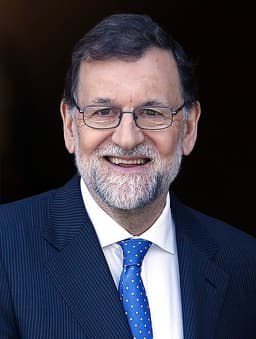
Mariano Rajoy Brey
Politician · Modern
51.8Total
Basic Information
Born
1931
1955
Died
—
—
Era
Modern
Modern
Nationality
Netherlands
Spain
Occupation
Politician
Politician
Civilization
Western
Western
Score Comparison
Military (10%)
51.1
50.0
Political (20%)
68.0
68.0
Influence (20%)
54.1
50.2
Legacy (20%)
45.0
40.0
Leadership (15%)
72.0
66.0
Strategy (15%)
60.0
41.6
TOTAL
56.9
51.8
Dries van Agt — Complete Timeline
1977 AD
Became Prime Minister of the NetherlandsPolitical Action◆ Major
Van Agt became prime minister after the CDA won the most seats in the 1977 election. He formed a coalition with the VVD, ending a long period of left-wing governments. His premiership was marked by economic stagnation and social tensions.
GovernmentLeadershipCoalition
Impact: national
Presided over the 'Van Agt I' cabinetPolitical Action
Van Agt's first cabinet faced economic crisis with high unemployment and inflation. It implemented austerity measures, including cuts to social spending. The cabinet was also marked by internal conflicts, particularly over nuclear energy and the placement of cruise missiles.
Economic PolicyAusterityCabinet
Impact: national
1981 AD
Controversial visit to South AfricaPolitical Action
Van Agt made an official visit to South Africa, meeting with Prime Minister P.W. Botha. This was highly controversial due to South Africa's apartheid regime. The visit was criticized by anti-apartheid activists and damaged the Netherlands' reputation as a human rights advocate.
DiplomacyApartheidControversy
Impact: regionaldestructive
1982 AD
Resigned as Prime MinisterPolitical Action◆ Major
Van Agt resigned after his second cabinet (with PvdA and D66) collapsed over economic policy disagreements. He stepped down as CDA leader and left national politics. His tenure was seen as ineffective, with the Netherlands facing persistent economic problems.
ResignationGovernment CollapseEnd of Term
Impact: national
Mariano Rajoy Brey — Complete Timeline
2011 AD
Elected Prime Minister of SpainPolitical Action
Rajoy led the People's Party (PP) to a landslide victory in the general election, becoming Prime Minister. His government implemented austerity measures to address the economic crisis.
Spanish PoliticsPPElection
Impact: national
2012 AD
Implemented austerity measuresReform◆ Major
Rajoy's government passed a series of austerity measures, including spending cuts and tax increases, to reduce the budget deficit and meet EU requirements. These measures were widely protested.
AusterityEconomic CrisisReform
Impact: nationaldestructive
2017 AD
Refused to hold a legal referendum on Catalan independencePolitical Action◆ Major
Rajoy's government opposed the Catalan independence referendum, declaring it illegal. He invoked Article 155 of the Constitution to impose direct rule on Catalonia after the referendum was held.
Catalan IndependenceArticle 155Constitutional Crisis
Impact: national
2018 AD
Ousted in no-confidence votePolitical Action
Rajoy lost a no-confidence motion in the Spanish Congress of Deputies, triggered by a corruption scandal involving the PP. He was replaced by Socialist leader Pedro S
No-confidenceCorruptionPP
Impact: nationaldestructive
Expert Analysis
Origins
Dries van Agt was born on February 2, 1931, in Geldrop, Netherlands, into a Catholic family. His father was a textile industrialist. He studied law at the Catholic University of Nijmegen, earning a doctorate in 1962. Van Agt began his career as a lawyer and later became a professor of criminal law at his alma mater.
Mariano Rajoy Brey was born on March 27, 1955, in Santiago de Compostela, Spain, into a family of lawyers. His father was a judge. He studied law at the University of Santiago de Compostela, graduating in 1977. Rajoy entered the civil service as a property registrar, a career that shaped his methodical approach.
Rise to Power
Van Agt entered politics in the 1960s, joining the Catholic People's Party (KVP). He served as Minister of Justice from 1971 to 1977, gaining attention for his conservative stance on moral issues. In 1977, he became the first Prime Minister of the Netherlands from the newly formed Christian Democratic Appeal (CDA) after the party won the most seats in the election. He formed a coalition with the conservative VVD, ending years of left-wing dominance.
Rajoy rose through the ranks of the People's Party (PP). He held various ministerial posts under Prime Minister José María Aznar, including Minister of Public Administrations (1996-1999) and Minister of the Interior (2001-2002). After Aznar stepped down, Rajoy became the PP's candidate for Prime Minister in 2004, losing to José Luis Rodríguez Zapatero. He finally won the 2011 election on a platform of economic austerity, securing a landslide majority.
Leadership & Governance
Van Agt's leadership style was characterized by his intellectualism and occasional aloofness. His first cabinet (Van Agt I, 1977-1981) focused on austerity measures to combat the economic crisis, including cuts to social spending. However, his coalition was unstable, leading to early elections in 1981. His second cabinet (Van Agt II, 1981-1982) with the Labour Party (PvdA) and Democrats 66 (D66) collapsed over economic policy, specifically disagreements on spending cuts. Van Agt resigned in 1982, scoring 72.0 in leadership but only 60.0 in strategy.
Rajoy's governance was defined by his cautious, consensus-seeking approach. His government implemented strict austerity measures, including tax increases and spending cuts, to reduce the budget deficit and meet EU requirements. This led to high unemployment, but also stabilized the economy. His handling of the Catalan independence crisis was firm: he opposed the 2017 referendum, declared it illegal, and imposed direct rule via Article 155. This action scored him 66.0 in leadership but only 41.6 in strategy, as it deepened the political divide.
Triumph & Tragedy
Van Agt's greatest success was his role in the formation of the CDA, which united three Catholic and Protestant parties, reshaping Dutch politics. His greatest failure was the collapse of his second cabinet, which exposed his inability to manage coalition dynamics. He also made a controversial visit to South Africa in 1981, meeting Prime Minister P.W. Botha, which drew international criticism due to apartheid.
Rajoy's triumph was navigating Spain through the economic crisis, with the economy returning to growth by 2014. His tragedy was the corruption scandal that led to his ouster: in 2018, the PP was found guilty of benefiting from a kickback scheme, triggering a no-confidence vote that Rajoy lost. He scored 40.0 in legacy, reflecting the taint of corruption.
Character & Destiny
Van Agt was an intellectual who often seemed detached from the political fray. His stubbornness on economic issues led to the breakdown of his coalition. After politics, he became a vocal critic of Israeli policy, showing a shift in moral priorities. His destiny was to be a transitional figure, bridging the old pillarized system to a more fragmented political landscape.
Rajoy was known for his patience and resilience, often described as a 'wall' against criticism. His cautious nature helped him survive multiple challenges, but also led to a lack of bold reforms. His destiny was to be the prime minister who faced both an economic crisis and a secessionist threat, but whose legacy was marred by corruption scandals.
Legacy
Van Agt's legacy is mixed. He is remembered as the first CDA prime minister and for his role in unifying Christian democracy in the Netherlands. His scores reflect this: political 68.0, influence 54.1, legacy 45.0. However, his cabinets are seen as ineffective, and his later activism has overshadowed his time in office.
Rajoy's legacy is similarly contested. He stabilized the economy but at a high social cost. His hardline stance on Catalonia prevented independence but inflamed separatist sentiment. His legacy score is 40.0, the lowest of the two, due to the corruption that ended his tenure.
Conclusion
While both leaders faced crises, Dries van Agt had a greater impact on Dutch political structure by founding the CDA, a major force for decades. Rajoy's achievements in economic recovery are notable, but his legacy is undermined by corruption. Van Agt's leadership score of 72.0 versus Rajoy's 66.0 reflects his more decisive, albeit flawed, governance. In terms of lasting influence, van Agt edges ahead. Thus, Dries van Agt had a greater impact than Mariano Rajoy.
Rankings
🥇
Dries van AgtLeader
Mil: 51.1Pol: 68.0Inf: 54.1
56.9
🥈
Mariano Rajoy Brey
Mil: 50.0Pol: 68.0Inf: 50.2
51.8
+5.1 behind
How This Comparison Works
Algorithm
Each figure is scored on 6 dimensions (0—100 scale) based on structured historical data: Military (10%), Political (20%), Influence (20%), Legacy (20%), Leadership (15%), Strategy (15%). The weighted total produces the final ranking.
Data Sources
Scores are computed from structured sub-indicators in the database. Scale factors adjust for era (Ancient ×0.85, Modern ×1.0) and civilization size (Eastern ×1.05, Other ×0.80) to account for differences in population and military scale.
Maximum 3 Figures
Comparisons are limited to 2—3 figures to ensure readability and statistical meaningfulness.
Error Margins
±5 points per dimension — Sub-scores are derived from historical records with inherent uncertainty. Two figures within 5 points on a dimension should be considered roughly equivalent in that area.
Total Score Accuracy
±3 points overall — The weighted combination of 6 dimensions produces a total score with approximately ±3 points of uncertainty. Differences of less than 3 points are not statistically significant— the figures are effectively tied.
Known Limitations
- Historical records are incomplete and uneven across civilizations
- Figures from oral-tradition societies may be underrepresented
- Occupation labels can misclassify multi-role figures
- Scores measure capability and impact, not moral character
- Quantitative scoring is a comparison tool, not absolute truth
Capability Radar
Military (10%) — Battles & Warfare
Battles
46
26
Win Rate
49
30
Expansion
52
34
Political (20%) — Governance & Reform
Reform
45
40
Diplomacy
60
55
Economy
50
45
Influence (20%) — Cultural & Global Reach
Cultural
30
20
Global
35
20
Legacy (20%) — Historical Impact
Historical
40
25
Longevity
30
15
Leadership (15%) — Power & Stability
Tenure
55
65
Stability
55
50
Strategy (15%) — Tactics & Innovation
Strategy
55
38
Tactics
61
40
Reform
65
43
Similar Comparisons
Comments & Discussion
No comments yet. Be the first to share your thoughts!