Loading...
Dorgon vs Rajendra Chola I
Rajendra Chola I leads by 4.2 pts · 2 figures compared
…

Dorgon
General · Modern
78.0Total
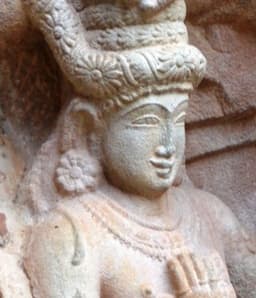
Rajendra Chola I
Emperor · Medieval
82.2Total
Basic Information
Born
1612
971
Died
1650
1044
Era
Modern
Medieval
Nationality
China
India
Occupation
General
Emperor
Civilization
Eastern
Indian
Score Comparison
Military (10%)
78.5
84.7
Political (20%)
78.0
82.0
Influence (20%)
88.0
84.0
Legacy (20%)
65.0
84.0
Leadership (15%)
85.0
78.0
Strategy (15%)
75.0
77.6
TOTAL
78.0
82.2
Dorgon — Complete Timeline
1643 AD
Appointed Prince RegentPolitical Action◆ Major
Upon the death of Hong Taiji, Dorgon was appointed as regent for the young Shunzhi Emperor. This position gave him effective control over the Qing government and military, enabling him to direct the conquest of Ming China.
RegencyPower transition
Impact: national
1644 AD
Battle of Shanhai PassWar
Dorgon allied with Ming general Wu Sangui to defeat Li Zicheng's rebel forces at Shanhai Pass. This victory allowed Qing forces to enter Beijing and establish the Qing dynasty as the ruling power in China.
Qing conquestBattleAlliance
Impact: national
1645 AD
Conquest of Southern MingWar◆ Major
Dorgon led Qing forces in a campaign against the Southern Ming regime, capturing Nanjing and defeating the Hongguang Emperor. This campaign extended Qing control over the Yangtze River valley and weakened Ming loyalist resistance.
Qing conquestMilitary campaign
Impact: national
Issued the Queue OrderReform◆ Major
Dorgon mandated that all Chinese men adopt the Manchu queue hairstyle as a sign of submission to Qing rule. This policy caused widespread resentment and resistance, but was enforced to consolidate Qing control over Han Chinese subjects.
Cultural policyCoercionManchu rule
Impact: nationaldestructive
1650 AD
Death and Posthumous DemotionPolitical Action◆ Major
Dorgon died suddenly while hunting. After his death, the Shunzhi Emperor accused him of plotting to usurp the throne, stripped him of all titles, and had his corpse mutilated. This posthumous purge reflected court factional struggles.
PurgePosthumous punishment
Impact: nationaltragic
Rajendra Chola I — Complete Timeline
1014 AD
Accession to the Chola ThronePolitical Action
Rajendra Chola I succeeded his father Raja Raja Chola I as emperor of the Chola Empire. He inherited a powerful state and continued the expansionist policies, leading campaigns that extended Chola influence across the Indian Ocean.
Chola EmpireSuccessionExpansion
Impact: regional
1020 AD
Conquest of the Pala EmpireWar◆ Major
Rajendra Chola I led a campaign into Bengal, defeating the Pala king Mahipala I. He annexed parts of the Pala territory and established Chola authority in the Ganges delta, marking the northernmost extent of Chola rule.
Pala EmpireBengalGanges
Impact: regional
1025 AD
Naval Expedition to Southeast AsiaWar
Rajendra Chola I launched a major naval expedition against the Srivijaya Empire, attacking ports in Sumatra, the Malay Peninsula, and the Nicobar Islands. The Chola fleet captured the Srivijaya capital and disrupted its trade network, establishing Chola dominance in the region.
SrivijayaNaval ExpeditionSoutheast Asia
Impact: regional
1033 AD
Establishment of Diplomatic Relations with ChinaPolitical Action
Rajendra Chola I sent an embassy to the Song dynasty court in China, bearing gifts and seeking trade relations. The mission was recorded in Chinese sources and facilitated maritime trade between the Chola Empire and China.
ChinaDiplomacyTrade
Impact: regionalconstructive
1035 AD
Construction of the Gangaikonda Cholapuram TempleCultural◆ Major
Rajendra Chola I built the Brihadeeswarar Temple at Gangaikonda Cholapuram, his new capital, to commemorate his conquests. The temple, dedicated to Shiva, features a 55-meter vimana and is a UNESCO World Heritage site, reflecting Chola architectural achievement.
Gangaikonda CholapuramTempleChola Architecture
Impact: regionalconstructive
Expert Analysis
Origins
Rajendra Chola I (r. 1012–1044 CE) was born into the powerful Chola dynasty of South India, inheriting a kingdom already dominant in the subcontinent. His father, Rajaraja Chola I, had laid the foundation of a maritime empire. In contrast, Dorgon (1612–1650 CE) was a Manchu prince of the Aisin Gioro clan, born into a tribal confederation that had recently unified under Nurhaci. Dorgon’s origins were less secure; he was the 14th son of Nurhaci and had to navigate the fierce internal politics of the Qing court. While Rajendra inherited stability, Dorgon fought for recognition.
Rise to Power
Rajendra Chola I ascended the throne without major contest, his father having secured the succession. His early reign focused on consolidating Chola power in South India and Sri Lanka. Dorgon’s rise was more turbulent. After his father’s death, he supported his brother Hong Taiji and later became regent for his nephew, the Shunzhi Emperor. Dorgon outmaneuvered rival princes and officials, including his brother Ajige, to become the de facto ruler of the Qing. His key turning point was the Battle of Shanhai Pass (1644), where he allied with Ming general Wu Sangui to defeat Li Zicheng’s rebel army and capture Beijing.
Leadership & Governance
Rajendra Chola I was an able administrator who built the magnificent Gangaikonda Cholapuram temple and expanded the Chola bureaucracy. He maintained a strong navy and fostered trade with China and Southeast Asia. His governance was characterized by efficient irrigation systems and local self-government. Dorgon, as Prince Regent, centralized Qing rule, but his methods were harsh. He issued the Queue Order, forcing Han Chinese to adopt Manchu hairstyles as a sign of submission. He also relocated populations and suppressed Ming loyalists. While Rajendra’s rule was more stable and integrative, Dorgon’s was marked by coercion and cultural imposition.
Triumph & Tragedy
Rajendra’s greatest triumph was his naval expedition to Southeast Asia (c. 1025 CE), where he defeated the Srivijaya empire and secured Chola influence in the region. He also conquered the Pala Empire in Bengal, extending Chola power to the Ganges. His tragic aspects are less pronounced, but his later years saw some rebellions in conquered territories. Dorgon’s triumph was the conquest of Southern Ming and the unification of China under the Qing. His tragedy was his sudden death in 1650 at age 37, followed by a posthumous demotion when the Shunzhi Emperor purged his allies and stripped him of titles. Dorgon’s legacy was thus tarnished by political revenge.
Character & Destiny
Rajendra Chola I was a visionary ruler who combined military prowess with cultural patronage. His destiny was to expand the Chola empire to its greatest extent and leave a lasting architectural and political legacy. Dorgon was a shrewd and ruthless tactician, but his ambition and authoritarian methods created enemies. His destiny was to achieve the Qing conquest but die before he could secure his own legacy. Rajendra’s character scores (M=85, P=82, I=84, L=84) reflect a balanced and effective ruler, while Dorgon’s (M=78, P=78, I=88, L=65) show high intelligence but lower longevity and leadership stability.
Legacy
Rajendra Chola I is remembered as one of India’s greatest medieval emperors. His temple at Gangaikonda Cholapuram is a UNESCO World Heritage site, and his naval achievements influenced Southeast Asian history. Dorgon’s legacy is mixed: he is credited with establishing the Qing dynasty’s rule over China, but his draconian policies and posthumous disgrace make him a controversial figure. In historical comparison, Rajendra’s legacy is more positive and enduring, while Dorgon’s is tied to a period of conquest and cultural conflict.
Conclusion
In the final analysis, Rajendra Chola I surpasses Dorgon in overall historical impact. Rajendra’s naval expedition, temple building, and stable governance gave him a higher composite score (82.1) compared to Dorgon’s (77.9). While Dorgon’s conquest of China was a monumental achievement, his methods and short reign limit his standing. Rajendra’s ability to project power across the Indian Ocean and leave a cultural legacy that endures today makes him the more exceptional figure. **Winner: Rajendra Chola I**.
Rankings
🥇
Rajendra Chola ILeader
Mil: 84.7Pol: 82.0Inf: 84.0
82.2
🥈
Dorgon
Mil: 78.5Pol: 78.0Inf: 88.0
78.0
+4.2 behind
How This Comparison Works
Algorithm
Each figure is scored on 6 dimensions (0—100 scale) based on structured historical data: Military (10%), Political (20%), Influence (20%), Legacy (20%), Leadership (15%), Strategy (15%). The weighted total produces the final ranking.
Data Sources
Scores are computed from structured sub-indicators in the database. Scale factors adjust for era (Ancient ×0.85, Modern ×1.0) and civilization size (Eastern ×1.05, Other ×0.80) to account for differences in population and military scale.
Maximum 3 Figures
Comparisons are limited to 2—3 figures to ensure readability and statistical meaningfulness.
Error Margins
±5 points per dimension — Sub-scores are derived from historical records with inherent uncertainty. Two figures within 5 points on a dimension should be considered roughly equivalent in that area.
Total Score Accuracy
±3 points overall — The weighted combination of 6 dimensions produces a total score with approximately ±3 points of uncertainty. Differences of less than 3 points are not statistically significant— the figures are effectively tied.
Known Limitations
- Historical records are incomplete and uneven across civilizations
- Figures from oral-tradition societies may be underrepresented
- Occupation labels can misclassify multi-role figures
- Scores measure capability and impact, not moral character
- Quantitative scoring is a comparison tool, not absolute truth
Capability Radar
Military (10%) — Battles & Warfare
Battles
85
95
Win Rate
80
98
Expansion
90
95
Political (20%) — Governance & Reform
Reform
72
88
Diplomacy
78
85
Economy
65
92
Influence (20%) — Cultural & Global Reach
Cultural
65
85
Global
70
85
Legacy (20%) — Historical Impact
Historical
80
88
Longevity
75
80
Leadership (15%) — Power & Stability
Tenure
70
90
Stability
60
90
Strategy (15%) — Tactics & Innovation
Strategy
88
92
Tactics
82
90
Reform
75
85
Similar Comparisons
Comments & Discussion
No comments yet. Be the first to share your thoughts!