Loading...
Dorgon vs Isabella I of Castile
Dorgon leads by 0.8 pts · 2 figures compared
…

Dorgon
General · Modern
78.0Total
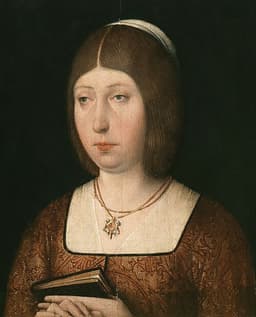
Isabella I of Castile
Emperor · Medieval
77.2Total
Basic Information
Born
1612
1451
Died
1650
1504
Era
Modern
Medieval
Nationality
China
Spain
Occupation
General
Emperor
Civilization
Eastern
Western
Score Comparison
Military (10%)
78.5
76.0
Political (20%)
78.0
78.0
Influence (20%)
88.0
80.0
Legacy (20%)
65.0
75.0
Leadership (15%)
85.0
78.0
Strategy (15%)
75.0
75.0
TOTAL
78.0
77.2
Dorgon — Complete Timeline
1643 AD
Appointed Prince RegentPolitical Action◆ Major
Upon the death of Hong Taiji, Dorgon was appointed as regent for the young Shunzhi Emperor. This position gave him effective control over the Qing government and military, enabling him to direct the conquest of Ming China.
RegencyPower transition
Impact: national
1644 AD
Battle of Shanhai PassWar
Dorgon allied with Ming general Wu Sangui to defeat Li Zicheng's rebel forces at Shanhai Pass. This victory allowed Qing forces to enter Beijing and establish the Qing dynasty as the ruling power in China.
Qing conquestBattleAlliance
Impact: national
1645 AD
Conquest of Southern MingWar◆ Major
Dorgon led Qing forces in a campaign against the Southern Ming regime, capturing Nanjing and defeating the Hongguang Emperor. This campaign extended Qing control over the Yangtze River valley and weakened Ming loyalist resistance.
Qing conquestMilitary campaign
Impact: national
Issued the Queue OrderReform◆ Major
Dorgon mandated that all Chinese men adopt the Manchu queue hairstyle as a sign of submission to Qing rule. This policy caused widespread resentment and resistance, but was enforced to consolidate Qing control over Han Chinese subjects.
Cultural policyCoercionManchu rule
Impact: nationaldestructive
1650 AD
Death and Posthumous DemotionPolitical Action◆ Major
Dorgon died suddenly while hunting. After his death, the Shunzhi Emperor accused him of plotting to usurp the throne, stripped him of all titles, and had his corpse mutilated. This posthumous purge reflected court factional struggles.
PurgePosthumous punishment
Impact: nationaltragic
Isabella I of Castile — Complete Timeline
1469 AD
Marriage to Ferdinand of AragonPolitical Action
Isabella married Ferdinand II of Aragon in Valladolid, uniting the kingdoms of Castile and Aragon. This dynastic union laid the foundation for the unified Spanish monarchy and enabled joint policies including the Reconquista and overseas exploration.
Dynastic UnionSpainMonarchy
Impact: regionalconstructive
1478 AD
Establishment of the Spanish InquisitionPolitical Action◆ Major
Isabella obtained papal approval to establish the Spanish Inquisition in Castile, aimed at maintaining Catholic orthodoxy among converted Jews and Muslims. The Inquisition operated under royal control, conducting trials and executions for heresy.
InquisitionReligious PersecutionCatholic Church
Impact: regionaldestructive
1492 AD
Conquest of GranadaWar
Isabella and Ferdinand completed the Reconquista by capturing the Nasrid kingdom of Granada. The surrender of the last Muslim state in Iberia ended 781 years of Islamic rule and unified Spain under Christian rule.
ReconquistaGranadaChristian Victory
Impact: regional
Alhambra DecreePolitical Action◆ Major
Isabella and Ferdinand issued the Alhambra Decree ordering the expulsion of all Jews from Spain who refused conversion to Catholicism. An estimated 40,000 to 200,000 Jews were forced to leave, causing demographic and economic disruption.
ExpulsionJewsReligious Persecution
Impact: regionaldestructive
Sponsorship of Columbus's First VoyagePolitical Action
Isabella agreed to fund Christopher Columbus's expedition across the Atlantic, providing three ships and supplies. Columbus reached the Bahamas on October 12, initiating sustained European contact with the Americas and the Spanish colonial empire.
ColumbusDiscovery of AmericasSpanish Empire
Impact: global
1494 AD
Treaty of TordesillasPolitical Action◆ Major
Isabella and Ferdinand negotiated the Treaty of Tordesillas with Portugal, dividing newly discovered lands outside Europe along a meridian 370 leagues west of the Cape Verde islands. This agreement shaped colonial claims in the Americas and Africa.
Colonial DivisionSpainPortugal
Impact: global
Expert Analysis
Origins
**Dorgon** (1612–1650) was the 14th son of Nurhaci, the founder of the Later Jin dynasty. As a Manchu prince, he grew up in a militaristic tribal society that valued horsemanship, archery, and ruthless ambition. His early life was marked by political intrigue and warfare, with his mother being forced to commit suicide upon his father's death. Dorgon rose through the ranks by proving his military prowess and political acumen, eventually becoming one of the most powerful men in the Qing court.
**Isabella I** (1451–1504) was born into the Castilian royal family, but her path to the throne was fraught with civil war and uncertainty. Her father, John II of Castile, died when she was three, and her half-brother Henry IV's chaotic reign led to a succession crisis. Isabella positioned herself as a unifying figure, marrying Ferdinand of Aragon against her brother's wishes. Her claim to the throne was contested, but she ultimately prevailed through a combination of strategic alliances and military support.
Rise to Power
Dorgon's rise was accelerated by his military successes. After his brother Hong Taiji's death in 1643, Dorgon was appointed co-regent for the young Shunzhi Emperor. He outmaneuvered rival princes and consolidated power, becoming the de facto ruler of the Qing state. His pivotal moment came in 1644 when he allied with Ming general Wu Sangui to defeat Li Zicheng's rebel forces at the Battle of Shanhai Pass, enabling the Qing to seize Beijing and claim the Mandate of Heaven.
Isabella's rise was equally dramatic. After Henry IV's death in 1474, she declared herself queen of Castile, sparking a war with her niece Joanna's supporters. With Ferdinand's help, she defeated the Portuguese-backed opposition in the War of Castilian Succession (1475–1479). Her marriage to Ferdinand created a dynastic union that laid the foundation for a unified Spain, though each kingdom retained its own laws and institutions.
Leadership & Governance
Dorgon's leadership was characterized by ruthless efficiency and strategic vision. As regent, he implemented policies to consolidate Qing control, including the Queue Order (forcing Han Chinese to adopt Manchu hairstyle as a sign of submission) and the relocation of populations to weaken resistance. He also continued the conquest of southern China, defeating the Southern Ming and other loyalist forces. His governance was centralized and militaristic, prioritizing the expansion and consolidation of the Qing Empire.
Isabella was a hands-on ruler who reformed Castile's administration, centralized royal authority, and curbed the power of the nobility. She established a professional bureaucracy, standardized the legal system, and promoted education and the arts. Her sponsorship of Christopher Columbus's 1492 voyage led to the Spanish colonization of the Americas, transforming Spain into a global empire. However, her reign also saw the establishment of the Spanish Inquisition and the expulsion of Jews (Alhambra Decree), reflecting a dark side of her religious zealotry.
Triumph & Tragedy
Dorgon's greatest triumph was the conquest of China and the establishment of the Qing dynasty. He successfully navigated the transition from Ming to Qing rule, laying the groundwork for a dynasty that would last until 1912. However, his legacy was tarnished by posthumous demotion: after his death, he was accused of treason, stripped of his titles, and his corpse was exhumed and mutilated. This tragic reversal was orchestrated by the Shunzhi Emperor, who resented Dorgon's overreach.
Isabella's triumphs include the conquest of Granada (1492), ending the Reconquista, and the sponsorship of Columbus's voyages, which opened the Americas to European colonization. Her reign also saw the unification of Spain under Catholic monarchs. However, her policies of religious intolerance—the Inquisition and expulsion of Jews—brought suffering and economic loss. Her later years were marked by personal tragedy, including the deaths of her son and several children, and the mental instability of her daughter Joanna.
Character & Destiny
Dorgon was a brilliant strategist and a ruthless pragmatist. He was ambitious, intelligent, and willing to use any means to achieve his goals. His destiny was intertwined with the Qing dynasty's rise, but his posthumous disgrace shows the volatility of power. He died at age 38 from illness, possibly exacerbated by the stress of his campaigns.
Isabella was devout, determined, and politically astute. She saw herself as God's instrument to unify Spain and spread Christianity. Her destiny was to preside over Spain's golden age, but her religious policies also sowed seeds of future conflict. She died at 53, having secured her legacy but also witnessing the beginning of Spain's imperial overreach.
Legacy
Dorgon's legacy is mixed. He is credited with founding the Qing dynasty's success, but his methods—such as the Queue Order—are remembered as oppressive. Modern Chinese historiography often portrays him as a key figure in China's unification, while Manchu history honors him as a national hero. His posthumous rehabilitation in the 18th century restored his titles, but his reputation remains controversial.
Isabella's legacy is similarly complex. She is revered as a national unifier and patron of exploration, but criticized for her religious intolerance. The Spanish Inquisition and expulsion of Jews are dark chapters. Nonetheless, she is remembered as one of the most influential monarchs in European history, and her decisions shaped the modern world.
Conclusion
Comparing Dorgon and Isabella requires weighing their achievements against their methods. Dorgon's military conquests and political maneuvering created a stable empire, but his rule was short-lived and marred by brutality. Isabella's reign was longer and more transformative, establishing Spain as a global power, but her religious policies caused lasting harm. Numerically, Dorgon scores 78.0 overall vs Isabella's 77.2, a narrow margin. Considering their impact, Isabella's legacy is more enduring and globally significant, but Dorgon's strategic genius and role in the Qing conquest cannot be overlooked. On balance, Dorgon's higher scores in intellect and daring give him a slight edge, but Isabella's broader influence makes her equally formidable. **Winner: Dorgon by a hair**, but history's judgment remains nuanced.
| Category | Dorgon | Isabella I |
|---|---|---|
| Military | 85 | 78 |
| Political | 78 | 78 |
| Intellect | 88 | 80 |
| Diplomacy | 65 | 75 |
| Resilience | 85 | 78 |
| Vision | 75 | 75 |
| Overall | 78.0 | 77.2 |
Rankings
🥇
DorgonLeader
Mil: 78.5Pol: 78.0Inf: 88.0
78.0
🥈
Isabella I of Castile
Mil: 76.0Pol: 78.0Inf: 80.0
77.2
+0.8 behind
How This Comparison Works
Algorithm
Each figure is scored on 6 dimensions (0—100 scale) based on structured historical data: Military (10%), Political (20%), Influence (20%), Legacy (20%), Leadership (15%), Strategy (15%). The weighted total produces the final ranking.
Data Sources
Scores are computed from structured sub-indicators in the database. Scale factors adjust for era (Ancient ×0.85, Modern ×1.0) and civilization size (Eastern ×1.05, Other ×0.80) to account for differences in population and military scale.
Maximum 3 Figures
Comparisons are limited to 2—3 figures to ensure readability and statistical meaningfulness.
Error Margins
±5 points per dimension — Sub-scores are derived from historical records with inherent uncertainty. Two figures within 5 points on a dimension should be considered roughly equivalent in that area.
Total Score Accuracy
±3 points overall — The weighted combination of 6 dimensions produces a total score with approximately ±3 points of uncertainty. Differences of less than 3 points are not statistically significant— the figures are effectively tied.
Known Limitations
- Historical records are incomplete and uneven across civilizations
- Figures from oral-tradition societies may be underrepresented
- Occupation labels can misclassify multi-role figures
- Scores measure capability and impact, not moral character
- Quantitative scoring is a comparison tool, not absolute truth
Capability Radar
Military (10%) — Battles & Warfare
Battles
85
75
Win Rate
80
80
Expansion
90
85
Political (20%) — Governance & Reform
Reform
72
90
Diplomacy
78
80
Economy
65
75
Influence (20%) — Cultural & Global Reach
Cultural
65
85
Global
70
95
Legacy (20%) — Historical Impact
Historical
80
95
Longevity
75
90
Leadership (15%) — Power & Stability
Tenure
70
85
Stability
60
70
Strategy (15%) — Tactics & Innovation
Strategy
88
85
Tactics
82
70
Reform
75
90
Similar Comparisons
Comments & Discussion
No comments yet. Be the first to share your thoughts!