Loading...
This comparison has not been analyzed yet.
One-time AI generation (~1 minute). Scores and timeline are already available below.
Domitius Domitianus vs Tulayha ibn Khuwaylid
Domitius Domitianus leads by 2.0 pts · 2 figures compared
…
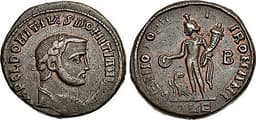
Domitius Domitianus
General · Ancient
45.1Total
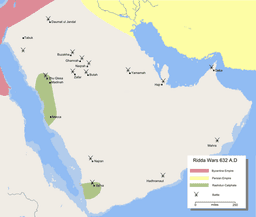
Tulayha ibn Khuwaylid
General · Ancient
43.1Total
Basic Information
Born
270
-570
Died
297
—
Era
Ancient
Ancient
Nationality
Egypt
Banu Asad
Occupation
General
General
Civilization
Western
Middle Eastern
Score Comparison
Military (10%)
47.5
25.0
Political (20%)
35.0
35.0
Influence (20%)
45.5
44.8
Legacy (20%)
34.2
35.8
Leadership (15%)
68.0
68.0
Strategy (15%)
50.0
50.0
TOTAL
45.1
43.1
Domitius Domitianus — Complete Timeline
297 AD
Besieged by Diocletian in AlexandriaWar◆ Major
Emperor Diocletian personally led a campaign to suppress the rebellion, besieging Domitius Domitianus in Alexandria. The siege lasted several months, causing severe hardship for the city's population.
SiegeAlexandriaDiocletian
Impact: regionaldestructive
Proclaimed emperor in EgyptPolitical Action◆ Major
Domitius Domitianus was declared emperor in Alexandria, leading a rebellion against Emperor Diocletian. The revolt exploited local discontent with Roman tax reforms and Diocletian's administrative reorganization.
UsurpationEgyptDiocletian
Impact: regional
Death during the siegeOther◆ Major
Domitius Domitianus died during Diocletian's siege of Alexandria, likely from illness or in battle. His death ended his brief usurpation, though his corrector Aurelius Achilleus continued the revolt for several more months.
DeathUsurpationEgypt
Impact: regionaltragic
Tulayha ibn Khuwaylid — Complete Timeline
636 BC
Participated in the Battle of al-QadisiyyahWar◆ Major
Tulayha fought as a Muslim commander at the Battle of al-Qadisiyyah, a decisive victory against the Sassanid Empire. His participation demonstrated his integration into the Islamic state after his earlier rebellion.
Muslim ConquestsBattleSassanid Empire
Impact: globalconstructive
632 BC
Defeated at the Battle of BuzakhaWar◆ Major
Tulayha's forces were defeated by the Muslim army under Khalid ibn al-Walid at Buzakha. Tulayha fled to Syria, abandoning his followers. This defeat marked the collapse of his prophetic movement.
Ridda WarsBattleDefeat
Impact: regionaltragic
630 BC
Converted to Islam and became a generalPolitical Action
After the Ridda Wars, Tulayha repented and converted to Islam. He later served as a commander in the Muslim conquests, participating in battles against the Sassanid Empire and the Byzantine Empire.
ConversionMuslim ConquestsGeneral
Impact: regionalconstructive
610 BC
Proclaimed prophethood among Banu AsadPolitical Action◆ Major
Tulayha ibn Khuwaylid declared himself a prophet, gaining followers among the Banu Asad tribe. He led a rebellion against the authority of the caliphate during the Ridda Wars, posing a significant threat to Medina.
Ridda WarsFalse ProphetBanu Asad
Impact: regionaldestructive
This comparison has not been analyzed yet.
One-time AI generation (~1 minute). Scores and timeline are already available below.
Rankings
🥇
Domitius DomitianusLeader
Mil: 47.5Pol: 35.0Inf: 45.5
45.1
🥈
Tulayha ibn Khuwaylid
Mil: 25.0Pol: 35.0Inf: 44.8
43.1
+2.0 behind
How This Comparison Works
Algorithm
Each figure is scored on 6 dimensions (0—100 scale) based on structured historical data: Military (10%), Political (20%), Influence (20%), Legacy (20%), Leadership (15%), Strategy (15%). The weighted total produces the final ranking.
Data Sources
Scores are computed from structured sub-indicators in the database. Scale factors adjust for era (Ancient ×0.85, Modern ×1.0) and civilization size (Eastern ×1.05, Other ×0.80) to account for differences in population and military scale.
Maximum 3 Figures
Comparisons are limited to 2—3 figures to ensure readability and statistical meaningfulness.
Error Margins
±5 points per dimension — Sub-scores are derived from historical records with inherent uncertainty. Two figures within 5 points on a dimension should be considered roughly equivalent in that area.
Total Score Accuracy
±3 points overall — The weighted combination of 6 dimensions produces a total score with approximately ±3 points of uncertainty. Differences of less than 3 points are not statistically significant— the figures are effectively tied.
Known Limitations
- Historical records are incomplete and uneven across civilizations
- Figures from oral-tradition societies may be underrepresented
- Occupation labels can misclassify multi-role figures
- Scores measure capability and impact, not moral character
- Quantitative scoring is a comparison tool, not absolute truth
Capability Radar
Military (10%) — Battles & Warfare
Battles
15
25
Win Rate
10
30
Expansion
5
10
Political (20%) — Governance & Reform
Reform
5
5
Diplomacy
10
20
Economy
5
5
Influence (20%) — Cultural & Global Reach
Cultural
5
10
Global
5
5
Legacy (20%) — Historical Impact
Historical
10
15
Longevity
5
10
Leadership (15%) — Power & Stability
Tenure
20
15
Stability
5
10
Strategy (15%) — Tactics & Innovation
Strategy
15
15
Tactics
20
20
Reform
5
5
Similar Comparisons
Comments & Discussion
No comments yet. Be the first to share your thoughts!