Loading...
Dominique de Villepin vs Yingluck Shinawatra
Dominique de Villepin leads by 7.6 pts · 2 figures compared
…

Dominique de Villepin
Politician · Modern
56.0Total
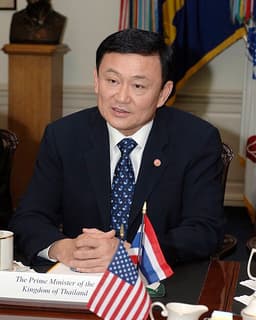
Yingluck Shinawatra
Politician · Modern
48.4Total
Basic Information
Born
1953
1967
Died
—
—
Era
Modern
Modern
Nationality
France
Thailand
Occupation
Politician
Politician
Civilization
Western
Eastern
Score Comparison
Military (10%)
50.0
11.3
Political (20%)
68.0
68.0
Influence (20%)
60.0
53.3
Legacy (20%)
45.8
42.5
Leadership (15%)
62.2
65.7
Strategy (15%)
50.0
33.1
TOTAL
56.0
48.4
Dominique de Villepin — Complete Timeline
2003 AD
Opposition to the Iraq War at the UN Security CouncilPolitical Action
As Foreign Minister, Villepin delivered a powerful speech at the UN Security Council on February 14, 2003, opposing the US-led invasion of Iraq. He argued for continued inspections and diplomacy, gaining international attention and solidifying France's stance against the war, which strained US-French relations.
Iraq WarUNDiplomacy
Impact: globalconstructive
2005 AD
Appointment as Prime MinisterPolitical Action◆ Major
President Jacques Chirac appointed Villepin as Prime Minister in May 2005, succeeding Jean-Pierre Raffarin. Villepin, a career diplomat and former Foreign Minister, took office during a period of social unrest and economic stagnation, facing challenges such as the 2005 riots and high unemployment.
Fifth RepublicGovernmentAppointment
Impact: national
2006 AD
First Employment Contract (CPE) CrisisReform◆ Major
Villepin's government proposed the First Employment Contract (CPE), a labor reform allowing easier dismissal of workers under 26. The plan sparked massive student protests and strikes across France, forcing the government to withdraw the law in April 2006, a major political defeat for Villepin.
Labor ReformProtestsCPE
Impact: nationaldestructive
Clearstream Affair and Legal TroublesPolitical Action◆ Major
Villepin became embroiled in the Clearstream affair, accused of involvement in a defamation campaign against Nicolas Sarkozy. He was investigated and later tried, but acquitted in 2010. The scandal damaged his political reputation and ended his ambitions for the presidency.
ScandalClearstreamLegal
Impact: nationaldestructive
Yingluck Shinawatra — Complete Timeline
2011 AD
Rice-pledging scheme implementationReform◆ Major
Yingluck's government launched a rice-pledging program that bought rice from farmers at above-market prices. The scheme initially boosted rural incomes but led to massive budget losses and rice stockpiles, contributing to economic strain.
AgricultureEconomic PolicyThailand
Impact: national
Election as first female Prime MinisterPolitical Action◆ Major
Yingluck Shinawatra led the Pheu Thai Party to victory in the 2011 general election, becoming Thailand's first female Prime Minister. Her campaign focused on reconciliation and populist policies similar to her brother Thaksin's.
ElectionGenderThailand
Impact: nationalconstructive
2014 AD
Constitutional Court removal from officePolitical Action◆ Major
Thailand's Constitutional Court ruled that Yingluck's 2011 transfer of the National Security Council chief was unconstitutional, forcing her to step down as Prime Minister. The decision was seen as politically motivated by her opponents.
LegalPolitical CrisisThailand
Impact: nationaldestructive
2015 AD
Impeachment and ban from politicsPolitical Action◆ Major
The military-appointed National Legislative Assembly impeached Yingluck for negligence in the rice-pledging scheme, banning her from politics for five years. She was later convicted in 2017 for mishandling the program.
ImpeachmentCorruptionThailand
Impact: nationaldestructive
Expert Analysis
Origins
Dominique de Villepin was born on November 14, 1953, in Rabat, Morocco, to a French diplomat father, Xavier de Villepin, and a mother from a military family. He studied at the elite École Nationale d'Administration (ENA), graduating in 1980, which placed him in the upper echelons of French bureaucracy. His early career as a diplomat included postings in Washington and New Delhi, shaping his international outlook. In contrast, Yingluck Shinawatra was born on June 21, 1967, in San Kamphaeng, Chiang Mai, Thailand, into a wealthy political family. She is the younger sister of former Prime Minister Thaksin Shinawatra. Yingluck earned a BA in political science from Chiang Mai University and an MA in public administration from Kentucky State University. She worked in business, managing telecommunications and real estate firms, before entering politics.
Rise to Power
Villepin rose through diplomatic ranks, becoming Secretary-General of the French Foreign Ministry in 1998. His defining moment came as Foreign Minister under President Jacques Chirac in 2002. On February 14, 2003, Villepin delivered a powerful speech at the UN Security Council opposing the US-led invasion of Iraq, arguing for continued inspections. This stance boosted his popularity in France and abroad. In May 2005, Chirac appointed him Prime Minister, succeeding Jean-Pierre Raffarin. Yingluck's rise was accelerated by her brother Thaksin's popularity. After Thaksin's 2006 coup ouster, the Pheu Thai Party recruited her as a candidate in the 2011 general election. Running on a platform of reconciliation and populist policies, she won a landslide victory, becoming Thailand's first female Prime Minister on August 5, 2011.
Leadership & Governance
Villepin's leadership style was aristocratic and confrontational. As Prime Minister (2005-2007), he pursued a 'social Gaullist' agenda, focusing on economic reforms. His government proposed the First Employment Contract (CPE), a labor reform allowing easier dismissal of workers under 26. The CPE sparked massive student protests and strikes in 2006, forcing Villepin to withdraw the measure. His governance scored 62.2 in leadership, reflecting his diplomatic skills but domestic inflexibility. Yingluck adopted a more populist approach, continuing Thaksin's policies. Her government launched the rice-pledging scheme in 2011, buying rice from farmers at 50% above market rates, initially boosting rural incomes. However, the scheme caused massive budget losses (estimated $8-15 billion) and led to corruption. Her leadership score of 65.7 indicates better crisis management, but she faced intense political opposition from royalist and military elites.
Triumph & Tragedy
Villepin's greatest triumph was his UN speech against the Iraq War, which cemented his reputation as a principled diplomat. His political score of 68.0 reflects his diplomatic influence. However, his tragedy was the CPE crisis, which crippled his government and led to his political decline. He also became embroiled in the Clearstream affair, accused of defaming Nicolas Sarkozy. Although acquitted, the scandal tarnished his legacy. Yingluck's triumph was becoming Thailand's first female PM and winning the 2011 election with a large majority. Her influence score of 53.3 shows her broad appeal. Her tragedy was the rice-pledging scheme's failure, leading to her removal by the Constitutional Court in 2014 for abuse of power. She later faced impeachment and a five-year political ban. The military coup in 2014 ended her government.
Character & Destiny
Villepin was known for his eloquence and aristocratic demeanor, often seen as a 'poet-politician.' He scored 50.0 in strategy, indicating a lack of tactical flexibility. His character led him to confront crises head-on but without pragmatism. Yingluck was perceived as calm and charismatic but reliant on her brother's network. Her strategy score of 33.1 is low, reflecting poor economic management and vulnerability to legal challenges. Both were shaped by family legacies: Villepin by his diplomat father, Yingluck by her brother Thaksin. Their fates were sealed by key missteps: Villepin's CPE, Yingluck's rice scheme.
Legacy
Villepin's legacy is mixed. He is remembered for his anti-Iraq War stance, which influenced French foreign policy, but his domestic reforms failed. His legacy score of 45.8 reflects limited lasting impact. Yingluck's legacy is tied to her brother's movement. She expanded populist policies but her government's corruption and economic mismanagement weakened Thailand's democracy. Her legacy score of 42.5 is slightly lower. Neither left enduring institutions, but Villepin's diplomatic moment had global resonance.
Conclusion
Dominique de Villepin had greater impact due to his influential role in international diplomacy. His UN speech shaped public opinion against the Iraq War and highlighted France's global role. Yingluck's domestic focus and failed rice scheme led to political instability. While both scored similarly in politics (68.0 each), Villepin's strategic influence (60.0) and leadership (62.2) edge out Yingluck's 53.3 and 65.7. Overall, Villepin's total score of 56.0 exceeds Yingluck's 48.4 by 7.6 points. He took a principled stand on a global issue, whereas Yingluck's legacy is marred by a failed economic policy and a coup. Thus, Villepin's impact, though narrower, was more significant.
Rankings
🥇
Dominique de VillepinLeader
Mil: 50.0Pol: 68.0Inf: 60.0
56.0
🥈
Yingluck Shinawatra
Mil: 11.3Pol: 68.0Inf: 53.3
48.4
+7.6 behind
How This Comparison Works
Algorithm
Each figure is scored on 6 dimensions (0—100 scale) based on structured historical data: Military (10%), Political (20%), Influence (20%), Legacy (20%), Leadership (15%), Strategy (15%). The weighted total produces the final ranking.
Data Sources
Scores are computed from structured sub-indicators in the database. Scale factors adjust for era (Ancient ×0.85, Modern ×1.0) and civilization size (Eastern ×1.05, Other ×0.80) to account for differences in population and military scale.
Maximum 3 Figures
Comparisons are limited to 2—3 figures to ensure readability and statistical meaningfulness.
Error Margins
±5 points per dimension — Sub-scores are derived from historical records with inherent uncertainty. Two figures within 5 points on a dimension should be considered roughly equivalent in that area.
Total Score Accuracy
±3 points overall — The weighted combination of 6 dimensions produces a total score with approximately ±3 points of uncertainty. Differences of less than 3 points are not statistically significant— the figures are effectively tied.
Known Limitations
- Historical records are incomplete and uneven across civilizations
- Figures from oral-tradition societies may be underrepresented
- Occupation labels can misclassify multi-role figures
- Scores measure capability and impact, not moral character
- Quantitative scoring is a comparison tool, not absolute truth
Capability Radar
Military (10%) — Battles & Warfare
Battles
27
17
Win Rate
31
15
Expansion
35
22
Political (20%) — Governance & Reform
Reform
40
40
Diplomacy
65
50
Economy
35
45
Influence (20%) — Cultural & Global Reach
Cultural
20
30
Global
50
30
Legacy (20%) — Historical Impact
Historical
45
35
Longevity
20
20
Leadership (15%) — Power & Stability
Tenure
30
45
Stability
30
20
Strategy (15%) — Tactics & Innovation
Strategy
39
23
Tactics
42
25
Reform
46
30
Similar Comparisons
Comments & Discussion
No comments yet. Be the first to share your thoughts!