Loading...
Djer vs Julius Caesar
Julius Caesar leads by 33.2 pts · 2 figures compared
…
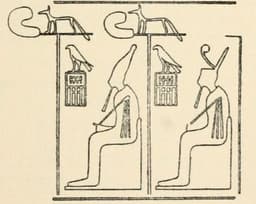
Djer
Emperor · Ancient
49.6Total

Julius Caesar
General · Ancient
82.8Total
Basic Information
Born
-3050
-100
Died
-3000
-44
Era
Ancient
Ancient
Nationality
Early Egypt
Roman Republic
Occupation
Emperor
General
Civilization
Middle Eastern
Western
Score Comparison
Military (10%)
45.0
88.0
Political (20%)
39.4
78.0
Influence (20%)
49.4
85.0
Legacy (20%)
46.7
82.0
Leadership (15%)
72.0
80.0
Strategy (15%)
43.7
85.0
TOTAL
49.6
82.8
Djer — Complete Timeline
3050 BC
Conducted Military Campaigns in the SinaiWar◆ Major
Djer led military expeditions into the Sinai Peninsula to secure turquoise and copper mines. These campaigns expanded Egyptian control over valuable mineral resources and established trade routes.
SinaiMiningMilitary
Impact: regional
Reigned for Over 50 YearsPolitical Action◆ Major
Djer ruled for approximately 50-54 years, the longest reign of the First Dynasty. His lengthy rule allowed for consolidation of the early state, expansion of trade networks, and development of administrative systems.
Long ReignConsolidationAdministration
Impact: regionalconstructive
Built the Royal Tomb at AbydosCultural◆ Major
Djer constructed a large tomb at Abydos, surrounded by subsidiary burials of servants and officials. The tomb contained rich grave goods, including ivory and stone vessels, indicating the wealth of the early dynasty.
TombAbydosBurial
Established Trade with ByblosCultural◆ Major
Djer initiated or expanded trade relations with Byblos (in modern Lebanon), importing cedar wood, resins, and other goods. This trade connection became a hallmark of Egyptian foreign relations for centuries.
TradeByblosCedar
Impact: regionalconstructive
Julius Caesar — Complete Timeline
58 BC
Gallic WarsWar◆ Major
Caesar, as proconsul of Gaul, launched a series of campaigns that conquered all of Gaul (modern France, Belgium, and parts of Switzerland). He fought numerous battles, including against the Helvetii, the Belgae, and the Gallic chieftain Vercingetorix. The wars brought immense wealth and a loyal army to Caesar.
Gallic WarsConquestRoman Expansion
Impact: regional
49 BC
Crossing the RubiconPolitical Action◆ Major
Caesar led Legio XIII across the Rubicon River into Italy, defying the Roman Senate's order to disband his army. This act triggered a civil war against Pompey and the Optimates, ultimately leading to Caesar's dictatorship and the end of the Roman Republic.
Roman Civil WarEnd of RepublicPower Struggle
Impact: global
48 BC
Battle of PharsalusWar◆ Major
Caesar's outnumbered army defeated the larger forces of Pompey the Great at Pharsalus in Greece. Caesar's tactical use of a reserve line to counter Pompey's cavalry charge proved decisive. Pompey fled to Egypt, where he was assassinated, leaving Caesar as the undisputed master of the Roman world.
Roman Civil WarBattleDecisive Victory
Impact: regional
44 BC
Appointment as Dictator for LifePolitical Action◆ Major
The Roman Senate appointed Caesar dictator perpetuo (dictator for life), granting him unprecedented personal power. This move concentrated military, legislative, and judicial authority in one person, effectively ending the Roman Republic's traditional system of checks and balances and alarming many senators.
DictatorshipEnd of RepublicPower Consolidation
Impact: regionaldestructive
Assassination on the Ides of MarchPolitical Action◆ Major
A group of Roman senators, led by Marcus Junius Brutus and Gaius Cassius Longinus, stabbed Caesar to death at a meeting of the Senate in the Theatre of Pompey. The assassination was intended to restore the Republic, but instead triggered another civil war that led to the rise of the Roman Empire.
AssassinationRoman PoliticsEnd of Republic
Impact: globaldestructive
Expert Analysis
djer-vs-julius-caesar
The Eternal Divide: Caesar and Djer
On a March morning in 44 BCE, Julius Caesar fell beneath the daggers of his senators, his blood pooling on the floor of the Pompeian Theatre. Across the Mediterranean and three thousand years earlier, another ruler—Djer, the third pharaoh of Egypt’s First Dynasty—died in his bed after a reign of more than half a century, his body entombed at Abydos amid the bones of servants who followed him into the afterlife. Both men held supreme power. Both shaped their civilizations. Yet one became a name that echoes through every classroom, while the other remains a shadow in the sand. What separates the conqueror of Gaul from the king of the Nile? The answer lies not in their deeds alone, but in the worlds they inherited and the tools they wielded.
Origins
Caesar was born into the twilight of the Roman Republic, a world of ruthless ambition, senatorial intrigue, and a political system buckling under the weight of empire. His family, the Julii, claimed descent from the goddess Venus—a pedigree that mattered in a culture obsessed with ancestry. But they were not rich, and Caesar grew up in a Rome where debt and patronage defined survival. He learned early that glory was currency, and that the path to power ran through the army, the forum, and the hearts of the people.
Djer, by contrast, emerged from the dawn of recorded history. Around 3050 BCE, Egypt was still forging itself—a narrow ribbon of green along the Nile, recently unified under the first pharaohs. Djer was the third king of Dynasty I, inheriting a state that was less an empire than a divine experiment. His name, inscribed in hieroglyphs on ivory tags and stone vessels, meant “Horus Who Succors”—a title that tied his authority directly to the falcon god. In Djer’s world, the king was not a politician but a living deity, responsible for the Nile’s flood and the sun’s rise. The very concept of political opposition did not exist; dissent was blasphemy.
Rise to Power
Caesar’s ascent was a masterpiece of calculated risk. He borrowed fortunes to fund games and bribes, climbed the ladder of Roman magistracies, and forged the First Triumvirate with Pompey and Crassus. His appointment as governor of Gaul in 58 BCE gave him an army—and a war. Over eight years, he conquered a territory larger than Italy, writing his own commentaries to burnish his legend. When the Senate ordered him to disband his legions, he crossed the Rubicon River in 49 BCE, igniting a civil war that ended with him as dictator for life. Every step was a gamble, every victory a debt to fortune.
Djer’s path was simpler and stranger. He did not campaign for office or court the masses. He was born into the Horus throne. His “rise” was the slow accumulation of years—a reign of fifty to fifty-four years, the longest of the First Dynasty. In a time when life expectancy rarely touched forty, Djer’s endurance was itself a kind of power. He did not need to seize authority; he only had to outlive his rivals.
Leadership & Governance
Caesar governed as a revolutionary. He reformed the calendar, granted citizenship to provincials, launched public works, and packed the Senate with his supporters. His military genius was tactical and strategic: at Alesia in 52 BCE, he besieged a Gallic army while simultaneously building fortifications to repel a relief force, a feat of engineering and nerve. Yet his rule was a balancing act. He centralized power but never fully dismantled the Republic’s institutions, leaving a hybrid system that collapsed into Augustus’s empire.
Djer ruled as a priest-king. His campaigns into the Sinai secured turquoise and copper mines—resources that meant wealth and divine favor. He built a royal tomb at Abydos, surrounded by subsidiary burials of servants and officials, a practice that reflected a worldview where the king’s afterlife required a court of the dead. He established trade with Byblos, importing cedar wood for temple doors and shipbuilding. There were no reforms, no constitutions, no speeches to the masses. His governance was ritual, his conquests were raids, and his legacy was measured in the endurance of the state itself.
Triumph & Tragedy
Caesar’s greatest triumph was his own myth. He conquered Gaul, defeated Pompey, and stood at the summit of the world. His tragedy was that the Republic he sought to master could not contain him. The Ides of March—44 BCE—was the moment when the old order struck back. Sixty senators stabbed him, and his last words, according to tradition, were “Et tu, Brute?” The assassination did not save the Republic; it plunged Rome into another civil war.
Djer’s triumphs were quieter. His long reign stabilized the dynasty. His Sinai campaigns expanded Egypt’s reach. His tomb, with its hundreds of subsidiary burials, testified to a king who commanded loyalty beyond death. His tragedy is that we know almost nothing of his personality. No speeches survive, no letters, no anecdotes. He is a name on a seal, a silhouette in a mastaba. The greatest tragedy for a ruler is not betrayal—it is obscurity.
Character & Destiny
Caesar was restless, audacious, and calculating. He slept with enemy queens and pardoned his assassins’ co-conspirators. His personality was a weapon: charm, cruelty, and clemency deployed in equal measure. He believed in his own star—and that belief drove him to the Senate floor on the day of his death. He could have stayed home; he chose to walk into the trap.
Djer is a cipher. We can infer that he was patient, enduring, and deeply traditional. A king who reigned for five decades in the ancient world must have been cautious, adaptable, or simply lucky. His character is written not in words but in the weight of stone and the length of years. Destiny for Caesar was a drama; for Djer, it was a cycle.
Legacy
Caesar’s legacy is the Western world. His name became a title: Kaiser, Tsar. His reforms outlived him; the Julian calendar lasted 1,600 years. His writings shaped military strategy for centuries. He is the archetype of the ambitious conqueror, the man who broke the Republic and made the Empire.
Djer’s legacy is Egypt itself. His reign helped consolidate the institutions of pharaonic rule—the divine kingship, the royal tomb, the trade networks—that would endure for three thousand years. He is remembered in the Abydos king lists, carved in stone by later pharaohs who honored his name. But to the world beyond Egyptology, he is a footnote. The difference is not in worth but in record: Caesar had Plutarch and Shakespeare; Djer had a tomb and a seal.
Conclusion
Standing at the edge of history, we see two men who held absolute power in their hands. Caesar’s hand was bloodied and restless, always reaching for more. Djer’s hand was steady, holding the crook and flail of a god. One changed the world in a decade; the other held it still for half a century. Perhaps the deepest lesson is this: to be remembered, you must not only act but be recorded. Caesar had writers; Djer had only scribes. And the difference between a writer and a scribe is the difference between immortality and silence.
Rankings
🥇
Julius CaesarLeader
Mil: 88.0Pol: 78.0Inf: 85.0
82.8
🥈
Djer
Mil: 45.0Pol: 39.4Inf: 49.4
49.6
+33.2 behind
How This Comparison Works
Algorithm
Each figure is scored on 6 dimensions (0—100 scale) based on structured historical data: Military (10%), Political (20%), Influence (20%), Legacy (20%), Leadership (15%), Strategy (15%). The weighted total produces the final ranking.
Data Sources
Scores are computed from structured sub-indicators in the database. Scale factors adjust for era (Ancient ×0.85, Modern ×1.0) and civilization size (Eastern ×1.05, Other ×0.80) to account for differences in population and military scale.
Maximum 3 Figures
Comparisons are limited to 2—3 figures to ensure readability and statistical meaningfulness.
Error Margins
±5 points per dimension — Sub-scores are derived from historical records with inherent uncertainty. Two figures within 5 points on a dimension should be considered roughly equivalent in that area.
Total Score Accuracy
±3 points overall — The weighted combination of 6 dimensions produces a total score with approximately ±3 points of uncertainty. Differences of less than 3 points are not statistically significant— the figures are effectively tied.
Known Limitations
- Historical records are incomplete and uneven across civilizations
- Figures from oral-tradition societies may be underrepresented
- Occupation labels can misclassify multi-role figures
- Scores measure capability and impact, not moral character
- Quantitative scoring is a comparison tool, not absolute truth
Capability Radar
Military (10%) — Battles & Warfare
Battles
20
95
Win Rate
25
92
Expansion
30
97
Political (20%) — Governance & Reform
Reform
40
90
Diplomacy
30
85
Economy
35
82
Influence (20%) — Cultural & Global Reach
Cultural
35
88
Global
20
94
Legacy (20%) — Historical Impact
Historical
40
95
Longevity
50
96
Leadership (15%) — Power & Stability
Tenure
70
75
Stability
60
60
Strategy (15%) — Tactics & Innovation
Strategy
20
94
Tactics
20
96
Reform
15
88
Similar Comparisons
Comments & Discussion
No comments yet. Be the first to share your thoughts!