Loading...
This comparison has not been analyzed yet.
One-time AI generation (~1 minute). Scores and timeline are already available below.
Ding Richang vs Klemens Metternich
Klemens Metternich leads by 16.3 pts · 2 figures compared
…

Ding Richang
Politician · Modern
50.8Total
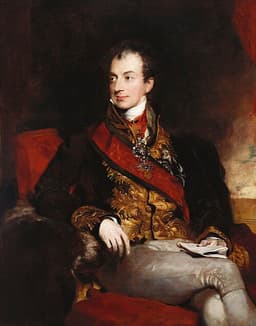
Klemens Metternich
Politician · Modern
67.1Total
Basic Information
Born
1823
1773
Died
1882
1859
Era
Modern
Modern
Nationality
China
Austria
Occupation
Politician
Politician
Civilization
Eastern
Western
Score Comparison
Military (10%)
35.0
50.0
Political (20%)
45.0
70.3
Influence (20%)
50.2
75.0
Legacy (20%)
45.0
70.0
Leadership (15%)
72.0
75.0
Strategy (15%)
60.0
40.5
TOTAL
50.8
67.1
Ding Richang — Complete Timeline
1865 AD
Established the Jiangnan ArsenalInvention◆ Major
Ding Richang, as a Qing official, oversaw the establishment of the Jiangnan Arsenal in Shanghai. This facility produced modern weapons and machinery, becoming a key center of the Self-Strengthening Movement and China's early industrialization.
Self-Strengthening MovementIndustrializationMilitary Modernization
Impact: nationalconstructive
1867 AD
Promoted Western Learning and TranslationCultural
Ding Richang supported the translation of Western scientific and technical texts at the Jiangnan Arsenal. He facilitated the hiring of foreign experts and the training of Chinese engineers, advancing technological knowledge in China.
TranslationEducationWesternization
Impact: nationalconstructive
1875 AD
Served as Governor of Jiangsu ProvincePolitical Action
Ding Richang was appointed Governor of Jiangsu, where he implemented administrative reforms and continued to support industrial projects. His tenure focused on strengthening provincial governance and economic development.
GovernorshipAdministrative Reform
Impact: regionalconstructive
Klemens Metternich — Complete Timeline
1815 AD
Congress of ViennaPolitical Action
Metternich chaired the Congress of Vienna, which redrew European borders after Napoleon's defeat. He advocated for the principle of legitimacy and balance of power, establishing a conservative order that lasted decades.
Congress of ViennaDiplomacyRestoration
Impact: globalconstructive
Formation of the Holy AlliancePolitical Action◆ Major
Metternich helped create the Holy Alliance between Austria, Prussia, and Russia. The alliance aimed to suppress revolutionary movements and maintain monarchical rule across Europe.
AllianceConservatismRestoration
Impact: globalconstructive
1819 AD
Carlsbad DecreesPolitical Action◆ Major
Metternich orchestrated the Carlsbad Decrees, which imposed censorship on universities and press in the German Confederation. The decrees suppressed liberal and nationalist movements, reinforcing conservative control.
RepressionCensorshipGerman Confederation
Impact: regionaldestructive
1820 AD
Congress of TroppauPolitical Action◆ Major
Metternich convened the Congress of Troppau to address revolutions in Naples and Spain. He secured the Troppau Protocol, which authorized Austrian intervention to suppress liberal uprisings in Italy.
CongressInterventionRevolutions
Impact: regionaldestructive
1848 AD
Revolutions of 1848Political Action
Metternich's conservative system collapsed during the Revolutions of 1848. He was forced to resign as Chancellor and flee to England, ending his decades-long dominance of European diplomacy.
RevolutionResignationExile
Impact: globaltragic
This comparison has not been analyzed yet.
One-time AI generation (~1 minute). Scores and timeline are already available below.
Rankings
🥇
Klemens MetternichLeader
Mil: 50.0Pol: 70.3Inf: 75.0
67.1
🥈
Ding Richang
Mil: 35.0Pol: 45.0Inf: 50.2
50.8
+16.3 behind
How This Comparison Works
Algorithm
Each figure is scored on 6 dimensions (0—100 scale) based on structured historical data: Military (10%), Political (20%), Influence (20%), Legacy (20%), Leadership (15%), Strategy (15%). The weighted total produces the final ranking.
Data Sources
Scores are computed from structured sub-indicators in the database. Scale factors adjust for era (Ancient ×0.85, Modern ×1.0) and civilization size (Eastern ×1.05, Other ×0.80) to account for differences in population and military scale.
Maximum 3 Figures
Comparisons are limited to 2—3 figures to ensure readability and statistical meaningfulness.
Error Margins
±5 points per dimension — Sub-scores are derived from historical records with inherent uncertainty. Two figures within 5 points on a dimension should be considered roughly equivalent in that area.
Total Score Accuracy
±3 points overall — The weighted combination of 6 dimensions produces a total score with approximately ±3 points of uncertainty. Differences of less than 3 points are not statistically significant— the figures are effectively tied.
Known Limitations
- Historical records are incomplete and uneven across civilizations
- Figures from oral-tradition societies may be underrepresented
- Occupation labels can misclassify multi-role figures
- Scores measure capability and impact, not moral character
- Quantitative scoring is a comparison tool, not absolute truth
Capability Radar
Military (10%) — Battles & Warfare
Battles
0
28
Win Rate
0
32
Expansion
10
35
Political (20%) — Governance & Reform
Reform
65
70
Diplomacy
30
95
Economy
55
60
Influence (20%) — Cultural & Global Reach
Cultural
20
60
Global
20
80
Legacy (20%) — Historical Impact
Historical
40
85
Longevity
30
75
Leadership (15%) — Power & Stability
Tenure
40
85
Stability
40
80
Strategy (15%) — Tactics & Innovation
Strategy
0
37
Tactics
0
38
Reform
70
42
Similar Comparisons
Comments & Discussion
No comments yet. Be the first to share your thoughts!