Loading...
This comparison has not been analyzed yet.
One-time AI generation (~1 minute). Scores and timeline are already available below.
Dileepa vs Ur-Nammu
Ur-Nammu leads by 14.5 pts · 2 figures compared
…

Dileepa
Emperor · Ancient
42.6Total
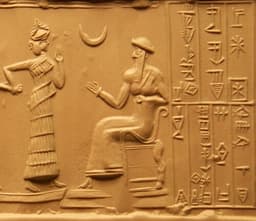
Ur-Nammu
Emperor · Ancient
57.1Total
Basic Information
Born
-1500
-2112
Died
-1450
-2095
Era
Ancient
Ancient
Nationality
Vedic India
Sumer
Occupation
Emperor
Emperor
Civilization
Indian
Middle Eastern
Score Comparison
Military (10%)
35.4
50.0
Political (20%)
26.4
59.3
Influence (20%)
48.6
56.7
Legacy (20%)
46.7
52.0
Leadership (15%)
48.4
72.0
Strategy (15%)
40.5
52.5
TOTAL
42.6
57.1
Dileepa — Complete Timeline
1500 BC
Ancestor of RamaPolitical Action
Dileepa is listed in the solar dynasty genealogy as a direct ancestor of Rama, the hero of the Ramayana. His pious rule is cited as a model for later kings in the dynasty.
Solar DynastyRamayana LineagePious King
Impact: regionalconstructive
Performance of Nandini Cow RitualCultural
According to the Raghuva
Divine CowDevotional ActHeir Birth
constructive
Ur-Nammu — Complete Timeline
2112 BC
Defeated the Gutians and expelled them from SumerWar◆ Major
Ur-Nammu led a military campaign against the Gutian rulers who had dominated Sumer for decades. He defeated them and drove them out of the region, restoring Sumerian independence and establishing his dynasty.
WarGutiansIndependence
Impact: regional
Founded the Third Dynasty of UrPolitical Action◆ Major
Ur-Nammu overthrew the Gutian rulers and established the Third Dynasty of Ur, reuniting Sumer under a single rule. This marked the beginning of the Ur III period, a time of centralized administration and cultural revival in Mesopotamia.
DynastySumerUnification
Impact: regionalconstructive
2100 BC
Promulgated the Code of Ur-NammuReform
Ur-Nammu issued the oldest known written legal code, predating Hammurabi's code by three centuries. The code established laws covering property, family, and criminal justice, with penalties including fines and compensation rather than physical punishment.
LawCodeJustice
Impact: globalconstructive
Built the Great Ziggurat of Ur (initial construction)Cultural◆ Major
Ur-Nammu began construction of the Great Ziggurat of Ur, a massive stepped temple dedicated to the moon god Nanna. The project was later completed by his son Shulgi and became one of the most iconic structures of ancient Mesopotamia.
ArchitectureZigguratReligion
Impact: regionalconstructive
This comparison has not been analyzed yet.
One-time AI generation (~1 minute). Scores and timeline are already available below.
Rankings
🥇
Ur-NammuLeader
Mil: 50.0Pol: 59.3Inf: 56.7
57.1
🥈
Dileepa
Mil: 35.4Pol: 26.4Inf: 48.6
42.6
+14.5 behind
How This Comparison Works
Algorithm
Each figure is scored on 6 dimensions (0—100 scale) based on structured historical data: Military (10%), Political (20%), Influence (20%), Legacy (20%), Leadership (15%), Strategy (15%). The weighted total produces the final ranking.
Data Sources
Scores are computed from structured sub-indicators in the database. Scale factors adjust for era (Ancient ×0.85, Modern ×1.0) and civilization size (Eastern ×1.05, Other ×0.80) to account for differences in population and military scale.
Maximum 3 Figures
Comparisons are limited to 2—3 figures to ensure readability and statistical meaningfulness.
Error Margins
±5 points per dimension — Sub-scores are derived from historical records with inherent uncertainty. Two figures within 5 points on a dimension should be considered roughly equivalent in that area.
Total Score Accuracy
±3 points overall — The weighted combination of 6 dimensions produces a total score with approximately ±3 points of uncertainty. Differences of less than 3 points are not statistically significant— the figures are effectively tied.
Known Limitations
- Historical records are incomplete and uneven across civilizations
- Figures from oral-tradition societies may be underrepresented
- Occupation labels can misclassify multi-role figures
- Scores measure capability and impact, not moral character
- Quantitative scoring is a comparison tool, not absolute truth
Capability Radar
Military (10%) — Battles & Warfare
Battles
20
45
Win Rate
25
50
Expansion
25
55
Political (20%) — Governance & Reform
Reform
20
85
Diplomacy
20
55
Economy
20
70
Influence (20%) — Cultural & Global Reach
Cultural
30
70
Global
20
55
Legacy (20%) — Historical Impact
Historical
40
75
Longevity
50
70
Leadership (15%) — Power & Stability
Tenure
30
60
Stability
30
65
Strategy (15%) — Tactics & Innovation
Strategy
30
55
Tactics
36
40
Reform
34
60
Similar Comparisons
Comments & Discussion
No comments yet. Be the first to share your thoughts!