Loading...
Dil Naod vs Napoleon Bonaparte
Napoleon Bonaparte leads by 30.9 pts · 2 figures compared
…
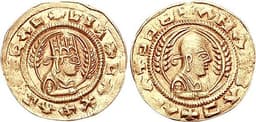
Dil Naod
Emperor · Medieval
40.0Total

Napoleon Bonaparte
General · Modern
70.9Total
Basic Information
Born
900
1769
Died
960
1821
Era
Medieval
Modern
Nationality
Ethiopia
France
Occupation
Emperor
General
Civilization
Other
Western
Score Comparison
Military (10%)
20.0
94.0
Political (20%)
35.0
72.0
Influence (20%)
47.1
40.0
Legacy (20%)
35.8
80.0
Leadership (15%)
49.9
78.0
Strategy (15%)
45.0
90.0
TOTAL
40.0
70.9
Dil Naod — Complete Timeline
960 AD
Overthrown by GuditPolitical Action
Dil Naod, the last king of the Aksumite dynasty, was overthrown by the non-Christian queen Gudit (Yodit). Her forces destroyed Aksumite churches and monuments, ending the Aksumite kingdom's rule and plunging the region into a period of chaos.
Aksumite fallGudit invasionDynastic end
Impact: regionaldestructive
Napoleon Bonaparte — Complete Timeline
1799 AD
Coup of 18 BrumaireOther◆ Major
Napoleon Bonaparte, with support from his brother Lucien and key political figures, overthrew the Directory in a bloodless coup. He established the Consulate with himself as First Consul, effectively becoming the ruler of France. This event ended the French Revolution's most unstable period.
French RevolutionCoupRise to Power
Impact: regional
1804 AD
Promulgation of the Napoleonic CodeOther◆ Major
Napoleon enacted the Civil Code of the French, known as the Napoleonic Code, a comprehensive set of laws that replaced the fragmented feudal legal systems. The code established legal equality, protected property rights, and secularized law. It became the basis for legal systems in many European and world countries.
Legal ReformNapoleonic CodeCivil Law
Impact: globalconstructive
1805 AD
Battle of AusterlitzWar◆ Major
Napoleon's Grande Arm
Napoleonic WarsBattleDecisive Victory
Impact: global
1812 AD
Invasion of RussiaWar◆ Major
Napoleon led the Grande Arm
Napoleonic WarsInvasionDisaster
Impact: globaldestructive
1815 AD
Battle of WaterlooWar◆ Major
Napoleon's French army was defeated by the combined forces of the Duke of Wellington's Anglo-Allied army and Gebhard Leberecht von Bl
Napoleonic WarsBattleFinal Defeat
Impact: globaldestructive
Expert Analysis
dil-naod-vs-napoleon-bonaparte
# The Emperor Who Remade the World, and the King Who Vanished into Legend
On a June morning in 1815, Napoleon Bonaparte stood on a muddy field near Waterloo, watching his Imperial Guard advance for the last time. Four thousand miles away and nine centuries earlier, another ruler—Dil Naod of Aksum—faced his own final hour, not on a battlefield of his choosing but in the chaos of a palace under siege. One man's fall shook the capitals of Europe; the other's disappearance erased an entire kingdom from the map. What separates a titan from a footnote is not merely luck, but the interplay of personality, opportunity, and the brutal logic of history itself.
Origins
Napoleon was born in 1769 on Corsica, an island that had passed from Italian to French control only months before. His family belonged to the minor nobility—poor enough to feel the sting of inferiority, proud enough to burn with ambition. The French Revolution, which erupted when he was twenty, shattered the old order and opened doors that would have remained sealed in any stable monarchy. A boy who spoke French with an Italian accent could now command armies, because talent mattered more than lineage.
Dil Naod, by contrast, was born around 900 into a world that had already begun to decay. He was the last king of the Aksumite dynasty, rulers who had once controlled a vast empire stretching from the Red Sea deep into the Horn of Africa. By his time, Aksum had lost its trade routes, its ports, and its prestige. He inherited not a rising power but a dying ember. His era offered him no revolution, no social upheaval to ride—only the slow, grinding erosion of a civilization that had outlived its own greatness.
Rise to Power
Napoleon’s ascent was a masterpiece of opportunism. In 1793, at the age of twenty-four, he recaptured the port of Toulon from British forces, earning promotion to brigadier general. By 1796, he commanded the Army of Italy and transformed a ragged force into a conquering machine. His Italian campaign of 1796-1797 was not just a military triumph but a political one: he negotiated his own treaties, created his own alliances, and returned to Paris as a hero who answered to no one.
Dil Naod’s rise was far simpler: he was born a king. The Aksumite monarchy was hereditary, and he assumed the throne in a court that had seen better centuries. There is no record of a youthful triumph, no brilliant campaign that launched his career. He did not seize power; he received it, along with all the accumulated weaknesses of his dynasty.
Leadership & Governance
Napoleon governed with a blend of iron discipline and radical reform. His Napoleonic Code, introduced in 1804, standardized French law, abolished feudal privileges, and established principles of meritocracy that influenced legal systems across Europe and beyond. He centralized administration, reformed education, and built infrastructure. His military genius—rated at 93.0 in strategy, 94.0 in military capability—was matched by a political acumen that scored 75.0, allowing him to turn conquered territories into allied states.
Dil Naod’s governance is nearly invisible to history. We know he presided over a Christian kingdom in an increasingly hostile region. His political score of 44.5 and leadership rating of 39.4 suggest a ruler unable to reverse his kingdom’s decline. The most significant decision of his reign may have been a failure: he could not prevent the rise of Gudit, a non-Christian queen who would destroy him.
Triumph & Tragedy
Napoleon’s greatest moment was Austerlitz in 1805, where he destroyed a combined Russian and Austrian army, forcing the Holy Roman Empire to dissolve. His worst was the invasion of Russia in 1812, where he lost over 400,000 men to winter, disease, and guerrilla warfare. He returned from exile in 1815, raised another army, and lost at Waterloo—a defeat so complete it ended not just his reign but an era.
Dil Naod’s greatest moment, if it can be called that, was simply holding his kingdom together for decades. His tragedy came in 960, when Gudit’s forces stormed his capital. The details are lost: we do not know if he fought, fled, or was executed. What we know is that the Aksumite dynasty ended with him, and Ethiopia fell into a dark age that lasted generations.
Character & Destiny
Napoleon was driven by an insatiable hunger for glory. “I live only for posterity,” he once said, and he meant it. His personality—arrogant, calculating, relentless—shaped every decision. He believed he could impose order on chaos, and for a time, he was right. But the same ambition that lifted him to power also drove him to overreach. He could not stop, because stopping would mean admitting he was merely mortal.
Dil Naod’s character is opaque. We have no diaries, no letters, no recorded speeches. But his fate suggests a ruler who was either too cautious or too weak to act decisively. In a world where survival required ruthlessness, he may have lacked the will to shed blood. His strategy score of 60.0 is modest, his military rating of 37.0 abysmal. He was, perhaps, a good man in an age that demanded a monster.
Legacy
Napoleon’s legacy is written across Europe: the legal codes, the administrative systems, the very idea of the modern nation-state. His influence score of 82.0 and legacy rating of 78.0 reflect a man who changed the world, for better and worse. He is remembered in statues, museums, and the nightmares of those who fear concentrated power.
Dil Naod’s legacy is a void. He is remembered, if at all, as the last king of a fallen dynasty. His influence score of 59.5 and legacy of 44.9 suggest a ruler who failed to leave a mark. Yet his story matters precisely because it is so common: most rulers do not remake the world. They are swept away by forces they cannot control, and their names fade into the silence of forgotten centuries.
Conclusion
Standing at the end of their stories, we see two men who faced the same fundamental challenge: how to hold power in a world that resists it. Napoleon answered with fire and genius, reshaping reality to fit his will. Dil Naod answered with endurance, holding onto what remained until he had nothing left. One became a legend; the other became a name in a chronicle. The difference was not just talent or luck, but the terrifying truth that history belongs to those who are willing to destroy everything—including themselves—in pursuit of immortality.
Rankings
🥇
Napoleon BonaparteLeader
Mil: 94.0Pol: 72.0Inf: 40.0
70.9
🥈
Dil Naod
Mil: 20.0Pol: 35.0Inf: 47.1
40.0
+30.9 behind
How This Comparison Works
Algorithm
Each figure is scored on 6 dimensions (0—100 scale) based on structured historical data: Military (10%), Political (20%), Influence (20%), Legacy (20%), Leadership (15%), Strategy (15%). The weighted total produces the final ranking.
Data Sources
Scores are computed from structured sub-indicators in the database. Scale factors adjust for era (Ancient ×0.85, Modern ×1.0) and civilization size (Eastern ×1.05, Other ×0.80) to account for differences in population and military scale.
Maximum 3 Figures
Comparisons are limited to 2—3 figures to ensure readability and statistical meaningfulness.
Error Margins
±5 points per dimension — Sub-scores are derived from historical records with inherent uncertainty. Two figures within 5 points on a dimension should be considered roughly equivalent in that area.
Total Score Accuracy
±3 points overall — The weighted combination of 6 dimensions produces a total score with approximately ±3 points of uncertainty. Differences of less than 3 points are not statistically significant— the figures are effectively tied.
Known Limitations
- Historical records are incomplete and uneven across civilizations
- Figures from oral-tradition societies may be underrepresented
- Occupation labels can misclassify multi-role figures
- Scores measure capability and impact, not moral character
- Quantitative scoring is a comparison tool, not absolute truth
Capability Radar
Military (10%) — Battles & Warfare
Battles
5
95
Win Rate
5
90
Expansion
5
95
Political (20%) — Governance & Reform
Reform
5
95
Diplomacy
5
80
Economy
5
85
Influence (20%) — Cultural & Global Reach
Cultural
5
85
Global
5
90
Legacy (20%) — Historical Impact
Historical
10
95
Longevity
5
90
Leadership (15%) — Power & Stability
Tenure
10
85
Stability
5
70
Strategy (15%) — Tactics & Innovation
Strategy
5
95
Tactics
5
98
Reform
5
92
Similar Comparisons
Comments & Discussion
NAPOLEON'S SHADOW6/17/2026
Waterloo wasn't Napoleon's true defeat—his real failure was Egypt. Dil Naod lost his kingdom, but at least he didn't spend years chasing a delusion of recreating Alexander's conquests. Bonaparte's 1798 campaign was a military farce: 400 ships carrying 40,000 men to conquer sand, only to slink back to France leaving 20,000 dead. One king vanished; the other made himself a footnote in the desert before his real fall.
TRANSLATOR-OF-EMPERORS6/17/2026
拿破仑的科西嘉口音才是他最大的秘密武器。想想看:一个说法语带意大利腔的暴发户,硬是用战功撬开了法国贵族的棺材板。但数据骗不了人——他执政期间法国死了近百万人。迪尔·诺德输了战争,但他的国民至少没被当成炮灰去填坑。谁才是真正的暴君?拿破仑用死亡数字说话。