Loading...
This comparison has not been analyzed yet.
One-time AI generation (~1 minute). Scores and timeline are already available below.
Dhruva Dharavarsha vs Shajar al-Durr
Dhruva Dharavarsha leads by 7.7 pts · 2 figures compared
…
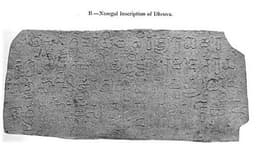
Dhruva Dharavarsha
Emperor · Medieval
55.4Total

Shajar al-Durr
Emperor · Medieval
47.7Total
Basic Information
Born
780
1200
Died
793
1257
Era
Medieval
Medieval
Nationality
India
Egypt
Occupation
Emperor
Emperor
Civilization
Indian
Middle Eastern
Score Comparison
Military (10%)
67.5
25.0
Political (20%)
61.3
43.7
Influence (20%)
53.3
58.0
Legacy (20%)
45.0
48.3
Leadership (15%)
64.0
51.9
Strategy (15%)
52.5
43.3
TOTAL
55.4
47.7
Dhruva Dharavarsha — Complete Timeline
785 AD
Defeat of the Pratihara EmpireWar◆ Major
Dhruva Dharavarsha led a successful military campaign against the Pratihara king Vatsaraja in the Ganges-Yamuna doab. This victory established Rashtrakuta dominance over northern India and weakened the Pratihara Empire.
Northern IndiaPratiharaMilitary Campaign
Impact: regional
790 AD
Defeat of the Pala EmpireWar◆ Major
Dhruva Dharavarsha defeated the Pala king Dharmapala in battle, further extending Rashtrakuta influence into eastern India. This victory made the Rashtrakutas the dominant power in the Indian subcontinent during his reign.
Eastern IndiaPalaDominance
Impact: regional
Shajar al-Durr — Complete Timeline
1250 AD
Rule as Sultana of Egypt (1250)Political Action◆ Major
After the death of her husband As-Salih Ayyub, Shajar al-Durr became the de facto ruler of Egypt. She was proclaimed Sultana with the support of the Mamluk commanders. Her reign marked the first and only time a woman ruled Egypt in the medieval Islamic period.
Female RuleMamluk SultanateEgypt
Impact: regionalprogressive
Marriage to Aybak (1250)Political Action◆ Major
To legitimize her rule and appease the Ayyubid caliph, Shajar al-Durr married the Mamluk commander Aybak. She abdicated the throne in his favor but retained significant influence. This marriage established the Mamluk Sultanate under Aybak's nominal rule.
MarriagePolitical AllianceMamluk Sultanate
Impact: regional
1257 AD
Murder of Aybak (1257)Political Action◆ Major
Shajar al-Durr ordered the assassination of her husband Sultan Aybak in his bathhouse after he planned to marry another woman. She feared losing her power and influence. This act led to a power struggle among the Mamluks and her own downfall.
AssassinationPower StruggleMamluk Sultanate
Impact: regionaldestructive
Death of Shajar al-Durr (1257)Other◆ Major
After Aybak's murder, Shajar al-Durr was arrested by the Mamluks loyal to Aybak. She was beaten to death by Aybak's concubines or slaves, and her body was thrown into a ditch. Her death ended the brief period of female rule in the Mamluk Sultanate.
DeathFemale RuleMamluk Sultanate
Impact: regionaltragic
This comparison has not been analyzed yet.
One-time AI generation (~1 minute). Scores and timeline are already available below.
Rankings
🥇
Dhruva DharavarshaLeader
Mil: 67.5Pol: 61.3Inf: 53.3
55.4
🥈
Shajar al-Durr
Mil: 25.0Pol: 43.7Inf: 58.0
47.7
+7.7 behind
How This Comparison Works
Algorithm
Each figure is scored on 6 dimensions (0—100 scale) based on structured historical data: Military (10%), Political (20%), Influence (20%), Legacy (20%), Leadership (15%), Strategy (15%). The weighted total produces the final ranking.
Data Sources
Scores are computed from structured sub-indicators in the database. Scale factors adjust for era (Ancient ×0.85, Modern ×1.0) and civilization size (Eastern ×1.05, Other ×0.80) to account for differences in population and military scale.
Maximum 3 Figures
Comparisons are limited to 2—3 figures to ensure readability and statistical meaningfulness.
Error Margins
±5 points per dimension — Sub-scores are derived from historical records with inherent uncertainty. Two figures within 5 points on a dimension should be considered roughly equivalent in that area.
Total Score Accuracy
±3 points overall — The weighted combination of 6 dimensions produces a total score with approximately ±3 points of uncertainty. Differences of less than 3 points are not statistically significant— the figures are effectively tied.
Known Limitations
- Historical records are incomplete and uneven across civilizations
- Figures from oral-tradition societies may be underrepresented
- Occupation labels can misclassify multi-role figures
- Scores measure capability and impact, not moral character
- Quantitative scoring is a comparison tool, not absolute truth
Capability Radar
Military (10%) — Battles & Warfare
Battles
60
45
Win Rate
65
50
Expansion
65
20
Political (20%) — Governance & Reform
Reform
40
35
Diplomacy
55
55
Economy
50
30
Influence (20%) — Cultural & Global Reach
Cultural
35
45
Global
25
35
Legacy (20%) — Historical Impact
Historical
40
50
Longevity
30
40
Leadership (15%) — Power & Stability
Tenure
45
40
Stability
50
25
Strategy (15%) — Tactics & Innovation
Strategy
60
35
Tactics
55
40
Reform
40
30
Similar Comparisons
Comments & Discussion
No comments yet. Be the first to share your thoughts!