Loading...
This comparison has not been analyzed yet.
One-time AI generation (~1 minute). Scores and timeline are already available below.
Dhana Nanda vs Takelot II
Dhana Nanda leads by 6.6 pts · 2 figures compared
…

Dhana Nanda
Emperor · Ancient
41.6Total
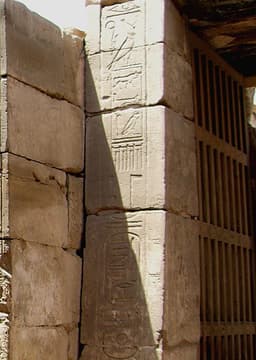
Takelot II
Emperor · Ancient
35.0Total
Basic Information
Born
-360
-850
Died
-321
-825
Era
Ancient
Ancient
Nationality
India
Third Intermediate Egypt
Occupation
Emperor
Emperor
Civilization
Indian
Middle Eastern
Score Comparison
Military (10%)
45.0
25.9
Political (20%)
33.6
32.1
Influence (20%)
44.8
41.6
Legacy (20%)
35.0
34.2
Leadership (15%)
51.9
31.2
Strategy (15%)
43.7
39.6
TOTAL
41.6
35.0
Dhana Nanda — Complete Timeline
340 BC
Accumulated Vast WealthOther
Dhana Nanda was known for amassing enormous wealth through heavy taxation and conquest. His treasury was said to contain vast amounts of gold and silver, which later funded Chandragupta's campaigns after being seized.
WealthTaxationLegend
Impact: regional
326 BC
Fought Alexander's InvasionWar◆ Major
During Alexander the Great's invasion of the Indus Valley, Dhana Nanda's large army, reportedly numbering 200,000 infantry and 20,000 cavalry, deterred Alexander from advancing into the Ganges plain, contributing to his army's mutiny.
AlexanderMilitary DeterrenceMutiny
Impact: regional
321 BC
Overthrown by Chandragupta MauryaPolitical Action
Dhana Nanda, the last ruler of the Nanda dynasty, was overthrown by Chandragupta Maurya with the guidance of Chanakya. The coup ended Nanda rule and established the Maurya Empire, one of ancient India's largest empires.
Dynasty FallMaurya RisePolitical Change
Impact: regionaltragic
Takelot II — Complete Timeline
845 BC
Appointment of Osorkon as High Priest of AmunPolitical Action◆ Major
Takelot II appointed his son Osorkon (later Osorkon III) as High Priest of Amun at Thebes, hoping to assert control over the south. This move sparked resistance from local Theban factions, escalating into open conflict.
PriesthoodThebesAppointment
Impact: nationaldestructive
840 BC
Civil War between North and SouthWar
Takelot II's reign was marked by a prolonged civil war between his forces in the north (Tanis) and the Theban priesthood in the south. The conflict, recorded in the Chronicle of Prince Osorkon, resulted in widespread destruction and weakened the 22nd Dynasty.
Civil WarThebesTanis
Impact: nationaldestructive
Siege of ThebesWar◆ Major
During the civil war, Takelot II's forces besieged Thebes, attempting to crush the rebellion of the Theban priesthood. The siege lasted several months and resulted in the capture of the city, but the conflict continued for years.
SiegeThebesCivil War
Impact: regionaldestructive
This comparison has not been analyzed yet.
One-time AI generation (~1 minute). Scores and timeline are already available below.
Rankings
🥇
Dhana NandaLeader
Mil: 45.0Pol: 33.6Inf: 44.8
41.6
🥈
Takelot II
Mil: 25.9Pol: 32.1Inf: 41.6
35.0
+6.6 behind
How This Comparison Works
Algorithm
Each figure is scored on 6 dimensions (0—100 scale) based on structured historical data: Military (10%), Political (20%), Influence (20%), Legacy (20%), Leadership (15%), Strategy (15%). The weighted total produces the final ranking.
Data Sources
Scores are computed from structured sub-indicators in the database. Scale factors adjust for era (Ancient ×0.85, Modern ×1.0) and civilization size (Eastern ×1.05, Other ×0.80) to account for differences in population and military scale.
Maximum 3 Figures
Comparisons are limited to 2—3 figures to ensure readability and statistical meaningfulness.
Error Margins
±5 points per dimension — Sub-scores are derived from historical records with inherent uncertainty. Two figures within 5 points on a dimension should be considered roughly equivalent in that area.
Total Score Accuracy
±3 points overall — The weighted combination of 6 dimensions produces a total score with approximately ±3 points of uncertainty. Differences of less than 3 points are not statistically significant— the figures are effectively tied.
Known Limitations
- Historical records are incomplete and uneven across civilizations
- Figures from oral-tradition societies may be underrepresented
- Occupation labels can misclassify multi-role figures
- Scores measure capability and impact, not moral character
- Quantitative scoring is a comparison tool, not absolute truth
Capability Radar
Military (10%) — Battles & Warfare
Battles
20
15
Win Rate
15
10
Expansion
30
5
Political (20%) — Governance & Reform
Reform
30
10
Diplomacy
20
10
Economy
35
10
Influence (20%) — Cultural & Global Reach
Cultural
15
10
Global
10
5
Legacy (20%) — Historical Impact
Historical
20
15
Longevity
10
10
Leadership (15%) — Power & Stability
Tenure
40
30
Stability
25
5
Strategy (15%) — Tactics & Innovation
Strategy
20
10
Tactics
25
10
Reform
10
5
Similar Comparisons
Comments & Discussion
No comments yet. Be the first to share your thoughts!