Loading...
Demetrius I Poliorcetes vs Julian the Apostate
Julian the Apostate leads by 2.0 pts · 2 figures compared
…
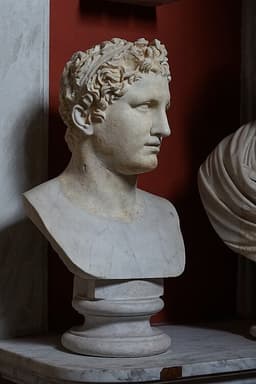
Demetrius I Poliorcetes
Emperor · Ancient
56.9Total

Julian the Apostate
Emperor · Ancient
58.9Total
Basic Information
Born
-337
331
Died
-283
363
Era
Ancient
Ancient
Nationality
Macedon
Roman Empire
Occupation
Emperor
Emperor
Civilization
Western
Western
Score Comparison
Military (10%)
67.3
70.0
Political (20%)
48.0
68.0
Influence (20%)
58.0
62.0
Legacy (20%)
50.0
58.0
Leadership (15%)
65.7
41.5
Strategy (15%)
61.2
55.0
TOTAL
56.9
58.9
Demetrius I Poliorcetes — Complete Timeline
306 BC
Battle of Salamis in Cyprus (306 BC)War◆ Major
Demetrius commanded the Macedonian fleet to a decisive victory over Ptolemy I's navy off Salamis, Cyprus. He destroyed or captured much of the Ptolemaic fleet, allowing him to conquer Cyprus and establish a base for his father Antigonus I Monophthalmus.
Naval BattleCyprusAntigonid
Impact: regional
305 BC
Siege of Rhodes (305-304 BC)War◆ Major
Demetrius Poliorcetes besieged the city of Rhodes with massive siege engines, including the Helepolis, a 130-foot siege tower. After a year-long siege, he failed to capture the city and was forced to withdraw, but his innovative siege techniques earned him the epithet 'Poliorcetes' (Besieger of Cities).
SiegeMilitary EngineeringRhodes
Impact: regional
294 BC
Proclaimed King of Macedon (294 BC)Political Action◆ Major
After a period of chaos in Macedon, Demetrius seized the throne and was proclaimed king. He ruled Macedon for seven years, attempting to restore Antigonid power and launch campaigns to reclaim his father's empire in Asia.
KingshipMacedonAntigonid
Impact: regional
285 BC
Capture and Death in Seleucid Captivity (285 BC)Other◆ Major
After being defeated by Lysimachus and Pyrrhus, Demetrius fled to Asia Minor but was captured by Seleucus I. He was held in honorable captivity in Apamea, where he died three years later from illness and excessive drinking, ending his turbulent career.
CaptivityDeathSeleucid
Impact: regionaltragic
Julian the Apostate — Complete Timeline
360 AD
Proclamation as AugustusPolitical Action◆ Major
While campaigning in Gaul, Julian was proclaimed Augustus by his troops in Paris, rejecting the authority of Emperor Constantius II. This act led to a civil war, but Constantius's death in 361 allowed Julian to become sole emperor without battle.
Civil WarProclamationConstantius II
Impact: national
362 AD
Edict of Religious TolerationPolitical Action◆ Major
Julian issued an edict granting freedom of worship to all religions, effectively ending the official persecution of pagans and allowing the restoration of pagan temples. He also recalled Christian bishops exiled by Constantius, aiming to weaken Christianity through internal division.
Religious PolicyPagan RestorationToleration
Impact: global
363 AD
Battle of SamarraWar
Julian led a massive invasion of the Sassanid Persian Empire but was mortally wounded during a skirmish near Samarra. His death ended the campaign and led to a humiliating peace treaty with the Persians, ceding territory and marking the failure of his military ambitions.
Roman-Persian WarsDeath in BattleCampaign Failure
Impact: regionaltragic
Attempt to Rebuild the Temple in JerusalemPolitical Action
Julian ordered the rebuilding of the Jewish Temple in Jerusalem, reversing the earlier Roman ban. The project was abandoned after a series of earthquakes and fires, which Christian sources attributed to divine intervention. This event highlighted Julian's anti-Christian agenda.
Jewish TempleReligious PolicyPaganism
Impact: regional
Expert Analysis
Origins
Demetrius I Poliorcetes (336–283 BC) was born into the royal family of Macedon, son of Antigonus I Monophthalmus, one of Alexander the Great's most powerful successors. His upbringing was steeped in warfare and court intrigue, as his father fought to unite Alexander's fractured empire. Demetrius received a military education befitting a prince, learning siegecraft and naval command from an early age.
Julian the Apostate (AD 331–363) was born into the Roman imperial family, a nephew of Constantine the Great. His childhood was marked by tragedy: his father and many relatives were killed in a purge after Constantine's death. Raised as a Christian, Julian secretly embraced Neoplatonic philosophy and the old Roman gods. He was educated in rhetoric and philosophy by tutors like the eunuch Mardonius, who instilled in him a love for Hellenic culture.
Rise to Power
Demetrius rose to prominence through military victories. At the Battle of Salamis in Cyprus (306 BC), he commanded the Macedonian fleet to a decisive victory over Ptolemy I's navy, destroying or capturing much of the Ptolemaic fleet. This triumph earned him the title "Poliorcetes" (Besieger) and led his father to proclaim him co-king. Demetrius then conducted the famous Siege of Rhodes (305–304 BC), where his massive siege engine, the Helepolis, a 130-foot tower, failed to take the city but cemented his reputation.
Julian's rise was more political. He was summoned by Emperor Constantius II to serve as Caesar (junior emperor) in Gaul. Despite his philosophical background, Julian proved an able military commander, defeating Germanic tribes at the Battle of Strasbourg (AD 357). In AD 360, while campaigning in Gaul, his troops proclaimed him Augustus in Paris, rejecting Constantius's authority. This act led to a civil war that ended with Constantius's death, leaving Julian as sole emperor.
Leadership & Governance
Demetrius ruled as a Hellenistic king, focused on conquest and display. He governed Macedon from 294 to 287 BC, attempting to restore Antigonid power. His leadership was charismatic but erratic; he alienated allies with his arrogance and debauchery. He demanded divine honors and lived extravagantly, which undermined his political support. His total score of 56.9 reflects his military prowess (67.3) but weak political skills (48.0).
Julian's governance was marked by religious reform. He issued the Edict of Religious Toleration (AD 362), granting freedom of worship to all, effectively ending Christian persecution and restoring pagan temples. He attempted to rebuild the Jewish Temple in Jerusalem, but the project was abandoned after earthquakes and fires. His leadership score is 41.5, indicating his reforms were unpopular and his reign short. He scored 68.0 in political acumen, but his death cut short his initiatives.
Triumph & Tragedy
Demetrius's greatest triumph was the Siege of Rhodes, which showcased his engineering genius and earned him his epithet. However, his greatest failure was his inability to maintain power. He was defeated by Lysimachus and Pyrrhus, fled to Asia Minor, and was captured by Seleucus I. He died in honorable captivity in Apamea (283 BC), a prisoner for three years. His legacy score is 50.0, reflecting the ephemeral nature of his conquests.
Julian's triumph was his successful invasion of Gaul and his philosophical writings, which preserved Neoplatonic thought. His tragedy was the Sassanid campaign: he led a massive invasion of Persia but was mortally wounded at the Battle of Samarra (AD 363). His death ended the campaign and his religious reforms. He scored 70.0 in military, higher than Demetrius's 67.3, but his leadership (41.5) was lower.
Character & Destiny
Demetrius was bold, inventive, and self-indulgent. His character — a mix of genius and hubris — led to his downfall. He was called "Poliorcetes" for his siegecraft, but also "the City-Sacker" for his brutality. His destiny was to be a king without a kingdom, a brilliant commander who could not secure loyalty.
Julian was ascetic, intellectual, and determined. His nickname "Apostate" reflects his rejection of Christianity. His character — principled but rigid — alienated both pagans and Christians. His destiny was to be a reformer who died before his reforms could take root. He scored 62.0 in influence, reflecting his cultural impact.
Legacy
Demetrius's legacy lies in military engineering. His siege techniques influenced Hellenistic warfare. The Helepolis and other engines were studied by later engineers. However, his political legacy was nil; his kingdom collapsed after his death. He scored 58.0 in influence and 50.0 in legacy.
Julian's legacy is more enduring. His attempt to revive paganism inspired later Neoplatonic thinkers. His writings, including satires and philosophical works, survive. The Edict of Religious Toleration foreshadowed later concepts of religious freedom. He scored 62.0 in influence and 58.0 in legacy, slightly higher than Demetrius.
Conclusion
Julian the Apostate had greater impact than Demetrius I Poliorcetes. While Demetrius was a superior military engineer, his conquests were temporary and his political failures total. Julian's religious reforms, though short-lived, influenced the cultural landscape of Europe. His higher total score (58.9 vs. 56.9) reflects this. Demetrius's achievements were spectacular but sterile; Julian's, though incomplete, planted ideas that outlasted him. Thus, Julian edges out Demetrius in historical significance.
Rankings
🥇
Julian the ApostateLeader
Mil: 70.0Pol: 68.0Inf: 62.0
58.9
🥈
Demetrius I Poliorcetes
Mil: 67.3Pol: 48.0Inf: 58.0
56.9
+2.0 behind
How This Comparison Works
Algorithm
Each figure is scored on 6 dimensions (0—100 scale) based on structured historical data: Military (10%), Political (20%), Influence (20%), Legacy (20%), Leadership (15%), Strategy (15%). The weighted total produces the final ranking.
Data Sources
Scores are computed from structured sub-indicators in the database. Scale factors adjust for era (Ancient ×0.85, Modern ×1.0) and civilization size (Eastern ×1.05, Other ×0.80) to account for differences in population and military scale.
Maximum 3 Figures
Comparisons are limited to 2—3 figures to ensure readability and statistical meaningfulness.
Error Margins
±5 points per dimension — Sub-scores are derived from historical records with inherent uncertainty. Two figures within 5 points on a dimension should be considered roughly equivalent in that area.
Total Score Accuracy
±3 points overall — The weighted combination of 6 dimensions produces a total score with approximately ±3 points of uncertainty. Differences of less than 3 points are not statistically significant— the figures are effectively tied.
Known Limitations
- Historical records are incomplete and uneven across civilizations
- Figures from oral-tradition societies may be underrepresented
- Occupation labels can misclassify multi-role figures
- Scores measure capability and impact, not moral character
- Quantitative scoring is a comparison tool, not absolute truth
Capability Radar
Military (10%) — Battles & Warfare
Battles
75
65
Win Rate
60
60
Expansion
70
40
Political (20%) — Governance & Reform
Reform
40
70
Diplomacy
50
45
Economy
45
40
Influence (20%) — Cultural & Global Reach
Cultural
55
60
Global
55
50
Legacy (20%) — Historical Impact
Historical
60
70
Longevity
50
55
Leadership (15%) — Power & Stability
Tenure
55
30
Stability
30
20
Strategy (15%) — Tactics & Innovation
Strategy
70
65
Tactics
85
70
Reform
50
55
Similar Comparisons
Comments & Discussion
No comments yet. Be the first to share your thoughts!