Loading...
This comparison has not been analyzed yet.
One-time AI generation (~1 minute). Scores and timeline are already available below.
Dawda Jawara vs John Knox
John Knox leads by 6.1 pts · 2 figures compared
…

Dawda Jawara
Politician · Modern
48.6Total
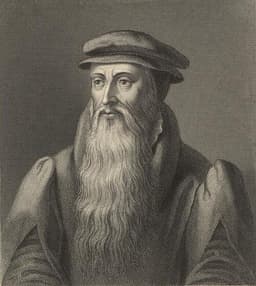
John Knox
Politician · Modern
54.7Total
Basic Information
Born
1924
1514
Died
—
1572
Era
Modern
Modern
Nationality
Gambia
Scotland
Occupation
Politician
Politician
Civilization
Other
Western
Score Comparison
Military (10%)
18.2
49.7
Political (20%)
61.3
61.3
Influence (20%)
49.4
55.0
Legacy (20%)
40.0
55.0
Leadership (15%)
74.0
58.8
Strategy (15%)
41.7
42.2
TOTAL
48.6
54.7
Dawda Jawara — Complete Timeline
1970 AD
Became First President of GambiaPolitical Action
Jawara became the first President of Gambia after the country became a republic, following independence from Britain in 1965. He led a stable, multi-party democracy for decades.
IndependenceGambiaPresidency
Impact: nationalconstructive
1981 AD
Survived Coup AttemptPolitical Action◆ Major
Jawara survived a coup attempt by leftist elements, which was suppressed with Senegalese military intervention. The attempt led to the short-lived Senegambia Confederation.
Coup AttemptGambiaSenegambia
Impact: nationaldestructive
1994 AD
Overthrown by CoupPolitical Action
Jawara was overthrown in a bloodless military coup led by Lieutenant Yahya Jammeh. The coup ended his 24-year rule and marked the beginning of authoritarian governance in Gambia.
CoupGambiaOverthrow
Impact: nationaldestructive
John Knox — Complete Timeline
1558 AD
First Blast of the Trumpet Against the Monstrous Regiment of WomenCultural◆ Major
John Knox published this pamphlet attacking female rulers, specifically Mary Tudor and Mary of Guise. The work argued that women ruling over men was against divine law. It provoked controversy and influenced Protestant political thought across Europe.
PamphletReligious PolemicGender Politics
Impact: regional
1560 AD
Scottish Reformation ParliamentPolitical Action
John Knox led the Protestant faction that pushed through legislation establishing Presbyterianism in Scotland. The parliament abolished papal authority, banned the Mass, and adopted the Scots Confession. This created the Church of Scotland.
ReformationReligious ChangeLegislation
Impact: nationalconstructive
1561 AD
Disputation with Mary, Queen of ScotsPolitical Action
John Knox engaged in a series of private debates with Mary, Queen of Scots over religious authority. He defended Protestant doctrine against her Catholic position. The confrontations became legendary in Scottish history, symbolizing the clash between crown and kirk.
DebateReligious ConflictMonarchy vs Church
Impact: national
This comparison has not been analyzed yet.
One-time AI generation (~1 minute). Scores and timeline are already available below.
Rankings
🥇
John KnoxLeader
Mil: 49.7Pol: 61.3Inf: 55.0
54.7
🥈
Dawda Jawara
Mil: 18.2Pol: 61.3Inf: 49.4
48.6
+6.1 behind
How This Comparison Works
Algorithm
Each figure is scored on 6 dimensions (0—100 scale) based on structured historical data: Military (10%), Political (20%), Influence (20%), Legacy (20%), Leadership (15%), Strategy (15%). The weighted total produces the final ranking.
Data Sources
Scores are computed from structured sub-indicators in the database. Scale factors adjust for era (Ancient ×0.85, Modern ×1.0) and civilization size (Eastern ×1.05, Other ×0.80) to account for differences in population and military scale.
Maximum 3 Figures
Comparisons are limited to 2—3 figures to ensure readability and statistical meaningfulness.
Error Margins
±5 points per dimension — Sub-scores are derived from historical records with inherent uncertainty. Two figures within 5 points on a dimension should be considered roughly equivalent in that area.
Total Score Accuracy
±3 points overall — The weighted combination of 6 dimensions produces a total score with approximately ±3 points of uncertainty. Differences of less than 3 points are not statistically significant— the figures are effectively tied.
Known Limitations
- Historical records are incomplete and uneven across civilizations
- Figures from oral-tradition societies may be underrepresented
- Occupation labels can misclassify multi-role figures
- Scores measure capability and impact, not moral character
- Quantitative scoring is a comparison tool, not absolute truth
Capability Radar
Military (10%) — Battles & Warfare
Battles
21
27
Win Rate
22
34
Expansion
25
35
Political (20%) — Governance & Reform
Reform
40
70
Diplomacy
55
40
Economy
35
20
Influence (20%) — Cultural & Global Reach
Cultural
20
65
Global
15
55
Legacy (20%) — Historical Impact
Historical
25
70
Longevity
15
60
Leadership (15%) — Power & Stability
Tenure
65
30
Stability
20
25
Strategy (15%) — Tactics & Innovation
Strategy
30
40
Tactics
35
40
Reform
38
42
Similar Comparisons
Comments & Discussion
No comments yet. Be the first to share your thoughts!