Loading...
Analysis will be generated on first visit.
Scores and timeline are available below. The page will refresh automatically when ready.
Daoguang Emperor vs Julius Caesar
Julius Caesar leads by 23.0 pts · 2 figures compared
…

Daoguang Emperor
Emperor · Modern
60.3Total
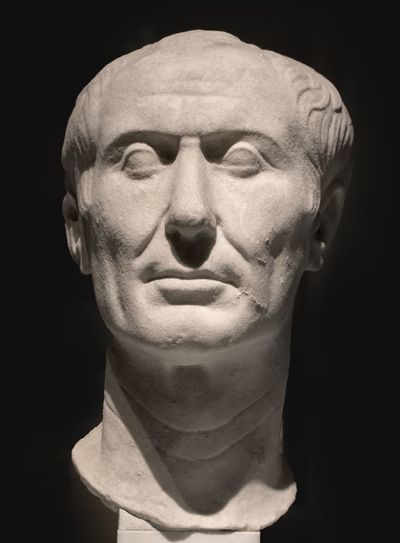
Julius Caesar
General · Ancient
83.3Total
Basic Information
Born
1782
-100
Died
1850
-44
Era
Modern
Ancient
Nationality
China
Roman Republic
Occupation
Emperor
General
Civilization
Eastern
Western
Score Comparison
Military (10%)
16.9
88.0
Political (20%)
64.8
78.0
Influence (20%)
73.2
85.0
Legacy (20%)
63.2
82.0
Leadership (15%)
80.4
82.0
Strategy (15%)
41.9
88.0
TOTAL
60.3
83.3
Rankings
🥇
Julius CaesarLeader
Mil: 88.0Pol: 78.0Inf: 85.0
83.3
🥈
Daoguang Emperor
Mil: 16.9Pol: 64.8Inf: 73.2
60.3
+23.0 behind
How This Comparison Works
Algorithm
Each figure is scored on 6 dimensions (0—100 scale) based on structured historical data: Military (10%), Political (20%), Influence (20%), Legacy (20%), Leadership (15%), Strategy (15%). The weighted total produces the final ranking.
Data Sources
Scores are computed from structured sub-indicators in the database. Scale factors adjust for era (Ancient ×0.85, Modern ×1.0) and civilization size (Eastern ×1.05, Other ×0.80) to account for differences in population and military scale.
Maximum 3 Figures
Comparisons are limited to 2—3 figures to ensure readability and statistical meaningfulness.
Error Margins
±5 points per dimension — Sub-scores are derived from historical records with inherent uncertainty. Two figures within 5 points on a dimension should be considered roughly equivalent in that area.
Total Score Accuracy
±3 points overall — The weighted combination of 6 dimensions produces a total score with approximately ±3 points of uncertainty. Differences of less than 3 points are not statistically significant— the figures are effectively tied.
Known Limitations
- Historical records are incomplete and uneven across civilizations
- Figures from oral-tradition societies may be underrepresented
- Occupation labels can misclassify multi-role figures
- Scores measure capability and impact, not moral character
- Quantitative scoring is a comparison tool, not absolute truth
Capability Radar
Military (10%) — Battles & Warfare
Battles
10
95
Win Rate
5
92
Expansion
5
97
Political (20%) — Governance & Reform
Reform
10
90
Diplomacy
5
85
Economy
10
82
Influence (20%) — Cultural & Global Reach
Cultural
20
88
Global
30
94
Legacy (20%) — Historical Impact
Historical
40
95
Longevity
30
96
Leadership (15%) — Power & Stability
Tenure
60
75
Stability
20
60
Strategy (15%) — Tactics & Innovation
Strategy
5
94
Tactics
5
96
Reform
5
88
Analysis will be generated on first visit.
Scores and timeline are available below. The page will refresh automatically when ready.
Daoguang Emperor — Complete Timeline
1839 AD
First Opium WarWar
British forces attacked China after Daoguang ordered the destruction of opium stocks in Canton. The Qing military was decisively defeated, leading to the Treaty of Nanjing in 1842.
Opium WarBritish invasionMilitary defeat
Impact: globaldestructive
Lin Zexu's anti-opium campaignPolitical Action◆ Major
Daoguang appointed Lin Zexu as Imperial Commissioner to suppress the opium trade in Canton. Lin confiscated and destroyed over 20,000 chests of opium, which triggered the British military response.
Opium suppressionLin ZexuDrug policy
Impact: nationalconstructive
1840 AD
Fiscal crisis and military declineOther◆ Major
The Opium War exposed the Qing's fiscal and military weaknesses. Daoguang's government faced severe budget deficits, outdated military technology, and a corrupt bureaucracy, leading to a loss of imperial prestige.
Fiscal crisisMilitary weaknessQing decline
Impact: nationaldestructive
1842 AD
Treaty of NanjingPolitical Action
Daoguang's government signed the Treaty of Nanjing, the first of the 'unequal treaties.' China ceded Hong Kong to Britain, opened five treaty ports, paid an indemnity, and granted extraterritorial rights to British subjects.
Unequal treatyHong Kong cessionTreaty ports
Impact: globaldestructive
1843 AD
Treaty of the BoguePolitical Action◆ Major
Daoguang's government signed the Treaty of the Bogue, which granted Britain most-favored-nation status and further extraterritorial rights. This treaty expanded the concessions made in the Treaty of Nanjing.
Unequal treatyBritish concessionsExtraterritoriality
Impact: globaldestructive
Similar Comparisons
Comments & Discussion
No comments yet. Be the first to share your thoughts!