Loading...
Dantidurga vs Qin Shi Huang
Qin Shi Huang leads by 26.5 pts · 2 figures compared
…
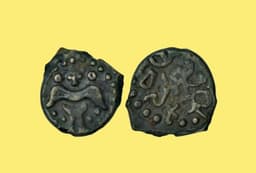
Dantidurga
Emperor · Medieval
58.7Total
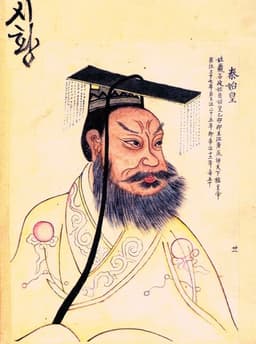
Qin Shi Huang
Emperor · Ancient
85.2Total
Basic Information
Born
735
-259
Died
756
-210
Era
Medieval
Ancient
Nationality
India
China
Occupation
Emperor
Emperor
Civilization
Indian
Eastern
Score Comparison
Military (10%)
67.5
80.0
Political (20%)
68.0
90.0
Influence (20%)
56.4
85.0
Legacy (20%)
50.0
90.0
Leadership (15%)
65.7
78.0
Strategy (15%)
52.5
82.0
TOTAL
58.7
85.2
Dantidurga — Complete Timeline
753 AD
Founding of the Rashtrakuta DynastyPolitical Action
Dantidurga overthrew his overlord, the Chalukya king Kirtivarman II, in a coup. He established the Rashtrakuta dynasty as the dominant power in the Deccan, with Manyakheta as his capital. This marked the beginning of a new imperial era.
Impact: regionalconstructive
754 AD
Performance of the Hiranyagarbha RitualCultural
Dantidurga performed the Hiranyagarbha (golden womb) ritual, a Vedic ceremony that symbolically rebirthed him as a Kshatriya. This legitimized his rule by claiming a higher caste status, as the Rashtrakutas were originally of humble origin.
Impact: nationalconstructive
755 AD
Conquest of MalwaWar◆ Major
Dantidurga led a military campaign into Malwa, defeating the Gurjara-Pratihara ruler Nagabhata I. He annexed the region, expanding Rashtrakuta territory northward. This victory established Rashtrakuta influence in central India.
Impact: regionaldestructive
Qin Shi Huang — Complete Timeline
246 BC
Construction of the Mausoleum and Terracotta ArmyOther◆ Major
Qin Shi Huang commissioned a vast mausoleum complex near Xi'an, guarded by thousands of life-sized terracotta soldiers, horses, and chariots. The project employed hundreds of thousands of workers and reflected his obsession with immortality and imperial power.
Impact: global
230 BC
Conquest of the Six Warring StatesWar
From 230 to 221 BCE, Ying Zheng led the Qin state in a series of campaigns that conquered the Han, Zhao, Wei, Chu, Yan, and Qi states. This unified China under a single ruler for the first time, ending the Warring States period.
Impact: global
221 BC
Standardization of Writing, Currency, and MeasurementsReform◆ Major
Qin Shi Huang ordered the standardization of Chinese script, currency, and weights and measures across the unified empire. This facilitated administration, trade, and cultural integration, laying a foundation for future dynasties.
Impact: globalconstructive
Proclamation of the Qin DynastyPolitical Action
After conquering the last independent state, Ying Zheng declared himself Shi Huangdi (First Emperor), founding the Qin Dynasty. He adopted a new title to signify his supreme authority and initiated centralized imperial rule.
Impact: global
214 BC
Initiation of the Great Wall ConstructionOther◆ Major
Qin Shi Huang ordered the connection and extension of existing northern fortifications to create a unified defensive wall against nomadic Xiongnu raids. This project involved massive conscripted labor and became the precursor to the later Great Wall.
Impact: regional
213 BC
Burning of Books and Burying of ScholarsPolitical Action◆ Major
On the advice of Li Si, Qin Shi Huang ordered the burning of historical records and philosophical texts not aligned with Legalist doctrine. He also had 460 Confucian scholars buried alive to suppress dissent and consolidate ideological control.
Impact: nationaldestructive
Expert Analysis
dantidurga-vs-qin-shi-huang
# The First Emperor and the Forgotten Founder
In the year 221 BC, a 38-year-old king stood before his assembled court in Xianyang and proclaimed himself *Shi Huangdi*—the First Emperor. His name was Ying Zheng, and he had just accomplished what no Chinese ruler had done before: the complete military unification of the Warring States. Half a world away and nearly a millennium later, in 753 AD, another ambitious ruler named Dantidurga performed a ritual that would transform his destiny. He presented a golden vessel to a Brahmin priest, emerging from the ceremony symbolically reborn as a Kshatriya warrior-king. Both men founded dynasties. Both men changed history. Yet one is remembered by billions, the other by only a few scholars. Why?
Origins
Qin Shi Huang was born into privilege and peril. His father was a prince of the Qin state, one of seven major kingdoms locked in a brutal contest for supremacy over China. The boy grew up in a court where assassination was a constant threat and where his mother's lover once tried to usurp the throne. By the time he took power at age 13, Ying Zheng had learned one lesson above all: trust was a luxury that rulers could not afford.
Dantidurga emerged from a very different world. He was a feudatory chief serving the Chalukya dynasty of Badami in the Deccan plateau of India. The exact details of his birth remain obscure, but he belonged to the Rashtrakuta clan, a family of warriors and administrators who had served their Chalukya overlords for generations. Unlike Qin Shi Huang, who inherited a throne, Dantidurga had to earn his. The difference between inheriting power and seizing it would define their entire careers.
Rise to Power
Qin Shi Huang's path was methodical and absolute. From 230 to 221 BC, he unleashed a series of campaigns that historians still study for their strategic brilliance. His generals conquered the Han, Zhao, Wei, Chu, Yan, and Qi states in relentless succession. Each victory brought new territory, new resources, and new enemies. By the end, he had unified an area roughly the size of modern China east of the Tibetan plateau, a feat that required not just military might but extraordinary political coordination.
Dantidurga's rise was more dramatic but far smaller in scale. In 753 AD, he simply overthrew his overlord, King Kirtivarman II of the Chalukyas, in a palace coup. The act was audacious but not unprecedented in Indian history. What made it significant was what followed: Dantidurga performed the Hiranyagarbha ritual in 754, a Vedic ceremony that symbolically rebirthed him as a Kshatriya. This was not mere religious theater—it was a political masterstroke that legitimized his rule in the eyes of a society where caste and ritual purity mattered as much as military power.
Leadership & Governance
Qin Shi Huang governed through revolution. He abolished the feudal system that had fragmented China for centuries, replacing it with a centralized bureaucracy divided into commanderies and counties. He standardized writing, currency, weights, and measures across his empire. He connected the northern fortifications into what would become the Great Wall. His prime minister, Li Si, implemented a legalist philosophy that valued order above all else. The First Emperor did not just conquer China—he reinvented it.
Dantidurga governed through adaptation. He conquered Malwa in 755, defeating the Gurjara-Pratihara ruler Nagabhata I, but he did not impose a radical new system. Instead, he maintained existing administrative structures while placing his own loyalists in key positions. His reign was too short—barely three years after founding the dynasty—to enact lasting reforms. What he left was a foundation, not a finished structure.
The contrast is stark. Qin Shi Huang had time, resources, and a unified vision. Dantidurga had ambition, opportunity, and the good sense to know his limits. One built a machine; the other planted a seed.
Triumph & Tragedy
Qin Shi Huang's greatest triumph was also his greatest tragedy. In 213 BC, on the advice of Li Si, he ordered the burning of historical records and philosophical texts that did not align with his legalist ideology. Scholars who resisted were buried alive. The First Emperor wanted to erase the past to control the future. He succeeded in part—countless texts were lost forever—but the act made him a tyrant in Chinese memory for two millennia.
Dantidurga's tragedy was simpler: he died too young. He founded the Rashtrakuta dynasty in 753 and was gone by 756. His successors would build upon his work, expanding the kingdom into an empire that rivaled the Gupta and Mughal dynasties in later centuries. But Dantidurga himself never saw the full fruit of his labor. He was a founder, not a builder.
Character & Destiny
Qin Shi Huang was consumed by fear. He obsessed over immortality, sending expeditions to find the elixir of life. He constructed a mausoleum guarded by thousands of life-sized terracotta soldiers, a silent army for the afterlife he hoped to reach. His paranoia drove him to greatness and to cruelty in equal measure.
Dantidurga was driven by ambition, but a practical ambition. He understood that legitimacy mattered as much as force—hence the Hiranyagarbha ritual. He knew when to strike and when to consolidate. His character was not shaped by existential dread but by the realities of medieval Indian politics, where a ruler's authority depended on a delicate balance of military power, religious sanction, and diplomatic alliances.
Legacy
Qin Shi Huang left a unified China that would endure, with interruptions, for over two thousand years. The administrative structures he created became the template for every subsequent dynasty. The Great Wall, though rebuilt many times, still bears his mark. His name is synonymous with imperial power. His tomb remains unopened, a mystery that continues to fascinate the world.
Dantidurga left a dynasty that would produce some of India's greatest rulers, including the powerful Amoghavarsha I. The Rashtrakutas would dominate the Deccan for over two centuries, patronizing art, literature, and architecture. But Dantidurga himself remains a footnote, known primarily to specialists in Indian medieval history.
Conclusion
The difference between these two founders is not merely a matter of scale. Qin Shi Huang inherited a state already primed for conquest, with a legalist philosophy ready to be implemented. Dantidurga started from a position of subordination, with no pre-existing blueprint for empire. One had centuries of Chinese political thought behind him; the other had only his wits and the ritual traditions of his people.
Yet perhaps the most telling difference is how they are remembered. Qin Shi Huang's name evokes both awe and horror—the unifier, the tyrant, the seeker of immortality. Dantidurga's name evokes... what? A question mark in the margins of history. This is the cruel arithmetic of historical memory: the scale of your ambition determines the scale of your legacy, but also the scale of your condemnation. The First Emperor unified China and burned its books. Dantidurga founded a dynasty and performed a ritual. Both changed the world for those who came after. Only one changed the world for all of us.
Rankings
🥇
Qin Shi HuangLeader
Mil: 80.0Pol: 90.0Inf: 85.0
85.2
🥈
Dantidurga
Mil: 67.5Pol: 68.0Inf: 56.4
58.7
+26.5 behind
How This Comparison Works
Algorithm
Each figure is scored on 6 dimensions (0—100 scale) based on structured historical data: Military (10%), Political (20%), Influence (20%), Legacy (20%), Leadership (15%), Strategy (15%). The weighted total produces the final ranking.
Data Sources
Scores are computed from structured sub-indicators in the database. Scale factors adjust for era (Ancient ×0.85, Modern ×1.0) and civilization size (Eastern ×1.05, Other ×0.80) to account for differences in population and military scale.
Maximum 3 Figures
Comparisons are limited to 2—3 figures to ensure readability and statistical meaningfulness.
Error Margins
±5 points per dimension — Sub-scores are derived from historical records with inherent uncertainty. Two figures within 5 points on a dimension should be considered roughly equivalent in that area.
Total Score Accuracy
±3 points overall — The weighted combination of 6 dimensions produces a total score with approximately ±3 points of uncertainty. Differences of less than 3 points are not statistically significant— the figures are effectively tied.
Known Limitations
- Historical records are incomplete and uneven across civilizations
- Figures from oral-tradition societies may be underrepresented
- Occupation labels can misclassify multi-role figures
- Scores measure capability and impact, not moral character
- Quantitative scoring is a comparison tool, not absolute truth
Capability Radar
Military (10%) — Battles & Warfare
Battles
60
85
Win Rate
65
90
Expansion
65
90
Political (20%) — Governance & Reform
Reform
45
95
Diplomacy
55
75
Economy
50
90
Influence (20%) — Cultural & Global Reach
Cultural
40
95
Global
30
85
Legacy (20%) — Historical Impact
Historical
55
95
Longevity
50
95
Leadership (15%) — Power & Stability
Tenure
40
70
Stability
45
65
Strategy (15%) — Tactics & Innovation
Strategy
60
85
Tactics
55
80
Reform
40
95
Similar Comparisons
Comments & Discussion
EmperorCynic6/17/2026
Nice analysis, but you're overstating Dantidurga's obscurity. Millions in southern India know him. The real story is how Qin Shi Huang's PR machine—burning books, burying scholars—created a myth of absolute originality. Dantidurga's golden vessel ceremony was brilliant strategic theater: he claimed Kshatriya status to legitimize his rebellion against the Chalukyas. Qin's brutality gets remembered because it served later dynasties' propaganda needs. Convenient, isn't it?|zh|千载一帝|zh|秦始皇焚书坑儒,看似毁灭历史