Loading...
Dantidurga vs Julius Caesar
Julius Caesar leads by 24.1 pts · 2 figures compared
…
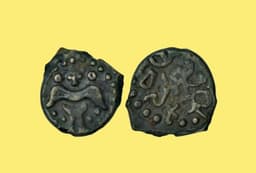
Dantidurga
Emperor · Medieval
58.7Total

Julius Caesar
General · Ancient
82.8Total
Basic Information
Born
735
-100
Died
756
-44
Era
Medieval
Ancient
Nationality
India
Roman Republic
Occupation
Emperor
General
Civilization
Indian
Western
Score Comparison
Military (10%)
67.5
88.0
Political (20%)
68.0
78.0
Influence (20%)
56.4
85.0
Legacy (20%)
50.0
82.0
Leadership (15%)
65.7
80.0
Strategy (15%)
52.5
85.0
TOTAL
58.7
82.8
Dantidurga — Complete Timeline
753 AD
Founding of the Rashtrakuta DynastyPolitical Action
Dantidurga overthrew his overlord, the Chalukya king Kirtivarman II, in a coup. He established the Rashtrakuta dynasty as the dominant power in the Deccan, with Manyakheta as his capital. This marked the beginning of a new imperial era.
Impact: regionalconstructive
754 AD
Performance of the Hiranyagarbha RitualCultural
Dantidurga performed the Hiranyagarbha (golden womb) ritual, a Vedic ceremony that symbolically rebirthed him as a Kshatriya. This legitimized his rule by claiming a higher caste status, as the Rashtrakutas were originally of humble origin.
Impact: nationalconstructive
755 AD
Conquest of MalwaWar◆ Major
Dantidurga led a military campaign into Malwa, defeating the Gurjara-Pratihara ruler Nagabhata I. He annexed the region, expanding Rashtrakuta territory northward. This victory established Rashtrakuta influence in central India.
Impact: regionaldestructive
Julius Caesar — Complete Timeline
58 BC
Gallic WarsWar◆ Major
Caesar, as proconsul of Gaul, launched a series of campaigns that conquered all of Gaul (modern France, Belgium, and parts of Switzerland). He fought numerous battles, including against the Helvetii, the Belgae, and the Gallic chieftain Vercingetorix. The wars brought immense wealth and a loyal army to Caesar.
Gallic WarsConquestRoman Expansion
Impact: regional
49 BC
Crossing the RubiconPolitical Action◆ Major
Caesar led Legio XIII across the Rubicon River into Italy, defying the Roman Senate's order to disband his army. This act triggered a civil war against Pompey and the Optimates, ultimately leading to Caesar's dictatorship and the end of the Roman Republic.
Roman Civil WarEnd of RepublicPower Struggle
Impact: global
48 BC
Battle of PharsalusWar◆ Major
Caesar's outnumbered army defeated the larger forces of Pompey the Great at Pharsalus in Greece. Caesar's tactical use of a reserve line to counter Pompey's cavalry charge proved decisive. Pompey fled to Egypt, where he was assassinated, leaving Caesar as the undisputed master of the Roman world.
Roman Civil WarBattleDecisive Victory
Impact: regional
44 BC
Appointment as Dictator for LifePolitical Action◆ Major
The Roman Senate appointed Caesar dictator perpetuo (dictator for life), granting him unprecedented personal power. This move concentrated military, legislative, and judicial authority in one person, effectively ending the Roman Republic's traditional system of checks and balances and alarming many senators.
DictatorshipEnd of RepublicPower Consolidation
Impact: regionaldestructive
Assassination on the Ides of MarchPolitical Action◆ Major
A group of Roman senators, led by Marcus Junius Brutus and Gaius Cassius Longinus, stabbed Caesar to death at a meeting of the Senate in the Theatre of Pompey. The assassination was intended to restore the Republic, but instead triggered another civil war that led to the rise of the Roman Empire.
AssassinationRoman PoliticsEnd of Republic
Impact: globaldestructive
Expert Analysis
Julius Caesar vs Dantidurga
# The Conqueror and the Founder: Two Paths to Power
On a winter day in 49 BCE, a Roman general stood on the banks of a small river in northern Italy. The Rubicon marked the boundary of his command, and crossing it with an army meant civil war. Julius Caesar hesitated, then uttered his famous line: "The die is cast." He crossed, and the Republic never recovered. Half a world away and eight centuries later, in 753 CE, another ambitious commander—Dantidurga—overthrew his overlord in the Deccan plateau of India. He did not plunge a civilization into war; he planted the seed of a dynasty. Both men seized power, but their stories reveal how geography, timing, and temperament shape the arc of history.
Origins
Caesar was born into the patrician Julian clan in 100 BCE, a family claiming descent from the goddess Venus. Yet his Rome was a republic in crisis—riven by class conflict, corruption, and the ambitions of generals like Marius and Sulla. Caesar grew up in the shadow of civil war, learning that politics was a blood sport. His uncle Marius had been a populist reformer; Sulla, his rival, had proscribed enemies by the thousands. Young Caesar fled Sulla's purges, a lesson that survival required cunning.
Dantidurga emerged from a very different world. Born around 735 CE, he belonged to the Rashtrakuta clan, a feudatory family serving the Chalukya empire in what is now Karnataka. India's medieval Deccan was a patchwork of competing kingdoms—Chalukyas, Pallavas, and Pratiharas—where power flowed through alliances and ritual legitimacy. Dantidurga's people were not ancient aristocrats like Caesar's; they were warriors of uncertain caste, rising through service. His era valued religious sanction as much as military might.
Rise to Power
Caesar's ascent was a masterclass in calculated risk. He climbed the Roman political ladder—quaestor, aedile, praetor—spending borrowed fortunes on games and bribes to win popularity. In 60 BCE, he forged the First Triumvirate with Pompey and Crassus, an informal alliance that gave him command of Gaul. Over the next eight years, he conquered a territory larger than Italy, winning battles at Alesia and against the Helvetii that showcased his tactical genius. But his true prize was political leverage. When the Senate ordered him to disband his army, Caesar chose war. The Rubicon crossing was not a gamble; it was the logical end of a career built on defying limits.
Dantidurga's rise was quieter but no less decisive. As a feudatory under the Chalukya king Kirtivarman II, he bided his time. In 753, he staged a coup, overthrowing his overlord and founding the Rashtrakuta dynasty. Unlike Caesar, he did not invoke the people or a rival faction; he simply seized the throne. To legitimize his rule, he performed the Hiranyagarbha ritual in 754—a Vedic ceremony where priests "reborn" him as a Kshatriya, a warrior noble. This act reveals a world where power needed divine blessing, not just swords. In 755, he expanded his realm by defeating the Gurjara-Pratihara ruler Nagabhata I and annexing Malwa. His conquests were modest compared to Caesar's Gaul, but they established a base for his dynasty's later glory.
Leadership & Governance
Caesar governed as a revolutionary reformer. As dictator, he overhauled the Roman calendar, granted citizenship to provincials, launched public works, and centralized tax collection. His military strategy—rapid marches, engineering feats, and clemency toward defeated enemies—was both ruthless and pragmatic. At Alesia, he built a double ring of fortifications to trap the Gallic army, a feat of logistics and nerve. Yet his political wisdom faltered: he alienated the Senate by accepting a lifetime dictatorship, and his clemency bred contempt. He was a brilliant destroyer of the old order but a flawed architect of the new.
Dantidurga governed as a founder, not a reformer. His rule was short—only about three years after his coup—and focused on consolidation. He did not overhaul society or law; he established a dynasty that would later build the magnificent Kailasa temple at Ellora and patronize Jain and Hindu learning. His military campaigns were limited, scoring a modest 57.7 in strategy, but they secured the Deccan's heartland. Unlike Caesar, who centralized power in himself, Dantidurga created a framework for succession. His nephew Krishna I would expand the empire, proving that Dantidurga's true genius lay in founding, not ruling.
Triumph & Tragedy
Caesar's greatest moment was his triumph over Gaul, celebrated with grand processions in Rome. His Commentaries became a model of military writing. But his tragedy was the Ides of March, 44 BCE, when senators stabbed him 23 times. He had ignored warnings, dismissed a seer's prophecy, and walked into the Senate unarmed. His death plunged Rome into another civil war, and his adopted heir Octavian would finally end the Republic—ironically, by completing Caesar's work.
Dantidurga's triumph was the Hiranyagarbha ritual, which transformed him from a usurper into a legitimate king. His tragedy was his early death in 756, after just three years as emperor. He left no memoirs, no dramatic assassination—only a dynasty that would flourish for two centuries. His fall was the quiet end of a brief flame.
Character & Destiny
Caesar was audacity incarnate. He pardoned enemies, seduced allies' wives, and wrote his own propaganda. His personality—arrogant, charismatic, reckless—drove him to defy fate. He once said, "I came, I saw, I conquered," a phrase that captured his belief that willpower could reshape the world. That same confidence blinded him to the daggers of his friends.
Dantidurga was pragmatic and ritualistic. He did not defy fate; he courted it through ceremony. His character was that of a builder, not a destroyer—he needed legitimacy more than glory. Where Caesar gambled on civil war, Dantidurga gambled on a golden womb.
Legacy
Caesar's legacy is the Roman Empire itself. His name became synonymous with autocracy—"Kaiser" and "Tsar" derive from it. His military tactics are still studied at West Point. But he also destroyed the Republic, and his ghost haunted Western politics for centuries.
Dantidurga's legacy is the Rashtrakuta dynasty, which ruled for 200 years and produced some of India's greatest art and architecture. His name is less known outside India, but his dynasty's rock-cut temples survive as UNESCO World Heritage sites. He did not change the world; he changed a region.
Conclusion
Standing on the Rubicon, Caesar saw an empire. Performing the Hiranyagarbha, Dantidurga saw a dynasty. One man's ambition ended a republic and began an age of emperors; the other's ambition began a lineage that carved temples into mountains. Their differences are not just of scale but of kind: Caesar remade the world in his image, while Dantidurga made a home for his family in history. Both succeeded; both paid the price. The conqueror and the founder—each played the hand his era dealt, and each showed that power, whether seized with a sword or blessed by priests, is never free.
Rankings
🥇
Julius CaesarLeader
Mil: 88.0Pol: 78.0Inf: 85.0
82.8
🥈
Dantidurga
Mil: 67.5Pol: 68.0Inf: 56.4
58.7
+24.1 behind
How This Comparison Works
Algorithm
Each figure is scored on 6 dimensions (0—100 scale) based on structured historical data: Military (10%), Political (20%), Influence (20%), Legacy (20%), Leadership (15%), Strategy (15%). The weighted total produces the final ranking.
Data Sources
Scores are computed from structured sub-indicators in the database. Scale factors adjust for era (Ancient ×0.85, Modern ×1.0) and civilization size (Eastern ×1.05, Other ×0.80) to account for differences in population and military scale.
Maximum 3 Figures
Comparisons are limited to 2—3 figures to ensure readability and statistical meaningfulness.
Error Margins
±5 points per dimension — Sub-scores are derived from historical records with inherent uncertainty. Two figures within 5 points on a dimension should be considered roughly equivalent in that area.
Total Score Accuracy
±3 points overall — The weighted combination of 6 dimensions produces a total score with approximately ±3 points of uncertainty. Differences of less than 3 points are not statistically significant— the figures are effectively tied.
Known Limitations
- Historical records are incomplete and uneven across civilizations
- Figures from oral-tradition societies may be underrepresented
- Occupation labels can misclassify multi-role figures
- Scores measure capability and impact, not moral character
- Quantitative scoring is a comparison tool, not absolute truth
Capability Radar
Military (10%) — Battles & Warfare
Battles
60
95
Win Rate
65
92
Expansion
65
97
Political (20%) — Governance & Reform
Reform
45
90
Diplomacy
55
85
Economy
50
82
Influence (20%) — Cultural & Global Reach
Cultural
40
88
Global
30
94
Legacy (20%) — Historical Impact
Historical
55
95
Longevity
50
96
Leadership (15%) — Power & Stability
Tenure
40
75
Stability
45
60
Strategy (15%) — Tactics & Innovation
Strategy
60
94
Tactics
55
96
Reform
40
88
Similar Comparisons
Comments & Discussion
CenturionSkeptic6/16/2026
Comparing Caesar to Dantidurga is like comparing a lightning strike to a seedling. Caesar crossed the Rubicon and remade Rome in a decade; Dantidurga took generations to build a stable dynasty from local rebellion. The "founder" label flatters him—he was just a successful rebel who happened to win at the right time. History isn’t a contest of "who started bigger," it’s about impact, and Caesar’s ripples are still felt today in Western law and governance.
南征北战6/16/2026
说Dantidurga是“王朝播种者”太温情了,他本质上就是德干版的僭主篡位者。753年他推翻查卢基亚宗主时,那场战争必然血流成河,只是印度史料掩盖了暴行。而凯撒至少用《高卢战记》为后世留下了真实第一手记录——Dantidurga连块像样的铭文都没多写几句。创始人光环背后,无非是胜利者书写历史的把戏。
EagleEyeAnalyst6/16/2026
The data here is lopsided: we have volumes about Caesar from Plutarch, Suetonius, and Caesar himself, but Dantidurga's story comes from a handful of copper-plate grants and temple inscriptions. It’s easy to romanticize a "founder" when you lack evidence of their taxes, military losses, or unpopular policies. Caesar’s assassination and civil wars show his flaws; Dantidurga’s legacy is suspiciously clean. That alone should make any historian skeptical.
墨家逻辑6/16/2026
从军事实力看,凯撒在高卢征服了上百个部落、歼敌百万级,而Dantidurga的“丰功伟绩”不过是击败了本地一个二流王朝的驻军。地理决定论在此成立:地中海盆地的高强度竞争锻造了凯撒这样的系统重装碎片,而德干高原的弹丸王国让Dantidurga只需小规模奇袭就能称王。用同样的“权力”概念套两人,本质是偷懒的跨文化打猎游戏。