Loading...
Cyrus the Great vs Wedem Arad
Cyrus the Great leads by 35.4 pts · 2 figures compared
…
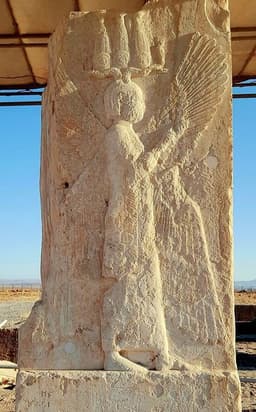
Cyrus the Great
Emperor · Ancient
83.9Total
Wedem Arad
Emperor · Medieval
48.5Total
Basic Information
Born
-600
1270
Died
-530
1314
Era
Ancient
Medieval
Nationality
Persia
Ethiopia
Occupation
Emperor
Emperor
Civilization
Middle Eastern
Other
Score Comparison
Military (10%)
82.0
50.0
Political (20%)
85.0
35.1
Influence (20%)
85.0
58.0
Legacy (20%)
90.0
45.8
Leadership (15%)
78.0
55.3
Strategy (15%)
75.0
39.6
TOTAL
83.9
48.5
Cyrus the Great — Complete Timeline
550 BC
Founding of the Achaemenid EmpirePolitical Action
Cyrus led a rebellion against the Median Empire, defeating King Astyages and capturing Ecbatana. He then united the Persian and Median tribes, establishing the Achaemenid Empire, which became the largest empire the world had yet seen.
Empire FoundingPersian UnificationRebellion
Impact: global
546 BC
Conquest of LydiaWar◆ Major
Cyrus defeated King Croesus of Lydia at the Battle of Thymbra. The Lydian capital Sardis was captured, and Croesus was taken prisoner. This conquest brought Anatolia under Persian control and secured access to the Aegean coast.
Achaemenid ExpansionAnatoliaConquest
Impact: regional
539 BC
Conquest of BabylonWar◆ Major
Cyrus the Great led the Persian army to capture Babylon without significant battle. The city's gates were opened, and Cyrus entered peacefully. This conquest added Mesopotamia to the Achaemenid Empire and marked the end of the Neo-Babylonian Empire.
Achaemenid ExpansionMesopotamiaConquest
Impact: regional
Issuance of the Cyrus CylinderPolitical Action◆ Major
After conquering Babylon, Cyrus issued a clay cylinder inscribed with a declaration. It described his policy of restoring temples, repatriating displaced peoples, and allowing religious freedom. The cylinder is often cited as an early charter of human rights.
Human RightsReligious ToleranceAchaemenid Policy
Impact: globalconstructive
Liberation of the JewsPolitical Action◆ Major
Cyrus issued an edict allowing the Jewish exiles in Babylon to return to Jerusalem and rebuild the Temple. This event is recorded in the biblical Book of Ezra and is a key moment in Jewish history, ending the Babylonian captivity.
Jewish HistoryReligious FreedomReturn from Exile
Impact: regionalconstructive
Wedem Arad — Complete Timeline
1306 AD
First Contact with EuropePolitical Action◆ Major
Wedem Arad sent an embassy to Europe, likely to the court of Pope Clement V in Avignon. This was the first recorded diplomatic contact between Ethiopia and a European power since antiquity, establishing a precedent for future Ethiopian-European relations.
Impact: regional
Expert Analysis
Cyrus the Great vs Wedem Arad
The Conqueror and the Emissary
In the spring of 539 BCE, the ancient world held its breath as the mighty walls of Babylon, long thought impregnable, opened their gates not to a storm of siege engines but to a disciplined army marching in peace. Nearly two millennia later, in 1306 CE, a far smaller drama unfolded on the diplomatic stage of Europe: an embassy from the highlands of Ethiopia arrived at the court of Pope Clement V in Avignon, bearing letters in a language few could read. Between these two moments lies a chasm not merely of time but of ambition, vision, and the very scale of what a ruler could imagine. Cyrus the Great founded an empire that stretched from the Indus to the Mediterranean, while Wedem Arad, Emperor of Ethiopia, sent a single embassy that would be forgotten for centuries. Why did one man shape the course of history while the other remains a footnote?
Origins
Cyrus was born around 600 BCE into a world of competing empires—the Medes, the Babylonians, the Lydians—each vying for dominance over the fertile crescent. He was a Persian, a member of a semi-nomadic people then subject to the Median Empire. Legends grew around his birth: that his grandfather, the Median king Astyages, dreamed the infant would overthrow him, and ordered the child killed. Cyrus survived, raised by a shepherd, and the story became a template for the destined ruler. This myth, whether true or not, reflected a culture that saw leadership as an almost cosmic calling.
Wedem Arad, born around 1270 CE, inherited a very different world. Ethiopia was a Christian kingdom isolated by geography and faith, surrounded by Muslim sultanates and pagan tribes. The Solomonic dynasty, which claimed descent from the biblical King Solomon and the Queen of Sheba, had recently restored its rule after a period of foreign domination. Wedem Arad’s legitimacy rested on this sacred lineage, not on personal conquest or charisma. His empire was small, mountainous, and inward-looking, its horizons limited by the Red Sea and the highlands.
Rise to Power
Cyrus’s ascent was a rebellion. In 550 BCE, he led the Persians against their Median overlords, defeating King Astyages and capturing the Median capital, Ecbatana. This was not a mere coup but a strategic masterstroke: Cyrus united the Persians and Medes into a single kingdom, respecting their customs and integrating their nobility. His military score of 82 and political score of 85 reflect this blend of force and diplomacy. He did not simply conquer; he co-opted.
Wedem Arad’s rise was quieter. He inherited a stable throne, his power limited by the Church, the nobility, and the rugged terrain of his realm. There is no record of a dramatic rebellion or battlefield triumph. His political score of 44.3 hints at a cautious, perhaps passive ruler, more caretaker than conqueror. His key event—the embassy to Europe in 1306—suggests a man aware of his kingdom’s isolation but unable or unwilling to change it through war.
Leadership & Governance
Cyrus’s genius lay in administration. After conquering Lydia in 546 BCE, he spared King Croesus and integrated the wealthy Lydian satrapy into his empire, preserving its trade networks. When he took Babylon in 539 BCE, he presented himself not as a foreign tyrant but as a liberator. The Cyrus Cylinder, a clay declaration, proclaimed his policy of restoring temples and respecting local gods. He allowed the Jewish exiles to return to Jerusalem and rebuild their Temple—a gesture that earned him the only mention in the Hebrew Bible of a non-Jewish ruler as a messiah. His leadership score of 80 and strategy score of 72 show a ruler who preferred persuasion to slaughter.
Wedem Arad governed a kingdom where Christianity was both a unifying force and a constraint. His embassy to Pope Clement V was a diplomatic feeler, perhaps seeking an alliance against Muslim enemies or simply recognition. But no military alliance followed, no trade routes opened. His influence score of 73.6 is surprisingly high for a ruler with so few recorded deeds, likely reflecting the symbolic importance of that first contact. Yet his military score of 24 and strategy score of 31.6 reveal a leader who could not project power beyond his borders. He was a king of a fortress, not an empire.
Triumph & Tragedy
Cyrus’s greatest triumph was the conquest of Babylon without a battle—a feat that seemed almost miraculous. His tragedy came later: he died in 530 BCE while campaigning against a nomadic tribe, the Massagetae. According to Greek historian Herodotus, his body was mutilated by the enemy queen, Tomyris, who had sworn vengeance for her son’s death. The great unifier met a violent, ignoble end.
Wedem Arad’s triumph was the embassy itself—a single, fragile thread connecting Africa to Europe. His tragedy was its irrelevance. The Pope’s court recorded the visit, but no lasting relationship emerged. Ethiopia remained isolated, and Wedem Arad died in 1314, remembered only in monastic chronicles. His legacy score of 57.8 reflects a ruler who opened a door but never walked through it.
Character & Destiny
Cyrus was a visionary pragmatist. He understood that empires built on fear crumble, while those built on loyalty endure. His tolerance was not mere kindness but a calculated policy: by respecting local traditions, he reduced rebellion. His character—confident, generous, strategic—shaped an empire that would last over two centuries.
Wedem Arad was a product of his environment. Ethiopia’s geography and history made expansion nearly impossible; the kingdom’s survival depended on defensive strength and religious unity. His embassy was a bold move for a medieval African ruler, but it lacked the resources or ambition to change the world. His character was cautious, perhaps wise, but ultimately limited by the scale of his world.
Legacy
Cyrus’s legacy is monumental. The Cyrus Cylinder is often called the first charter of human rights. His empire set the template for Persian rule, influencing Alexander the Great and later Islamic caliphates. The Jews remember him as a liberator. His total score of 79.6 places him among history’s great leaders.
Wedem Arad’s legacy is a curiosity. He is remembered primarily for that one embassy, a footnote in Ethiopian history and a blip in European records. His total score of 48.3 reflects a ruler who did little wrong but also little of lasting consequence. Yet in a sense, he represents something Cyrus never could: the quiet dignity of a kingdom that chose to reach out, even if no one reached back.
Conclusion
Cyrus the Great and Wedem Arad stand at opposite ends of the spectrum of historical impact—one a builder of worlds, the other a keeper of a world. Their differences are not merely of talent but of circumstance: Cyrus had the luck to be born into a moment of flux, when a skilled leader could reshape continents. Wedem Arad inherited a stable, isolated throne where survival was achievement enough. Yet both men faced the same fundamental question: what do you do with power? Cyrus answered by expanding the boundaries of the possible. Wedem Arad answered by sending a message in a bottle, hoping someone, somewhere, would read it. In the end, history remembers the builder, but it should not forget the messenger.
Rankings
🥇
Cyrus the GreatLeader
Mil: 82.0Pol: 85.0Inf: 85.0
83.9
🥈
Wedem Arad
Mil: 50.0Pol: 35.1Inf: 58.0
48.5
+35.4 behind
How This Comparison Works
Algorithm
Each figure is scored on 6 dimensions (0—100 scale) based on structured historical data: Military (10%), Political (20%), Influence (20%), Legacy (20%), Leadership (15%), Strategy (15%). The weighted total produces the final ranking.
Data Sources
Scores are computed from structured sub-indicators in the database. Scale factors adjust for era (Ancient ×0.85, Modern ×1.0) and civilization size (Eastern ×1.05, Other ×0.80) to account for differences in population and military scale.
Maximum 3 Figures
Comparisons are limited to 2—3 figures to ensure readability and statistical meaningfulness.
Error Margins
±5 points per dimension — Sub-scores are derived from historical records with inherent uncertainty. Two figures within 5 points on a dimension should be considered roughly equivalent in that area.
Total Score Accuracy
±3 points overall — The weighted combination of 6 dimensions produces a total score with approximately ±3 points of uncertainty. Differences of less than 3 points are not statistically significant— the figures are effectively tied.
Known Limitations
- Historical records are incomplete and uneven across civilizations
- Figures from oral-tradition societies may be underrepresented
- Occupation labels can misclassify multi-role figures
- Scores measure capability and impact, not moral character
- Quantitative scoring is a comparison tool, not absolute truth
Capability Radar
Military (10%) — Battles & Warfare
Battles
85
15
Win Rate
90
20
Expansion
92
10
Political (20%) — Governance & Reform
Reform
90
20
Diplomacy
95
55
Economy
80
15
Influence (20%) — Cultural & Global Reach
Cultural
90
20
Global
90
40
Legacy (20%) — Historical Impact
Historical
95
35
Longevity
95
30
Leadership (15%) — Power & Stability
Tenure
70
40
Stability
85
30
Strategy (15%) — Tactics & Innovation
Strategy
88
10
Tactics
80
10
Reform
75
5
Similar Comparisons
Comments & Discussion
CRUSADER_RAVEN6/16/2026
This comparison is hilariously lopsided. Cyrus literally rewrote the rulebook on empire-building—cylinder seals, multicultural governance, the whole liberation-of-Babylon propaganda machine. Wedem Arad sent some monks to France. That’s not an emperor, that’s a medieval travel agent with a prayer book. Wedem’s embassy got lost in the Vatican archives for centuries, while Cyrus’s legacy still echoes in modern Iranian identity. One created a template; the other created a footnote.
史墙小兵6/16/2026
拿雪域高原上的信使和波斯弯刀比,实在欺负人。Wedem Arad派往阿维尼翁的使团,撑死算外交试探,连军事同盟都没谈成。而Cyrus用十年时间灭了三个帝国,连攻城都玩出了心理战——放任巴比伦城内亲波斯派开门迎接。这哪是对等比较?分明是全球霸主vs地方领主。数据上说,Cyrus治下人口千万级,Wedem的高原王国能凑出十万兵马就算天顶星了。
ARISTOTLE_OF_ARABIA6/16/2026
Let’s be blunt: Cyrus was a geopolitical earthquake who fundamentally changed how power was projected and legitimized. The Cyrus Cylinder isn’t just an artifact; it’s the first recorded use of “human rights” as state propaganda. Wedem Arad sent an exploratory letter and then vanished like morning mist. If we’re ranking historical impact, Cyrus sits in the pantheon of Alexander and Caesar. Wedem Arad sits in a dusty footnote next to “embassies that didn’t work out.”
石头记史6/16/2026
把这两位放一起比较,本身就是对Cyrus的侮辱。Cyrus改革了行政体系、货币流通、宗教宽容,连犹太人都把他当救世主。而Wedem Arad做了什么?派了两个懂教会拉丁文的修士去欧洲求援,结果教皇正忙着和法王吵架,信都没读完。历史容量是有上限的,Cyrus填满了整个卷轴,Wedem只够写个批注。不是针对谁,但事实如此。
HISTORY_HERETIC6/16/2026
Everyone’s worshipping Cyrus like he’s some infallible visionary. Let’s not forget: his “liberation” of Babylon was a military occupation dressed in diplomatic robes. He let the conquered elites keep their jobs because it was pragmatic, not because he loved human rights. Wedem Arad’s embassy, however pathetic, shows a king trying to connect his isolated civilization to a wider world. That kind of reach, bold but naive, is exactly what history loves to bury. So who’s really the smarter ruler—the