Loading...
Cyrus the Great vs Theodore I Laskaris
Cyrus the Great leads by 22.1 pts · 2 figures compared
…
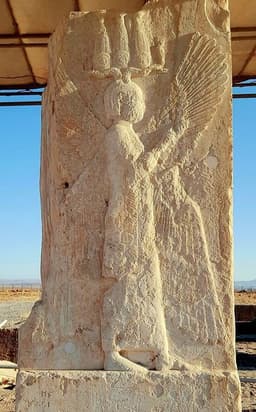
Cyrus the Great
Emperor · Ancient
83.9Total
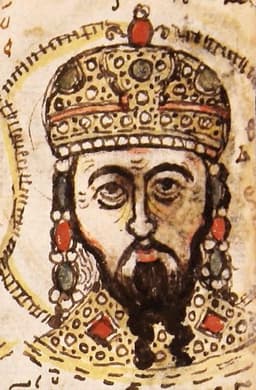
Theodore I Laskaris
Emperor · Medieval
61.8Total
Basic Information
Born
-600
1174
Died
-530
1222
Era
Ancient
Medieval
Nationality
Persia
Nicaean Empire
Occupation
Emperor
Emperor
Civilization
Middle Eastern
Western
Score Comparison
Military (10%)
82.0
65.0
Political (20%)
85.0
60.0
Influence (20%)
85.0
61.0
Legacy (20%)
90.0
56.0
Leadership (15%)
78.0
77.2
Strategy (15%)
75.0
55.0
TOTAL
83.9
61.8
Cyrus the Great — Complete Timeline
550 BC
Founding of the Achaemenid EmpirePolitical Action
Cyrus led a rebellion against the Median Empire, defeating King Astyages and capturing Ecbatana. He then united the Persian and Median tribes, establishing the Achaemenid Empire, which became the largest empire the world had yet seen.
Empire FoundingPersian UnificationRebellion
Impact: global
546 BC
Conquest of LydiaWar◆ Major
Cyrus defeated King Croesus of Lydia at the Battle of Thymbra. The Lydian capital Sardis was captured, and Croesus was taken prisoner. This conquest brought Anatolia under Persian control and secured access to the Aegean coast.
Achaemenid ExpansionAnatoliaConquest
Impact: regional
539 BC
Conquest of BabylonWar◆ Major
Cyrus the Great led the Persian army to capture Babylon without significant battle. The city's gates were opened, and Cyrus entered peacefully. This conquest added Mesopotamia to the Achaemenid Empire and marked the end of the Neo-Babylonian Empire.
Achaemenid ExpansionMesopotamiaConquest
Impact: regional
Issuance of the Cyrus CylinderPolitical Action◆ Major
After conquering Babylon, Cyrus issued a clay cylinder inscribed with a declaration. It described his policy of restoring temples, repatriating displaced peoples, and allowing religious freedom. The cylinder is often cited as an early charter of human rights.
Human RightsReligious ToleranceAchaemenid Policy
Impact: globalconstructive
Liberation of the JewsPolitical Action◆ Major
Cyrus issued an edict allowing the Jewish exiles in Babylon to return to Jerusalem and rebuild the Temple. This event is recorded in the biblical Book of Ezra and is a key moment in Jewish history, ending the Babylonian captivity.
Jewish HistoryReligious FreedomReturn from Exile
Impact: regionalconstructive
Theodore I Laskaris — Complete Timeline
1204 AD
Foundation of the Empire of NicaeaPolitical Action
After the Fourth Crusade captured Constantinople, Theodore I Laskaris fled to Nicaea in Asia Minor and established a Byzantine government-in-exile. He organized resistance against the Latin Empire and the Seljuk Turks, laying the foundation for the Nicaean Empire as the primary successor state of Byzantium.
Fourth CrusadeSuccessor StateExile Government
Impact: regionalconstructive
1208 AD
Coronation as emperor by the Patriarch of ConstantinoplePolitical Action◆ Major
Theodore I Laskaris was formally crowned as emperor by the newly elected Patriarch of Constantinople-in-exile, Michael IV Autoreianos. This coronation legitimized the Nicaean Empire as the rightful continuation of the Byzantine Empire, with full ecclesiastical authority.
CoronationLegitimacyPatriarchate
Impact: regionalconstructive
1211 AD
Battle of Antioch on the MeanderWar◆ Major
Theodore I Laskaris defeated the Seljuk Sultanate of Rum at the Battle of Antioch on the Meander. The victory secured Nicaean control over western Anatolia and prevented Seljuk expansion into Byzantine territories, establishing Theodore as a major regional power.
Byzantine-Seljuk WarsMilitary VictoryAnatolian Campaign
Impact: regional
Defeat of the Latin Empire at the Battle of RhyndacusWar
Theodore I Laskaris led Nicaean forces to a victory over the Latin Empire at the Battle of Rhyndacus. The battle halted Latin expansion into Asia Minor and secured Nicaean control over the region, strengthening the Byzantine resistance against the crusader states.
Latin EmpireMilitary VictoryAsia Minor
Impact: regional
Expert Analysis
Cyrus the Great vs Theodore I Laskaris
# The Builder and the Restorer: Cyrus the Great and Theodore I Laskaris
On a spring morning in 539 BCE, the gates of Babylon swung open not to the roar of battle, but to the quiet tread of a conqueror who came as a liberator. More than seventeen centuries later, another emperor—fleeing the sack of his own capital—scrambled across the Bosphorus to a small Anatolian town called Nicaea, clutching the remnants of an empire in his hands. Cyrus the Great and Theodore I Laskaris never met, never could have met. Yet both faced the same fundamental question: How do you build something lasting from the ruins of the old? Their answers—and their fates—could not have been more different.
Origins
Cyrus was born around 600 BCE into a world of competing empires. According to legend, his grandfather Astyages, the Median king, dreamed that his grandson would overthrow him and ordered the infant killed. The child survived, raised by a shepherd, and the prophecy came true. Whether myth or fact, the story reveals something essential: Cyrus emerged from the margins, a Persian prince from a vassal people, destined to upend the established order.
Theodore I Laskaris, born in 1174, was no marginal figure. He was a Byzantine aristocrat, connected by marriage to the ruling Angelos dynasty. When the Fourth Crusade stormed Constantinople in 1204—not by Muslim armies, but by fellow Christians bearing crosses—Theodore was among the desperate nobles who fled east. He arrived in Nicaea with little more than his name, his wits, and a burning conviction that Byzantium must not die.
Rise to Power
Cyrus’s path to power was swift and audacious. In 550 BCE, he led a rebellion against his Median overlords. At the Battle of Ecbatana, he defeated Astyages and absorbed the Median Empire into his own. Within a decade, he turned west. In 546 BCE, he faced Croesus of Lydia, whose wealth was legendary. At the Battle of Thymbra, Cyrus deployed a novel tactic—using camels to spook the Lydian cavalry—and captured Sardis. Croesus, according to some accounts, became Cyrus’s advisor.
Theodore’s rise was slower and more precarious. In 1204, he was a refugee. For four years, he fought to consolidate control over a fragment of Byzantine Anatolia while Latin crusaders carved up the rest. His coronation in 1208 by the newly elected Patriarch of Constantinople-in-exile was a political masterstroke: it gave his fledgling state legitimacy. He was not just a warlord; he was the true emperor.
Leadership & Governance
Here the two men diverged fundamentally. Cyrus governed through inclusion. When he conquered Babylon in 539 BCE, he famously ordered his army not to loot the temples. He issued the Cyrus Cylinder, a clay declaration that restored local cults and allowed deported peoples—including the Jews—to return home. “I am Cyrus, king of the universe,” the cylinder proclaims, “who made the great gods dwell in peace.” His empire was a mosaic of cultures, each allowed its own laws and gods, bound only by loyalty to the Persian king.
Theodore governed through survival. His Empire of Nicaea was a fortress state, hemmed in by the Latin Empire to the west and the Seljuk Turks to the east. In 1211, he faced both threats. At the Battle of Antioch on the Meander, he defeated the Seljuk Sultanate of Rum, securing Nicaea’s eastern frontier. Later that same year, at the Battle of Rhyndacus, he halted a Latin advance. These victories were not expansions but salvations. Theodore’s genius lay not in building a new order, but in preserving an old one.
Triumph & Tragedy
Cyrus’s greatest triumph was also his most humane. The liberation of the Jews in 539 BCE—recorded in the biblical Book of Ezra—was a gesture of such political wisdom that it echoes still. By allowing exiled peoples to return home, he turned conquered subjects into grateful allies. His tragedy came later, on the battlefield. In 530 BCE, Cyrus marched against the Massagetae, a nomadic tribe east of the Caspian. He was killed in battle, his body reportedly mutilated and thrown into a wineskin filled with blood.
Theodore’s triumph was the survival of Byzantium itself. When he died in 1222, Nicaea was strong enough to reclaim Constantinople just thirty-nine years later. His tragedy was that he never saw it. He spent his reign fighting, always fighting, never knowing if his work would outlast him.
Character & Destiny
Cyrus was a visionary. He thought in centuries, not years. His policies of tolerance were not just pragmatic—they reflected a genuine belief that diversity strengthened his empire. “I will respect the traditions, customs, and religions of the nations of my kingdom,” the Cyrus Cylinder reads, “and never let any of my governors look down on or insult them.”
Theodore was a survivor. He thought in days, not decades. Every decision was defensive, every alliance temporary. He was crowned emperor, but he ruled like a besieged general. His personality was forged in crisis, and crisis never left him.
Legacy
Cyrus’s legacy is monumental. The Achaemenid Empire he founded lasted over two centuries. The Cyrus Cylinder is sometimes called the first human rights charter. Even Alexander the Great, centuries later, would show respect for Cyrus’s tomb. In the modern world, Cyrus remains a symbol of enlightened rule.
Theodore’s legacy is quieter but no less real. He preserved the Byzantine flame when it might have been extinguished. Without Nicaea, there would have been no Byzantine restoration in 1261, no Palaiologan Renaissance. He is remembered by historians as the founder of the Empire of Nicaea, but rarely by the general public.
Conclusion
Cyrus built an empire from nothing, and it became the largest the world had ever seen. Theodore rebuilt an empire from ruins, and it became a bridge between two worlds. One conquered with generosity; the other survived through grit. Their stories remind us that greatness takes many forms—and that sometimes, the most enduring legacy is not the size of the kingdom, but the humanity of the ruler.
Rankings
🥇
Cyrus the GreatLeader
Mil: 82.0Pol: 85.0Inf: 85.0
83.9
🥈
Theodore I Laskaris
Mil: 65.0Pol: 60.0Inf: 61.0
61.8
+22.1 behind
How This Comparison Works
Algorithm
Each figure is scored on 6 dimensions (0—100 scale) based on structured historical data: Military (10%), Political (20%), Influence (20%), Legacy (20%), Leadership (15%), Strategy (15%). The weighted total produces the final ranking.
Data Sources
Scores are computed from structured sub-indicators in the database. Scale factors adjust for era (Ancient ×0.85, Modern ×1.0) and civilization size (Eastern ×1.05, Other ×0.80) to account for differences in population and military scale.
Maximum 3 Figures
Comparisons are limited to 2—3 figures to ensure readability and statistical meaningfulness.
Error Margins
±5 points per dimension — Sub-scores are derived from historical records with inherent uncertainty. Two figures within 5 points on a dimension should be considered roughly equivalent in that area.
Total Score Accuracy
±3 points overall — The weighted combination of 6 dimensions produces a total score with approximately ±3 points of uncertainty. Differences of less than 3 points are not statistically significant— the figures are effectively tied.
Known Limitations
- Historical records are incomplete and uneven across civilizations
- Figures from oral-tradition societies may be underrepresented
- Occupation labels can misclassify multi-role figures
- Scores measure capability and impact, not moral character
- Quantitative scoring is a comparison tool, not absolute truth
Capability Radar
Military (10%) — Battles & Warfare
Battles
85
65
Win Rate
90
70
Expansion
92
60
Political (20%) — Governance & Reform
Reform
90
65
Diplomacy
95
70
Economy
80
60
Influence (20%) — Cultural & Global Reach
Cultural
90
50
Global
90
45
Legacy (20%) — Historical Impact
Historical
95
65
Longevity
95
55
Leadership (15%) — Power & Stability
Tenure
70
70
Stability
85
65
Strategy (15%) — Tactics & Innovation
Strategy
88
75
Tactics
80
60
Reform
75
55
Similar Comparisons
Comments & Discussion
SPQR_Soul6/16/2026
Cyrus conquered Babylon without breaking its walls—that’s not liberation, that’s clever siegecraft. The Persians diverted the Euphrates to sneak in, then Cyrus played nice to avoid revolt. Meanwhile Theodore Laskaris held Nicaea against Frankish knights with guts and grit, not propaganda. Cyrus built an empire on borrowed Babylonian systems; Theodore actually kept Byzantine learning alive. One’s a PR genius, the other’s a real pragmatist.
城砖考据家6/16/2026
非要把两个没法比的人物硬放一起?居鲁士统治着从印度到地中海的庞然大物,而塞奥多利只守着一小块安纳托利亚土地。历史比较不是做沙拉,把苹果和橙子切碎了混着吃。居鲁士的政治艺术来自古近东几千年文明积淀,塞奥多利只是帝国碎片的看守者。语境不同,功业就更没法直接排序。
Norman_Conqueror6/16/2026
Let’s talk real numbers: Cyrus united Medes, Persians, Elamites, Babylonians, and more within a decade. Theodore’s “empire” was Nicaea plus a few Aegean ports—population maybe 200,000 versus half a million under Cyrus’s direct control. The Bosporus crossing in 1204 was a tactical retreat, not a strategic masterstroke. Cyrus conquered Babylon with the Persians, Medes, and defecting Babylonian troops. Theodore rallied with refugees. Scale matters, folks.
古典学判官6/16/2026
居鲁士圆筒铭文记载“我进入巴比伦和平地”,阿卡德语写就的统治术完美无缺。而塞奥多利?尼卡亚的希腊文献里他常自称“流亡者”,而不是“皇帝”。居鲁士打造了多元帝国的理想模型,至今伊朗人还叫他“父亲”。塞奥多利只是在拜占庭残骸上拼贴碎片,终究没能阻止1204年后的文化断裂。一位是创始者,一位是消防员。
The_Myth_Slayer6/16/2026
Cyrus’s “liberation” of Babylon is the West’s favorite feel-good story—rolls right off Herodotus’s tongue. But let’s check the clay tablets. The Persians executed the Babylonian king Belshazzar, imposed heavy tribute, and Cyrus’s famous “declaration” is likely a retroactive PR puff from the Persian court. Theodore didn’t conquer or liberate; he just ran faster when Constantinople fell. Both are image-makers. The real hero is the unknown baker in Nicaea who fed the refugees.