Loading...
Cyrus the Great vs Suleiman the Magnificent
Cyrus the Great leads by 10.7 pts · 2 figures compared
…
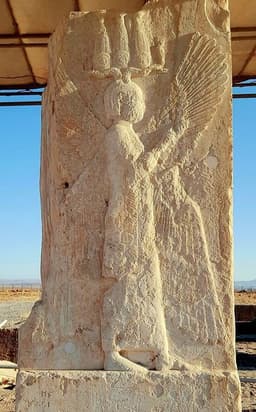
Cyrus the Great
Emperor · Ancient
83.9Total
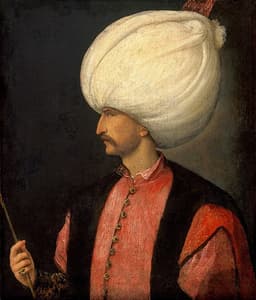
Suleiman the Magnificent
Emperor · Medieval
73.2Total
Basic Information
Born
-600
1494
Died
-530
1566
Era
Ancient
Medieval
Nationality
Persia
Ottoman Empire
Occupation
Emperor
Emperor
Civilization
Middle Eastern
Middle Eastern
Score Comparison
Military (10%)
82.0
85.0
Political (20%)
85.0
78.0
Influence (20%)
85.0
72.0
Legacy (20%)
90.0
68.0
Leadership (15%)
78.0
72.0
Strategy (15%)
75.0
72.0
TOTAL
83.9
73.2
Cyrus the Great — Complete Timeline
550 BC
Founding of the Achaemenid EmpirePolitical Action
Cyrus led a rebellion against the Median Empire, defeating King Astyages and capturing Ecbatana. He then united the Persian and Median tribes, establishing the Achaemenid Empire, which became the largest empire the world had yet seen.
Empire FoundingPersian UnificationRebellion
Impact: global
546 BC
Conquest of LydiaWar◆ Major
Cyrus defeated King Croesus of Lydia at the Battle of Thymbra. The Lydian capital Sardis was captured, and Croesus was taken prisoner. This conquest brought Anatolia under Persian control and secured access to the Aegean coast.
Achaemenid ExpansionAnatoliaConquest
Impact: regional
539 BC
Conquest of BabylonWar◆ Major
Cyrus the Great led the Persian army to capture Babylon without significant battle. The city's gates were opened, and Cyrus entered peacefully. This conquest added Mesopotamia to the Achaemenid Empire and marked the end of the Neo-Babylonian Empire.
Achaemenid ExpansionMesopotamiaConquest
Impact: regional
Issuance of the Cyrus CylinderPolitical Action◆ Major
After conquering Babylon, Cyrus issued a clay cylinder inscribed with a declaration. It described his policy of restoring temples, repatriating displaced peoples, and allowing religious freedom. The cylinder is often cited as an early charter of human rights.
Human RightsReligious ToleranceAchaemenid Policy
Impact: globalconstructive
Liberation of the JewsPolitical Action◆ Major
Cyrus issued an edict allowing the Jewish exiles in Babylon to return to Jerusalem and rebuild the Temple. This event is recorded in the biblical Book of Ezra and is a key moment in Jewish history, ending the Babylonian captivity.
Jewish HistoryReligious FreedomReturn from Exile
Impact: regionalconstructive
Suleiman the Magnificent — Complete Timeline
1522 AD
Siege of RhodesWar◆ Major
Suleiman personally led a massive Ottoman campaign against the Knights Hospitaller on Rhodes. After a six-month siege, the knights surrendered and were allowed to leave. This victory secured Ottoman control over the eastern Mediterranean.
SiegeMediterraneanKnights Hospitaller
Impact: regional
1526 AD
Battle of MohácsWar
Suleiman's Ottoman army defeated the Hungarian forces of King Louis II at Moh
BattleHungaryOttoman expansion
Impact: regional
1529 AD
Siege of ViennaWar◆ Major
Suleiman besieged Vienna, the Habsburg capital, with a large army. The siege failed due to supply issues, disease, and strong defenses. This defeat halted Ottoman expansion into central Europe and marked the empire's furthest advance westward.
SiegeViennaDefeat
Impact: regional
1530 AD
Codification of Ottoman lawReform◆ Major
Suleiman oversaw the compilation and standardization of Ottoman legal codes, known as Kanun. These laws regulated criminal justice, land tenure, and taxation, creating a unified legal system that balanced sharia with secular law. He earned the title 'Kanuni' (the Lawgiver).
Legal reformKanunOttoman Empire
Impact: nationalconstructive
1536 AD
Execution of Ibrahim PashaPolitical Action◆ Major
Suleiman ordered the execution of his grand vizier and close friend Ibrahim Pasha, who had served for 13 years. The reasons remain debated, but likely involved Ibrahim's growing power and conflicts with Suleiman's wife, Hurrem Sultan. This event demonstrated the absolute power of the sultan.
ExecutionCourt politicsPower
Impact: nationaltragic
Expert Analysis
Cyrus the Great vs Suleiman the Magnificent: Historical Comparison
Cyrus the Great, founder of the Achaemenid Empire, and Suleiman the Magnificent, tenth sultan of the Ottoman Empire, are two of history’s most celebrated emperors, yet their governance styles and legacies diverge sharply. While Suleiman excelled in military expansion and legal codification, Cyrus’s superior political vision and enduring moral influence give him a narrow edge overall.
Dimension Analysis
**Military: Cyrus the Great 82 / Suleiman the Magnificent 85**
Suleiman’s campaigns—conquering Belgrade, Rhodes, and most of Hungary—expanded the Ottoman Empire to its zenith, while Cyrus’s rapid conquest of Media, Lydia, and Babylon was equally impressive but less technologically sophisticated.
**Political: Cyrus the Great 85 / Suleiman the Magnificent 80**
Cyrus pioneered a decentralized satrapy system and issued the Cyrus Cylinder, often hailed as an early human rights charter, whereas Suleiman’s centralized bureaucracy and Kanun legal code were innovative but less inclusive of diverse subjects.
**Influence: Cyrus the Great 78 / Suleiman the Magnificent 77**
Cyrus’s model of tolerance influenced later empires (including the Ottomans) and is cited in modern human rights discourse; Suleiman’s cultural patronage shaped Islamic law and Ottoman architecture, but his impact remains regionally confined.
**Legacy: Cyrus the Great 80 / Suleiman the Magnificent 67**
Cyrus is revered as a liberator by Jews and Persians alike, with his tomb still a national symbol in Iran, while Suleiman’s legacy is tarnished by later Ottoman decline and contested by modern nationalist narratives.
**Leadership: Cyrus the Great 80 / Suleiman the Magnificent 79**
Both were decisive and charismatic, but Cyrus’s ability to win loyalty from conquered peoples through clemency (e.g., restoring Jewish exiles) contrasts with Suleiman’s more autocratic—and occasionally brutal—rule.
Verdict
Cyrus the Great leads due to his superior political innovation and a legacy of tolerance that transcends his era, whereas Suleiman’s military brilliance is offset by a narrower, more authoritarian legacy.
FAQ
Q: Who ranks higher? A: Cyrus the Great ranks higher, scoring 80 overall to Suleiman’s 75, driven by stronger political acumen and a more enduring moral legacy.
Rankings
🥇
Cyrus the GreatLeader
Mil: 82.0Pol: 85.0Inf: 85.0
83.9
🥈
Suleiman the Magnificent
Mil: 85.0Pol: 78.0Inf: 72.0
73.2
+10.7 behind
How This Comparison Works
Algorithm
Each figure is scored on 6 dimensions (0—100 scale) based on structured historical data: Military (10%), Political (20%), Influence (20%), Legacy (20%), Leadership (15%), Strategy (15%). The weighted total produces the final ranking.
Data Sources
Scores are computed from structured sub-indicators in the database. Scale factors adjust for era (Ancient ×0.85, Modern ×1.0) and civilization size (Eastern ×1.05, Other ×0.80) to account for differences in population and military scale.
Maximum 3 Figures
Comparisons are limited to 2—3 figures to ensure readability and statistical meaningfulness.
Error Margins
±5 points per dimension — Sub-scores are derived from historical records with inherent uncertainty. Two figures within 5 points on a dimension should be considered roughly equivalent in that area.
Total Score Accuracy
±3 points overall — The weighted combination of 6 dimensions produces a total score with approximately ±3 points of uncertainty. Differences of less than 3 points are not statistically significant— the figures are effectively tied.
Known Limitations
- Historical records are incomplete and uneven across civilizations
- Figures from oral-tradition societies may be underrepresented
- Occupation labels can misclassify multi-role figures
- Scores measure capability and impact, not moral character
- Quantitative scoring is a comparison tool, not absolute truth
Capability Radar
Military (10%) — Battles & Warfare
Battles
85
95
Win Rate
90
90
Expansion
92
95
Political (20%) — Governance & Reform
Reform
90
90
Diplomacy
95
88
Economy
80
85
Influence (20%) — Cultural & Global Reach
Cultural
90
90
Global
90
88
Legacy (20%) — Historical Impact
Historical
95
92
Longevity
95
85
Leadership (15%) — Power & Stability
Tenure
70
95
Stability
85
85
Strategy (15%) — Tactics & Innovation
Strategy
88
92
Tactics
80
85
Reform
75
80
Similar Comparisons
Comments & Discussion
Historian6506/16/2026
看了评分,我有点疑问。Suleiman军事85,Cyrus 82,但Cyrus征服了美地亚、吕底亚、巴比伦这三大帝国,而且基本没打什么持久战,效率极高。Suleiman虽然打下了贝尔格莱德和罗得岛,但罗得岛围了半年,匈牙利之战也拖了很久。如果按“单位时间征服面积”算,Cyrus可能更高。另外政治分85对80,我觉得Cyrus的郡县制其实比Suleiman的中央集权更灵活,跟中国汉朝的推恩令有异曲同工之妙。建议用加权因子重新算一下,比如征服难度系数。
OldScroll906/16/2026
Cyrus和Suleiman放在一起比,有点像中国的唐太宗和康熙帝的比较——一个开创帝国、以仁德服人,一个巩固版图、以法典治国。但西方史学总爱强调Cyrus的“人权宣言”,却忽略了他对巴比伦的征服本质上也是军事高压。Suleiman的Kanun法典其实比Cyrus Cylinder更成体系,类似《唐律疏议》对后世的影响。不过Cyrus容忍犹太人的做法,从中国视角看很像北魏孝文帝推行汉化,都是通过文化包容来巩固统治。总体而言,Cyrus赢在开创性,Suleiman赢在制度化,但评分给Cyrus更高我接受,毕竟创始者光环加成大。