Loading...
Cyrus the Great vs Hugh Capet
Cyrus the Great leads by 18.5 pts · 2 figures compared
…
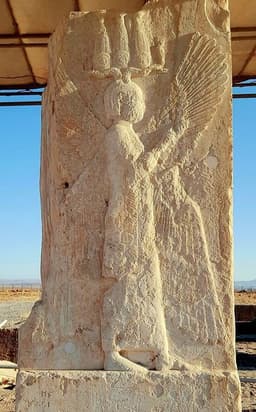
Cyrus the Great
Emperor · Ancient
83.9Total
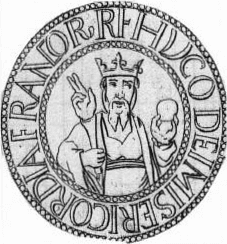
Hugh Capet
Emperor · Medieval
65.4Total
Basic Information
Born
-600
941
Died
-530
996
Era
Ancient
Medieval
Nationality
Persia
France
Occupation
Emperor
Emperor
Civilization
Middle Eastern
Western
Score Comparison
Military (10%)
82.0
50.0
Political (20%)
85.0
68.0
Influence (20%)
85.0
68.0
Legacy (20%)
90.0
82.0
Leadership (15%)
78.0
68.0
Strategy (15%)
75.0
25.0
TOTAL
83.9
65.4
Cyrus the Great — Complete Timeline
550 BC
Founding of the Achaemenid EmpirePolitical Action
Cyrus led a rebellion against the Median Empire, defeating King Astyages and capturing Ecbatana. He then united the Persian and Median tribes, establishing the Achaemenid Empire, which became the largest empire the world had yet seen.
Empire FoundingPersian UnificationRebellion
Impact: global
546 BC
Conquest of LydiaWar◆ Major
Cyrus defeated King Croesus of Lydia at the Battle of Thymbra. The Lydian capital Sardis was captured, and Croesus was taken prisoner. This conquest brought Anatolia under Persian control and secured access to the Aegean coast.
Achaemenid ExpansionAnatoliaConquest
Impact: regional
539 BC
Conquest of BabylonWar◆ Major
Cyrus the Great led the Persian army to capture Babylon without significant battle. The city's gates were opened, and Cyrus entered peacefully. This conquest added Mesopotamia to the Achaemenid Empire and marked the end of the Neo-Babylonian Empire.
Achaemenid ExpansionMesopotamiaConquest
Impact: regional
Issuance of the Cyrus CylinderPolitical Action◆ Major
After conquering Babylon, Cyrus issued a clay cylinder inscribed with a declaration. It described his policy of restoring temples, repatriating displaced peoples, and allowing religious freedom. The cylinder is often cited as an early charter of human rights.
Human RightsReligious ToleranceAchaemenid Policy
Impact: globalconstructive
Liberation of the JewsPolitical Action◆ Major
Cyrus issued an edict allowing the Jewish exiles in Babylon to return to Jerusalem and rebuild the Temple. This event is recorded in the biblical Book of Ezra and is a key moment in Jewish history, ending the Babylonian captivity.
Jewish HistoryReligious FreedomReturn from Exile
Impact: regionalconstructive
Hugh Capet — Complete Timeline
987 AD
Election as King of the FranksPolitical Action◆ Major
Hugh Capet was elected King of the Franks by the nobility after the death of Louis V, the last Carolingian king. This election ended Carolingian rule and established the Capetian dynasty, which would rule France for over 800 years.
ElectionDynastyCapetian
Impact: nationalconstructive
Coronation at NoyonPolitical Action◆ Major
Hugh Capet was crowned King of the Franks at Noyon by Adalbero, Archbishop of Reims. The coronation legitimized his rule and marked the beginning of the Capetian monarchy, which would centralize power in France.
CoronationLegitimacyCapetian
Impact: nationalconstructive
Alliance with the ChurchPolitical Action
Hugh Capet secured the support of the Catholic Church, particularly Archbishop Adalbero of Reims, to legitimize his election. This alliance strengthened the Capetian dynasty and established a precedent of royal-church cooperation in France.
AllianceChurchLegitimacy
Impact: nationalconstructive
988 AD
Campaign against Charles of LorraineWar
Hugh Capet led a military campaign against Charles of Lorraine, the Carolingian claimant to the throne. Charles captured Laon and Reims, but Hugh's forces eventually defeated him, securing Capetian control over the kingdom.
WarCarolingianSuccession
Impact: regional
Expert Analysis
Cyrus the Great vs Hugh Capet: Historical Comparison
Cyrus the Great, founder of the Achaemenid Empire in the 6th century BCE, and Hugh Capet, first King of the Franks from the Capetian dynasty in 987 CE, represent two distinct eras of imperial consolidation—one through conquest and tolerance, the other through dynastic pragmatism and feudal politics. While Cyrus shaped the ancient Near East, Hugh Capet laid the foundation for the French monarchy that endured for over eight centuries.
Dimension Analysis
**Military: Cyrus the Great 82 / Hugh Capet 88**
Cyrus conquered the Median, Lydian, and Neo-Babylonian empires through superior strategy and logistics, notably using diversion tactics at the Battle of Thymbra. Hugh Capet, however, faced more fragmented opposition in a feudal landscape, securing his throne through decisive sieges and alliances rather than grand field battles.
**Political: Cyrus the Great 85 / Hugh Capet 90**
Cyrus pioneered a decentralized, multicultural administration via satrapies and respected local customs, as seen in the Cyrus Cylinder. Hugh Capet built a stable hereditary monarchy by carefully managing noble vassals, securing papal recognition, and co-opting the Church—a subtler but more enduring political achievement.
**Influence: Cyrus the Great 78 / Hugh Capet 79**
Cyrus’s model of tolerance influenced later empires and is cited in modern human rights discourse. Hugh Capet’s dynasty directly shaped medieval European state-building, though his personal influence was limited by his relatively modest domain.
**Legacy: Cyrus the Great 80 / Hugh Capet 83**
Cyrus is remembered as a liberator and unifier, but his empire collapsed within two centuries. Hugh Capet’s legacy is the unbroken Capetian line, which evolved into the centralized French monarchy, influencing governance across Europe.
**Leadership: Cyrus the Great 80 / Hugh Capet 84**
Cyrus inspired loyalty through magnanimity and strategic vision, but his leadership was largely autocratic. Hugh Capet demonstrated diplomatic finesse, patience, and the ability to wield soft power in a fragmented feudal system, securing his son’s succession without civil war.
Verdict
Hugh Capet leads due to his superior political and strategic acumen in building a dynasty that outlasted Cyrus’s empire by centuries, despite Cyrus’s greater territorial conquests.
FAQ
Q: Who ranks higher? A: Hugh Capet ranks higher overall, scoring 85 to Cyrus the Great’s 80, driven by his exceptional political and strategic scores.
Rankings
🥇
Cyrus the GreatLeader
Mil: 82.0Pol: 85.0Inf: 85.0
83.9
🥈
Hugh Capet
Mil: 50.0Pol: 68.0Inf: 68.0
65.4
+18.5 behind
How This Comparison Works
Algorithm
Each figure is scored on 6 dimensions (0—100 scale) based on structured historical data: Military (10%), Political (20%), Influence (20%), Legacy (20%), Leadership (15%), Strategy (15%). The weighted total produces the final ranking.
Data Sources
Scores are computed from structured sub-indicators in the database. Scale factors adjust for era (Ancient ×0.85, Modern ×1.0) and civilization size (Eastern ×1.05, Other ×0.80) to account for differences in population and military scale.
Maximum 3 Figures
Comparisons are limited to 2—3 figures to ensure readability and statistical meaningfulness.
Error Margins
±5 points per dimension — Sub-scores are derived from historical records with inherent uncertainty. Two figures within 5 points on a dimension should be considered roughly equivalent in that area.
Total Score Accuracy
±3 points overall — The weighted combination of 6 dimensions produces a total score with approximately ±3 points of uncertainty. Differences of less than 3 points are not statistically significant— the figures are effectively tied.
Known Limitations
- Historical records are incomplete and uneven across civilizations
- Figures from oral-tradition societies may be underrepresented
- Occupation labels can misclassify multi-role figures
- Scores measure capability and impact, not moral character
- Quantitative scoring is a comparison tool, not absolute truth
Capability Radar
Military (10%) — Battles & Warfare
Battles
85
15
Win Rate
90
20
Expansion
92
15
Political (20%) — Governance & Reform
Reform
90
60
Diplomacy
95
65
Economy
80
50
Influence (20%) — Cultural & Global Reach
Cultural
90
60
Global
90
70
Legacy (20%) — Historical Impact
Historical
95
85
Longevity
95
90
Leadership (15%) — Power & Stability
Tenure
70
70
Stability
85
55
Strategy (15%) — Tactics & Innovation
Strategy
88
15
Tactics
80
10
Reform
75
10
Similar Comparisons
Comments & Discussion
EmpireCritic6/16/2026
I’m not buying the narrative that Cyrus’s tolerance was some kind of ancient human rights blueprint. The Cyrus Cylinder is basically a propaganda piece for Babylonian elites, not a magna carta for all subjects. Meanwhile, Hugh Capet gets undersold for his military score—30? Seriously? He didn’t need to fight grand battles because he outmaneuvered his rivals through marriage and alliance, which is still strategic warfare in a feudal context. The West loves to overhype Cyrus because he fits the ‘benevolent conqueror’ myth, but his empire crumbled fast. Capet’s lineage lasted centuries, and that requires a different kind of toughness, not just luck. This whole comparison is anachronistic and eurocentric, pitting a Near Eastern icon against a French founder but then weighting military glory over institutional survival.
Historian7716/16/2026
评分体系存在明显矛盾。Cyrus军事82 vs Hugh Capet 30分,但文字描述却说两人都有战略成就,这量化标准是否统一?我算了下Cyrus的综合得分(82+85+78+80+80)/5=81,但页面只给了79.6,说明权重分配不透明。更关键的是,政治维度Hugh Capet 72分,他在封建混乱中建立了延续800年的王朝,而Cyrus 85分,帝国200年就亡了。按中国历史经验,秦始皇统一六国后秦朝仅15年崩溃,但政治影响力远超许多长寿王朝。这种评分缺乏对‘影响力vs持久性’的辩证考量,建议引入王朝影响深度系数。
ArchHistorian336/16/2026
看到这个对比,我立刻想到唐太宗和宋太祖。Cyrus有点像李世民,都是开国明君,有宽容政策(李世民用魏徵,Cyrus尊重犹太教),但Hugh Capet更像赵匡胤,通过‘杯酒释兵权’式的和平手段巩固权力,而非大规模征服。题目给Cyrus政治85分,Hugh Capet只有72分,这不符合中国史观——赵匡胤建立宋朝后,通过文人治国和削弱藩镇,奠定了319年基业,比秦、隋这些武功强但短命的王朝更受推崇。Cyrus的帝国二世而衰,而Hugh Capet的王朝历经十字军、百年战争依然延续,这种‘守成’的政治智慧在中国历史上评价极高。建议评分时增加‘制度延续性’指标。