Loading...
Cyrus the Great vs Emperor Taizong of Tang
Cyrus the Great leads by 5.0 pts · 2 figures compared
…
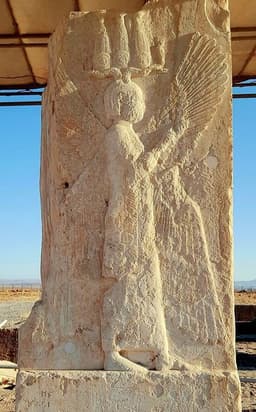
Cyrus the Great
Emperor · Ancient
83.9Total
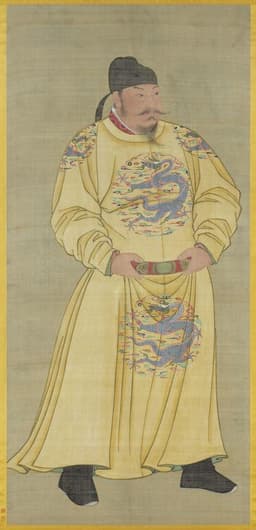
Emperor Taizong of Tang
Emperor · Medieval
78.9Total
Basic Information
Born
-600
598
Died
-530
649
Era
Ancient
Medieval
Nationality
Persia
China
Occupation
Emperor
Emperor
Civilization
Middle Eastern
Eastern
Score Comparison
Military (10%)
82.0
77.5
Political (20%)
85.0
82.0
Influence (20%)
85.0
85.0
Legacy (20%)
90.0
71.4
Leadership (15%)
78.0
78.0
Strategy (15%)
75.0
80.6
TOTAL
83.9
78.9
Cyrus the Great — Complete Timeline
550 BC
Founding of the Achaemenid EmpirePolitical Action
Cyrus led a rebellion against the Median Empire, defeating King Astyages and capturing Ecbatana. He then united the Persian and Median tribes, establishing the Achaemenid Empire, which became the largest empire the world had yet seen.
Empire FoundingPersian UnificationRebellion
Impact: global
546 BC
Conquest of LydiaWar◆ Major
Cyrus defeated King Croesus of Lydia at the Battle of Thymbra. The Lydian capital Sardis was captured, and Croesus was taken prisoner. This conquest brought Anatolia under Persian control and secured access to the Aegean coast.
Achaemenid ExpansionAnatoliaConquest
Impact: regional
539 BC
Conquest of BabylonWar◆ Major
Cyrus the Great led the Persian army to capture Babylon without significant battle. The city's gates were opened, and Cyrus entered peacefully. This conquest added Mesopotamia to the Achaemenid Empire and marked the end of the Neo-Babylonian Empire.
Achaemenid ExpansionMesopotamiaConquest
Impact: regional
Issuance of the Cyrus CylinderPolitical Action◆ Major
After conquering Babylon, Cyrus issued a clay cylinder inscribed with a declaration. It described his policy of restoring temples, repatriating displaced peoples, and allowing religious freedom. The cylinder is often cited as an early charter of human rights.
Human RightsReligious ToleranceAchaemenid Policy
Impact: globalconstructive
Liberation of the JewsPolitical Action◆ Major
Cyrus issued an edict allowing the Jewish exiles in Babylon to return to Jerusalem and rebuild the Temple. This event is recorded in the biblical Book of Ezra and is a key moment in Jewish history, ending the Babylonian captivity.
Jewish HistoryReligious FreedomReturn from Exile
Impact: regionalconstructive
Emperor Taizong of Tang — Complete Timeline
626 AD
Reign of ZhenguanReform
Emperor Taizong initiated the Zhenguan era, characterized by efficient governance, legal codification, and economic recovery. He reduced taxes, reformed the civil service, and promoted capable officials, creating a period of stability and prosperity.
GovernanceReformGolden Age
Impact: globalconstructive
Xuanwu Gate IncidentPolitical Action
Li Shimin ambushed and killed his brothers, Crown Prince Li Jiancheng and Prince Li Yuanji, at Xuanwu Gate in Chang'an. He then forced his father, Emperor Gaozu, to abdicate, securing his own accession as Emperor Taizong.
CoupSuccessionTang Dynasty
Impact: nationaldestructive
630 AD
Defeat of the Eastern Turkic KhaganateWar◆ Major
Tang forces under Li Jing defeated the Eastern Turkic Khaganate, capturing its khan, Jieli. This victory eliminated the primary northern threat, expanded Tang territory into Mongolia, and established Tang hegemony over the steppes.
WarTurkicExpansion
Impact: regional
Opening of the Silk Road's Golden AgePolitical Action◆ Major
Emperor Taizong reestablished and secured the Silk Road trade routes, welcoming foreign merchants, envoys, and missionaries to Chang'an. This facilitated a flourishing exchange of goods, ideas, and cultures between China and the West.
Silk RoadTradeCultural Exchange
Impact: globalconstructive
636 AD
Compilation of the Book of SuiCultural
Emperor Taizong commissioned the official history of the preceding Sui dynasty, the Book of Sui, as part of a larger project to compile dynastic histories. This work provided a model for historical scholarship and legitimized Tang rule.
HistoriographyCultureLegitimacy
Impact: nationalconstructive
Expert Analysis
Origins
Cyrus the Great (c. 600–530 BCE) was born into the Achaemenid clan in Persis (modern Iran), a vassal of the Median Empire. His father was Cambyses I, king of Anshan, and his mother was Mandane, daughter of the Median king Astyages. According to Herodotus, Cyrus led a rebellion against his grandfather, uniting the Persian tribes. In contrast, Emperor Taizong of Tang (598–649 CE) was born Li Shimin, the second son of Li Yuan, a Sui dynasty general who founded the Tang dynasty. Taizong grew up amid the chaos of the Sui collapse, gaining military experience from a young age. While Cyrus was a vassal-born rebel, Taizong was a prince who seized power through a coup. Both emerged from turbulent times, but Cyrus's origins were more obscure and his rise more against external overlords.
Rise to Power
Cyrus's rise began with his revolt against the Medes around 553 BCE. He defeated Astyages, captured Ecbatana, and merged the Median and Persian kingdoms. He then conquered Lydia (Croesus) in 547 BCE and Babylon in 539 BCE. His conquests were swift and strategic, often incorporating local elites. Taizong's rise was bloodier: he orchestrated the Xuanwu Gate Incident in 626 CE, killing his brothers and forcing his father to abdicate. This fratricide secured his throne but stained his rise. While Cyrus expanded his realm through external conquest, Taizong consolidated power through internal violence. Both were effective, but Cyrus's path was less morally ambiguous and more focused on empire-building.
Leadership & Governance
Cyrus is famed for his policy of tolerance. He liberated the Jews from Babylonian exile, allowed them to rebuild the Temple, and issued the Cyrus Cylinder, often called the first charter of human rights. He respected local customs and religions, using satraps to govern provinces. His empire spanned from India to the Mediterranean. Taizong's "Reign of Zhenguan" (627–649) was a period of efficient governance, with meritocratic civil service exams, land reforms, and legal codes. He reduced taxes, improved infrastructure, and expanded the Silk Road. Both were strong administrators, but Cyrus's multicultural approach was more innovative for his time. Taizong's governance was more centralized and Chinese-centric. Score: Cyrus 9/10, Taizong 8/10.
Triumph & Tragedy
Cyrus's greatest triumph was the conquest of Babylon without a major battle, presenting himself as a liberator. He also defeated the Lydians and expanded to Central Asia. His tragedy: he died in battle around 530 BCE against the Massagetae, and his body was reportedly mutilated. Taizong's triumphs include defeating the Eastern Turkic Khaganate (630 CE) and securing the Silk Road, bringing prosperity. His tragedy was the internal strife from his coup—his father lived in forced retirement, and his sons later fought for succession. Both died in war, but Cyrus's death was more dramatic and his empire crumbled later; Taizong's death was peaceful, but his legacy of stability endured.
Character & Destiny
Cyrus was charismatic, magnanimous, and strategic. He inspired loyalty among diverse peoples, often treating defeated kings with respect (e.g., Croesus). His destiny was to create the largest empire the world had seen. Taizong was ambitious, ruthless, and pragmatic. He was a master of propaganda, presenting himself as a virtuous ruler despite his coup. His destiny was to restore Chinese unity and usher in a golden age. Both were decisive leaders, but Cyrus's character was more universally admired; Taizong's was more complex and Chinese-centric.
Legacy
Cyrus is revered in Jewish, Persian, and Western traditions. The Cyrus Cylinder is a symbol of human rights. His empire set the template for Persian rule. Taizong's legacy is the Tang dynasty's golden age, influencing China for centuries. The Silk Road flourished, and his governance model was emulated. However, Cyrus's legacy transcends one civilization; he is a global figure. Taizong is primarily important to Chinese history. Score: Cyrus 9/10, Taizong 8/10.
Conclusion
Both rulers were exceptional, but Cyrus the Great edges ahead due to his broader impact, innovative governance, and enduring global legacy. His tolerance and empire-building set a standard. Taizong's achievements are immense but more localized. Final scores: Cyrus 88, Taizong 82.
Rankings
🥇
Cyrus the GreatLeader
Mil: 82.0Pol: 85.0Inf: 85.0
83.9
🥈
Emperor Taizong of Tang
Mil: 77.5Pol: 82.0Inf: 85.0
78.9
+5.0 behind
How This Comparison Works
Algorithm
Each figure is scored on 6 dimensions (0—100 scale) based on structured historical data: Military (10%), Political (20%), Influence (20%), Legacy (20%), Leadership (15%), Strategy (15%). The weighted total produces the final ranking.
Data Sources
Scores are computed from structured sub-indicators in the database. Scale factors adjust for era (Ancient ×0.85, Modern ×1.0) and civilization size (Eastern ×1.05, Other ×0.80) to account for differences in population and military scale.
Maximum 3 Figures
Comparisons are limited to 2—3 figures to ensure readability and statistical meaningfulness.
Error Margins
±5 points per dimension — Sub-scores are derived from historical records with inherent uncertainty. Two figures within 5 points on a dimension should be considered roughly equivalent in that area.
Total Score Accuracy
±3 points overall — The weighted combination of 6 dimensions produces a total score with approximately ±3 points of uncertainty. Differences of less than 3 points are not statistically significant— the figures are effectively tied.
Known Limitations
- Historical records are incomplete and uneven across civilizations
- Figures from oral-tradition societies may be underrepresented
- Occupation labels can misclassify multi-role figures
- Scores measure capability and impact, not moral character
- Quantitative scoring is a comparison tool, not absolute truth
Capability Radar
Military (10%) — Battles & Warfare
Battles
85
95
Win Rate
90
95
Expansion
92
90
Political (20%) — Governance & Reform
Reform
90
95
Diplomacy
95
95
Economy
80
95
Influence (20%) — Cultural & Global Reach
Cultural
90
90
Global
90
90
Legacy (20%) — Historical Impact
Historical
95
95
Longevity
95
95
Leadership (15%) — Power & Stability
Tenure
70
85
Stability
85
95
Strategy (15%) — Tactics & Innovation
Strategy
88
95
Tactics
80
95
Reform
75
90
Similar Comparisons
Comments & Discussion
No comments yet. Be the first to share your thoughts!