Loading...
Croesus vs Napoleon Bonaparte
Napoleon Bonaparte leads by 20.3 pts · 2 figures compared
…
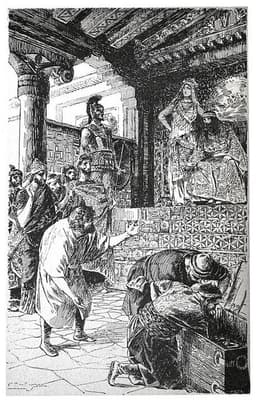
Croesus
Emperor · Ancient
50.6Total

Napoleon Bonaparte
General · Modern
70.9Total
Basic Information
Born
-595
1769
Died
-546
1821
Era
Ancient
Modern
Nationality
Lydia
France
Occupation
Emperor
General
Civilization
Middle Eastern
Western
Score Comparison
Military (10%)
46.7
94.0
Political (20%)
68.0
72.0
Influence (20%)
54.1
40.0
Legacy (20%)
47.5
80.0
Leadership (15%)
40.0
78.0
Strategy (15%)
43.7
90.0
TOTAL
50.6
70.9
Croesus — Complete Timeline
550 BC
Dedication of Votive Offerings at DelphiCultural
Croesus sent numerous lavish gifts to the Oracle at Delphi, including gold and silver statues, bowls, and a golden lion. These offerings were among the most famous dedications in Greek history, symbolizing his legendary wealth and piety.
DelphiWealthReligion
Impact: regionalconstructive
547 BC
Defeat by Cyrus the Great at the Battle of ThymbraWar
Croesus led the Lydian army against the Persian forces of Cyrus the Great at Thymbra. The Lydian forces were defeated, leading to the siege and fall of Sardis. This battle ended the Kingdom of Lydia and incorporated it into the Persian Empire.
Lydian-Persian WarConquestFall of Lydia
Impact: regionaldestructive
Consultation of the Oracle at DelphiCultural◆ Major
Croesus consulted the Delphic oracle before attacking Persia, receiving the ambiguous prophecy that a great empire would fall. He interpreted this as Persia's defeat, but the fallen empire was his own. This event became a classic example of oracular ambiguity.
OracleProphecyLydian-Persian War
Impact: regionaltragic
546 BC
Capture and Near-Execution by CyrusPolitical Action◆ Major
After the fall of Sardis, Croesus was captured by Cyrus. According to Herodotus, Cyrus ordered Croesus to be burned alive, but the king's cries of 'Solon' caused Cyrus to reconsider and spare him. Croesus then became an advisor to Cyrus.
CaptivityCyrus the GreatHerodotus
Impact: regionaltragic
Napoleon Bonaparte — Complete Timeline
1799 AD
Coup of 18 BrumaireOther◆ Major
Napoleon Bonaparte, with support from his brother Lucien and key political figures, overthrew the Directory in a bloodless coup. He established the Consulate with himself as First Consul, effectively becoming the ruler of France. This event ended the French Revolution's most unstable period.
French RevolutionCoupRise to Power
Impact: regional
1804 AD
Promulgation of the Napoleonic CodeOther◆ Major
Napoleon enacted the Civil Code of the French, known as the Napoleonic Code, a comprehensive set of laws that replaced the fragmented feudal legal systems. The code established legal equality, protected property rights, and secularized law. It became the basis for legal systems in many European and world countries.
Legal ReformNapoleonic CodeCivil Law
Impact: globalconstructive
1805 AD
Battle of AusterlitzWar◆ Major
Napoleon's Grande Arm
Napoleonic WarsBattleDecisive Victory
Impact: global
1812 AD
Invasion of RussiaWar◆ Major
Napoleon led the Grande Arm
Napoleonic WarsInvasionDisaster
Impact: globaldestructive
1815 AD
Battle of WaterlooWar◆ Major
Napoleon's French army was defeated by the combined forces of the Duke of Wellington's Anglo-Allied army and Gebhard Leberecht von Bl
Napoleonic WarsBattleFinal Defeat
Impact: globaldestructive
Expert Analysis
Origins
Croesus, born around 595 BC, was the last king of Lydia, a kingdom in western Anatolia. He inherited the throne from his father Alyattes and expanded the Lydian Empire, known for its wealth from gold deposits in the Pactolus River. Croesus was the first ruler to issue gold and silver coinage, stabilizing Lydia's economy. His court at Sardis was a center of luxury and culture.
Napoleon Bonaparte was born on August 15, 1769, in Ajaccio, Corsica, to a modest noble family. He studied at military schools in Brienne and Paris, graduating as an artillery officer in 1785. The French Revolution opened opportunities for rapid advancement, and Napoleon aligned with the Jacobins, distinguishing himself at the Siege of Toulon in 1793.
Rise to Power
Croesus ascended the Lydian throne around 560 BC. He continued his father's conquests, subjugating Greek cities in Ionia and expanding Lydia's borders. His wealth became legendary, attracting Greek philosophers and craftsmen. Croesus formed alliances with Sparta, Egypt, and Babylon to counter the rising Persian power under Cyrus the Great. In 547 BC, he consulted the Oracle at Delphi, which ambiguously stated that if he attacked Persia, a great empire would fall. Interpreting this favorably, Croesus launched a campaign.
Napoleon rose to prominence during the French Revolutionary Wars. After Toulon, he suppressed a royalist uprising in Paris in 1795, earning command of the Army of Italy. In 1796-1797, he defeated Austrian and Sardinian armies, forcing treaties that brought wealth to France. His Egyptian campaign (1798-1799) failed strategically but enhanced his fame. In November 1799, he staged the Coup of 18 Brumaire, becoming First Consul and effectively dictator of France.
Leadership & Governance
Croesus ruled as an absolute monarch, but his governance was marked by diplomacy and cultural patronage. He maintained alliances through gifts and marriages, and his court welcomed Greek thinkers like Solon. However, his reliance on oracles and ambiguous prophecies revealed a strategic weakness. He failed to adapt to Persian tactics, leading to his defeat. Croesus's political score of 62.8 reflects his diplomatic acumen but poor military judgment.
Napoleon centralized power in France, creating a meritocratic bureaucracy. His Napoleonic Code (1804) standardized laws, protecting property rights and secularizing the state. He reformed education, established the Bank of France, and negotiated the Concordat of 1801 with the Catholic Church. As a leader, he scored 80.0 in leadership and 93.0 in strategy, demonstrating exceptional organizational and tactical skills. However, his governance became increasingly autocratic, suppressing dissent and crowning himself emperor in 1804.
Triumph & Tragedy
Croesus's greatest triumph was amassing unprecedented wealth and making Lydia a cultural and economic hub. His coinage system influenced Mediterranean commerce for centuries. His tragedy was his defeat by Cyrus at the Battle of Thymbra (547 BC). According to Herodotus, Croesus misinterpreted the Delphic oracle, leading to the fall of Sardis. He was captured and nearly executed, though Cyrus spared him after his cries of "Solon" reminded the Persian king of the transience of happiness. Croesus's military score of 44.5 reflects his failure against a superior enemy.
Napoleon's triumphs include the Battle of Austerlitz (1805), where he defeated a larger Austro-Russian army, and the establishment of the Napoleonic Code, which influenced legal systems worldwide. His tragedy lies in his overreach: the disastrous Invasion of Russia (1812) destroyed his Grande Armée, and the Battle of Waterloo (1815) ended his reign. He died in exile on Saint Helena in 1821. Napoleon's military score of 94.0 and strategy of 93.0 underscore his tactical genius but also his fatal hubris.
Character & Destiny
Croesus is often depicted as hubristic, trusting in his wealth and oracles. His character was shaped by the belief that material riches ensured divine favor. This led to his downfall when he underestimated Cyrus. Herodotus presents Croesus as a cautionary tale about the instability of fortune. His legacy score of 63.4 reflects his symbolic role as the archetypal wealthy king.
Napoleon was ambitious, intelligent, and ruthless. He possessed extraordinary energy and charisma, inspiring loyalty in his troops. However, his insatiable drive for conquest and control led to strategic overextension. His personality combined pragmatism with a grandiose vision of European domination. Historians rate him as one of history's greatest military commanders, but his destiny was shaped by his inability to consolidate his gains. His total score of 82.4 reflects his multifaceted impact.
Legacy
Croesus's legacy is primarily symbolic: his name became synonymous with immense wealth ("rich as Croesus"). His introduction of coinage revolutionized trade, though his political and military achievements were ephemeral. Lydia fell to Persia, and Croesus's empire vanished. His influence score of 72.5 acknowledges his cultural and economic contributions, but his legacy is overshadowed by his defeat.
Napoleon's legacy is vast. The Napoleonic Code remains the basis of civil law in many countries. He reshaped European borders, abolished feudalism, and spread nationalism. His military innovations influenced warfare for a century. Despite his eventual defeat, his impact on modern state-building and law is profound. Napoleon scores 78.0 in legacy and 82.0 in influence, reflecting his enduring mark.
Conclusion
Napoleon Bonaparte had a greater impact than Croesus by any measure. With a total score of 82.4 against Croesus's 61.7, Napoleon's military, strategic, and political achievements reshaped Europe and the world. Croesus's wealth and coinage were important, but his empire collapsed quickly, and his influence is largely symbolic. Napoleon's Napoleonic Code, military reforms, and territorial changes had lasting effects that continue into the 21st century. While Croesus exemplifies transitory fortune, Napoleon represents transformative power. The 20.7-point gap in their total scores underscores this disparity.
Rankings
🥇
Napoleon BonaparteLeader
Mil: 94.0Pol: 72.0Inf: 40.0
70.9
🥈
Croesus
Mil: 46.7Pol: 68.0Inf: 54.1
50.6
+20.3 behind
How This Comparison Works
Algorithm
Each figure is scored on 6 dimensions (0—100 scale) based on structured historical data: Military (10%), Political (20%), Influence (20%), Legacy (20%), Leadership (15%), Strategy (15%). The weighted total produces the final ranking.
Data Sources
Scores are computed from structured sub-indicators in the database. Scale factors adjust for era (Ancient ×0.85, Modern ×1.0) and civilization size (Eastern ×1.05, Other ×0.80) to account for differences in population and military scale.
Maximum 3 Figures
Comparisons are limited to 2—3 figures to ensure readability and statistical meaningfulness.
Error Margins
±5 points per dimension — Sub-scores are derived from historical records with inherent uncertainty. Two figures within 5 points on a dimension should be considered roughly equivalent in that area.
Total Score Accuracy
±3 points overall — The weighted combination of 6 dimensions produces a total score with approximately ±3 points of uncertainty. Differences of less than 3 points are not statistically significant— the figures are effectively tied.
Known Limitations
- Historical records are incomplete and uneven across civilizations
- Figures from oral-tradition societies may be underrepresented
- Occupation labels can misclassify multi-role figures
- Scores measure capability and impact, not moral character
- Quantitative scoring is a comparison tool, not absolute truth
Capability Radar
Military (10%) — Battles & Warfare
Battles
30
95
Win Rate
20
90
Expansion
35
95
Political (20%) — Governance & Reform
Reform
40
95
Diplomacy
50
80
Economy
85
85
Influence (20%) — Cultural & Global Reach
Cultural
45
85
Global
40
90
Legacy (20%) — Historical Impact
Historical
55
95
Longevity
50
90
Leadership (15%) — Power & Stability
Tenure
60
85
Stability
55
70
Strategy (15%) — Tactics & Innovation
Strategy
20
95
Tactics
25
98
Reform
10
92
Similar Comparisons
Comments & Discussion
No comments yet. Be the first to share your thoughts!