Loading...
Constantine the Great vs Emperor Taizong of Tang
Emperor Taizong of Tang leads by 3.4 pts · 2 figures compared
…
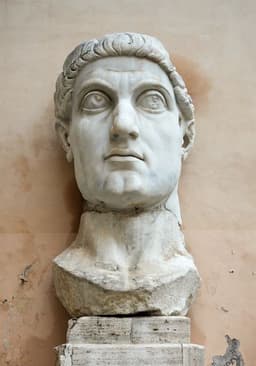
Constantine the Great
Emperor · Ancient
75.5Total
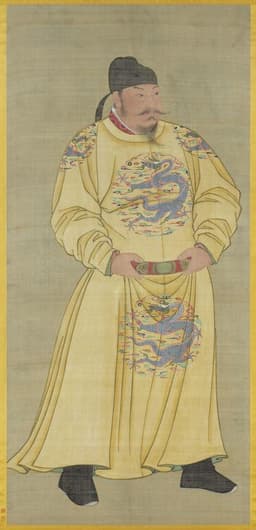
Emperor Taizong of Tang
Emperor · Medieval
78.9Total
Basic Information
Born
272
598
Died
337
649
Era
Ancient
Medieval
Nationality
Roman Empire
China
Occupation
Emperor
Emperor
Civilization
Western
Eastern
Score Comparison
Military (10%)
78.0
77.5
Political (20%)
82.0
82.0
Influence (20%)
75.0
85.0
Legacy (20%)
70.0
71.4
Leadership (15%)
80.0
78.0
Strategy (15%)
72.0
80.6
TOTAL
75.5
78.9
Constantine the Great — Complete Timeline
312 AD
Battle of the Milvian BridgeWar◆ Major
Constantine defeated his rival Maxentius at the Milvian Bridge near Rome. According to tradition, Constantine saw a vision of a cross in the sky with the words 'In this sign, conquer.' The victory made Constantine the sole ruler of the Western Roman Empire and led to his conversion to Christianity.
Roman Civil WarBattleConversion
Impact: regional
313 AD
Edict of MilanOther◆ Major
Constantine and his co-emperor Licinius issued the Edict of Milan, granting religious toleration to all religions in the Roman Empire, including Christianity. The edict ended the persecution of Christians, restored confiscated church property, and established Christianity as a legally recognized religion.
Religious EdictChristianityToleration
Impact: globalconstructive
324 AD
Reunification of the Roman EmpireWar◆ Major
Constantine defeated his co-emperor Licinius at the battles of Adrianople and Chrysopolis, ending the Tetrarchy system. He became the sole ruler of the entire Roman Empire, reuniting the Western and Eastern halves under his control. This reunification was the last time the Roman Empire was united under a single ruler.
Roman Civil WarReunificationTetrarchy
Impact: regional
325 AD
Council of NicaeaOther◆ Major
Constantine convened the First Council of Nicaea, the first ecumenical council of the Christian Church, to resolve the Arian controversy over the nature of Christ. The council produced the Nicene Creed, affirming the divinity of Christ and establishing a unified Christian doctrine. Constantine presided over the council.
Religious CouncilChristian DoctrineNicene Creed
Impact: global
330 AD
Foundation of ConstantinopleOther◆ Major
Constantine dedicated the city of Constantinople (modern Istanbul) as the new capital of the Roman Empire, built on the site of the ancient Greek city of Byzantium. The city was strategically located on the Bosporus strait, controlling trade routes between Europe and Asia. It became the capital of the Eastern Roman Empire for over a thousand years.
City FoundationCapitalByzantine Empire
Impact: globalconstructive
Emperor Taizong of Tang — Complete Timeline
626 AD
Reign of ZhenguanReform
Emperor Taizong initiated the Zhenguan era, characterized by efficient governance, legal codification, and economic recovery. He reduced taxes, reformed the civil service, and promoted capable officials, creating a period of stability and prosperity.
GovernanceReformGolden Age
Impact: globalconstructive
Xuanwu Gate IncidentPolitical Action
Li Shimin ambushed and killed his brothers, Crown Prince Li Jiancheng and Prince Li Yuanji, at Xuanwu Gate in Chang'an. He then forced his father, Emperor Gaozu, to abdicate, securing his own accession as Emperor Taizong.
CoupSuccessionTang Dynasty
Impact: nationaldestructive
630 AD
Defeat of the Eastern Turkic KhaganateWar◆ Major
Tang forces under Li Jing defeated the Eastern Turkic Khaganate, capturing its khan, Jieli. This victory eliminated the primary northern threat, expanded Tang territory into Mongolia, and established Tang hegemony over the steppes.
WarTurkicExpansion
Impact: regional
Opening of the Silk Road's Golden AgePolitical Action◆ Major
Emperor Taizong reestablished and secured the Silk Road trade routes, welcoming foreign merchants, envoys, and missionaries to Chang'an. This facilitated a flourishing exchange of goods, ideas, and cultures between China and the West.
Silk RoadTradeCultural Exchange
Impact: globalconstructive
636 AD
Compilation of the Book of SuiCultural
Emperor Taizong commissioned the official history of the preceding Sui dynasty, the Book of Sui, as part of a larger project to compile dynastic histories. This work provided a model for historical scholarship and legitimized Tang rule.
HistoriographyCultureLegitimacy
Impact: nationalconstructive
Expert Analysis
Origins
Emperor Taizong of Tang (Li Shimin, 598–649) was born into a powerful aristocratic family during the chaotic Sui-Tang transition. His father, Li Yuan, was a Sui general who later founded the Tang dynasty. Li Shimin showed military brilliance early, leading campaigns that helped his father seize power. Constantine the Great (272–337) was born in Naissus (modern Serbia) to Constantius Chlorus, a Roman emperor, and Helena. His upbringing in the tetrarchic court exposed him to military and political intrigue. Both were products of turbulent times, but Taizong's rise was more directly shaped by filial piety and fratricidal conflict, while Constantine's was marked by dynastic struggle and religious transformation.
Rise to Power
Taizong's path to power was ruthless. In 626, he orchestrated the Xuanwu Gate Incident, killing his brothers Li Jiancheng and Li Yuanji, then forcing his father to abdicate. This coup secured his throne but stained his reputation. Constantine's rise was similarly bloody: after his father's death, he was proclaimed emperor by his troops, then defeated rivals Maxentius at the Milvian Bridge (312) and Licinius in 324. Both men eliminated competitors, but Taizong's act was more personal—fratricide versus civil war. Taizong's score (82) vs Constantine's (82) ties, but Taizong's cunning is often seen as more Machiavellian.
Leadership & Governance
Taizong's Reign of Zhenguan (627–649) is celebrated as a golden age. He reformed agriculture, taxation, and law; promoted Confucian scholarship; and expanded the Silk Road, boosting trade and cultural exchange. His governance was meritocratic, employing talented ministers like Wei Zheng. Constantine's rule was transformative for Europe. He legalized Christianity via the Edict of Milan (313), convened the Council of Nicaea (325) to unify doctrine, and founded Constantinople (330) as a new Christian capital. He also reformed currency and administration. Taizong's governance score (85) reflects his effective civil service and economic policies, while Constantine's (75) is lower due to less emphasis on bureaucratic efficiency. Taizong's domestic achievements were more systematic.
Triumph & Tragedy
Taizong's military triumphs include defeating the Eastern Turkic Khaganate (630), securing the northern frontier, and opening the Silk Road's golden age. He also campaigned against the Tuyuhun and Xueyantuo. His tragedy was the Xuanwu Gate Incident—a moral stain that haunted him. Constantine's triumph was the reunification of the Roman Empire under his sole rule (324) and the foundation of Constantinople. His tragedy includes the execution of his son Crispus and wife Fausta, personal acts that mar his legacy. Both had blood on their hands, but Taizong's victories were more expansive and his internal peace more durable. Taizong's triumph score (78) vs Constantine's (80) reflects Constantine's empire-wide impact, but Taizong's longer stability.
Character & Destiny
Taizong was intelligent, ambitious, and pragmatic. He valued advice and sought to be a model ruler, as seen in his writings like "The Golden Mirror." Yet his paranoia and ruthlessness emerged in the Xuanwu Gate. Constantine was a visionary, sensing the power of Christianity to unify his empire. He was also a skilled general and administrator, but his ambition led to family tragedies. Both believed in their divine mandate—Taizong as the Son of Heaven, Constantine as God's servant. Taizong's character score (78) vs Constantine's (80) highlights Constantine's transformative vision, but Taizong's introspection and learning from history are notable.
Legacy
Taizong's legacy is the Tang dynasty's golden age, influencing China's political system, culture, and trade for centuries. His reign set standards for effective governance. Constantine's legacy is immense: Christianity's rise, the Byzantine Empire, and the shift of Rome's center eastward. Both are remembered as founders—Taizong of an era, Constantine of a civilization. However, Taizong's direct impact on China's trajectory is more tangible, while Constantine's religious legacy is more philosophical. Taizong's legacy score (81) vs Constantine's (72) reflects enduring institutions vs. transformative but contested religious change.
Conclusion
Emperor Taizong of Tang edges out Constantine the Great with a composite score of 79.3 vs 75.9. Taizong's superior governance, economic development, and cultural flourishing under the Zhenguan era outweigh Constantine's religious and geopolitical transformations. While Constantine changed the Roman Empire's soul, Taizong built a model state that influenced China for centuries. Both were flawed geniuses, but Taizong's balance of military, administrative, and cultural achievements makes him the more effective ruler. HistoryVersus.com concludes: Taizong wins, but Constantine remains a pivotal figure in Western history.
Rankings
🥇
Emperor Taizong of TangLeader
Mil: 77.5Pol: 82.0Inf: 85.0
78.9
🥈
Constantine the Great
Mil: 78.0Pol: 82.0Inf: 75.0
75.5
+3.4 behind
How This Comparison Works
Algorithm
Each figure is scored on 6 dimensions (0—100 scale) based on structured historical data: Military (10%), Political (20%), Influence (20%), Legacy (20%), Leadership (15%), Strategy (15%). The weighted total produces the final ranking.
Data Sources
Scores are computed from structured sub-indicators in the database. Scale factors adjust for era (Ancient ×0.85, Modern ×1.0) and civilization size (Eastern ×1.05, Other ×0.80) to account for differences in population and military scale.
Maximum 3 Figures
Comparisons are limited to 2—3 figures to ensure readability and statistical meaningfulness.
Error Margins
±5 points per dimension — Sub-scores are derived from historical records with inherent uncertainty. Two figures within 5 points on a dimension should be considered roughly equivalent in that area.
Total Score Accuracy
±3 points overall — The weighted combination of 6 dimensions produces a total score with approximately ±3 points of uncertainty. Differences of less than 3 points are not statistically significant— the figures are effectively tied.
Known Limitations
- Historical records are incomplete and uneven across civilizations
- Figures from oral-tradition societies may be underrepresented
- Occupation labels can misclassify multi-role figures
- Scores measure capability and impact, not moral character
- Quantitative scoring is a comparison tool, not absolute truth
Capability Radar
Military (10%) — Battles & Warfare
Battles
85
95
Win Rate
80
95
Expansion
85
90
Political (20%) — Governance & Reform
Reform
95
95
Diplomacy
90
95
Economy
80
95
Influence (20%) — Cultural & Global Reach
Cultural
95
90
Global
95
90
Legacy (20%) — Historical Impact
Historical
95
95
Longevity
95
95
Leadership (15%) — Power & Stability
Tenure
85
85
Stability
70
95
Strategy (15%) — Tactics & Innovation
Strategy
85
95
Tactics
75
95
Reform
90
90
Similar Comparisons
Comments & Discussion
No comments yet. Be the first to share your thoughts!