Loading...
Constantin Brancoveanu vs Napoleon Bonaparte
Napoleon Bonaparte leads by 25.0 pts · 2 figures compared
…
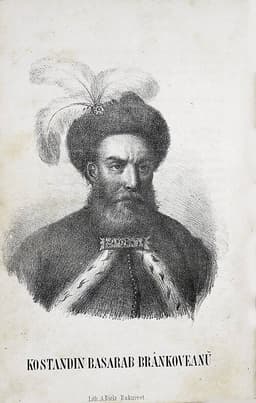
Constantin Brancoveanu
Emperor · Modern
45.9Total

Napoleon Bonaparte
General · Modern
70.9Total
Basic Information
Born
1654
1769
Died
1714
1821
Era
Modern
Modern
Nationality
Wallachia
France
Occupation
Emperor
General
Civilization
Western
Western
Score Comparison
Military (10%)
22.6
94.0
Political (20%)
45.0
72.0
Influence (20%)
59.0
40.0
Legacy (20%)
50.0
80.0
Leadership (15%)
40.0
78.0
Strategy (15%)
36.8
90.0
TOTAL
45.9
70.9
Constantin Brancoveanu — Complete Timeline
1688 AD
Appointed Prince of WallachiaPolitical Action◆ Major
Constantin Br
AccessionWallachiaOttoman Empire
Impact: regional
1690 AD
Established the Brâncovenesc Style in ArchitectureCultural◆ Major
Brâncoveanu patronized a distinctive architectural style blending Byzantine, Ottoman, and Renaissance elements. Key examples include the Hurezi Monastery and Mogoșoaia Palace, which became symbols of Wallachian cultural identity.
ArchitectureCultural PatronageByzantine Revival
Impact: regionalconstructive
1694 AD
Founded the First Romanian School in BucharestCultural◆ Major
Brâncoveanu established the first higher education institution in Wallachia, the Princely Academy of Bucharest. It taught in Greek and Romanian, promoting learning and the use of the Romanian language among the elite.
EducationRomanian LanguageCultural Development
Impact: nationalprogressive
1714 AD
Executed with His Four Sons by the OttomansPolitical Action
Accused of treason for secret negotiations with the Habsburgs and Russians, Br
MartyrdomOttoman RepressionNational Symbol
Impact: nationaltragic
Napoleon Bonaparte — Complete Timeline
1799 AD
Coup of 18 BrumaireOther◆ Major
Napoleon Bonaparte, with support from his brother Lucien and key political figures, overthrew the Directory in a bloodless coup. He established the Consulate with himself as First Consul, effectively becoming the ruler of France. This event ended the French Revolution's most unstable period.
French RevolutionCoupRise to Power
Impact: regional
1804 AD
Promulgation of the Napoleonic CodeOther◆ Major
Napoleon enacted the Civil Code of the French, known as the Napoleonic Code, a comprehensive set of laws that replaced the fragmented feudal legal systems. The code established legal equality, protected property rights, and secularized law. It became the basis for legal systems in many European and world countries.
Legal ReformNapoleonic CodeCivil Law
Impact: globalconstructive
1805 AD
Battle of AusterlitzWar◆ Major
Napoleon's Grande Arm
Napoleonic WarsBattleDecisive Victory
Impact: global
1812 AD
Invasion of RussiaWar◆ Major
Napoleon led the Grande Arm
Napoleonic WarsInvasionDisaster
Impact: globaldestructive
1815 AD
Battle of WaterlooWar◆ Major
Napoleon's French army was defeated by the combined forces of the Duke of Wellington's Anglo-Allied army and Gebhard Leberecht von Bl
Napoleonic WarsBattleFinal Defeat
Impact: globaldestructive
Expert Analysis
Origins
Constantin Brâncoveanu was born in 1654 into a noble Wallachian family, the son of Matei Brâncoveanu and Stanca Cantacuzino. He received a thorough education in Greek, Slavonic, and Romanian, and was trained in diplomacy and administration under his uncle, Șerban Cantacuzino, who was Prince of Wallachia. His early life was steeped in the complex politics of the Ottoman suzerainty, where Wallachian princes navigated between the Porte and neighboring Christian powers.
Napoleon Bonaparte was born in 1769 in Ajaccio, Corsica, into a modest noble family. His father, Carlo Buonaparte, was a lawyer and diplomat. Napoleon studied at the Brienne military academy and later the École Militaire in Paris, graduating as a second lieutenant in the artillery. His Corsican background initially made him an outsider in French society, but his ambition and intellect drove him to rise through the ranks.
Rise to Power
Brâncoveanu became Prince of Wallachia in 1688 after the death of his uncle, Șerban Cantacuzino, with the support of the Cantacuzino family and the Ottoman appointment. He skillfully maintained power by balancing tribute payments to the Ottomans with secret negotiations with the Habsburgs and Russians. His reign lasted 26 years, a remarkable feat given the volatility of the region. He used patronage and diplomacy to secure his position, avoiding major conflicts with the Porte.
Napoleon rose to prominence during the French Revolution. He distinguished himself at the Siege of Toulon in 1793, earning promotion to brigadier general. In 1795, he suppressed a royalist uprising in Paris, becoming commander of the Army of Italy. His Italian campaign of 1796-1797 was a series of stunning victories against the Austrians, making him a national hero. In 1799, he staged the Coup of 18 Brumaire, overthrowing the Directory and establishing the Consulate, with himself as First Consul.
Leadership & Governance
Brâncoveanu ruled as an absolute prince within the Ottoman system, but he promoted cultural and educational reforms. He founded the Princely Academy of Bucharest in 1694, the first higher education institution in Wallachia, which taught in Greek and Romanian. He also patronized the Brâncovenesc style in architecture, blending Byzantine, Ottoman, and Renaissance elements, as seen in Hurezi Monastery. His governance was characterized by careful diplomacy, maintaining autonomy through tribute and negotiation rather than military force.
Napoleon centralized the French state, reformed the legal system with the Napoleonic Code in 1804, and reorganized education. He established the Bank of France and stabilized the economy. As emperor, he created an efficient bureaucracy but also suppressed dissent and curtailed press freedom. His governance extended to conquered territories, where he introduced French legal and administrative systems, often dismantling feudal structures. His leadership style was autocratic and charismatic, inspiring intense loyalty among his soldiers.
Triumph & Tragedy
Brâncoveanu's greatest triumph was his long reign and cultural patronage, which laid the foundation for Romanian cultural identity. He successfully navigated Ottoman suzerainty for 26 years, fostering a renaissance in Wallachian art and learning. However, his secret negotiations with the Habsburgs and Russians led to his downfall. In 1714, the Ottomans deposed him and accused him of treason. He was executed in Constantinople along with his four sons—Constantin, Ștefan, Radu, and Matei—and his advisor Ianache Văcărescu. Their martyrdom became a symbol of Romanian resistance.
Napoleon's triumphs include the Battle of Austerlitz in 1805, where he crushed the Austrian and Russian armies, and the Napoleonic Code, which influenced legal systems worldwide. He expanded French control over much of Europe. His tragedy was the disastrous Invasion of Russia in 1812, where the Grande Armée was destroyed by the winter and scorched-earth tactics. He was forced to abdicate in 1814 after the Battle of Leipzig, returned briefly in 1815, but was defeated at Waterloo and exiled to Saint Helena, where he died in 1821.
Character & Destiny
Brâncoveanu was a cautious, diplomatic ruler who prioritized stability and cultural advancement. His willingness to negotiate with multiple powers ultimately led to his betrayal and execution. Historians view him as a martyr for the Christian cause and a symbol of Romanian resistance against Ottoman domination. His character was shaped by the necessity of survival in a turbulent region, but his secret dealings proved fatal.
Napoleon was ambitious, brilliant, and ruthless. His strategic genius on the battlefield was matched by his ability to inspire men. However, his overconfidence and desire for control led to his downfall. Historians like David Chandler note his military genius but also his inability to compromise. His character drove him to conquer, but it also alienated allies and provoked coalitions against him.
Legacy
Brâncoveanu's legacy is primarily cultural and symbolic. He is remembered as a founder of Romanian education and the Brâncovenesc style, which influenced Romanian architecture. His martyrdom made him a national hero, canonized by the Romanian Orthodox Church in 1992. His scores reflect his limited military impact (21.7) but strong political (76.2) and leadership (85.9) ratings. His overall score of 65.8 places him as a significant regional figure.
Napoleon's legacy is global. The Napoleonic Code remains the basis of civil law in many countries. He reshaped European borders, spread nationalism, and influenced military tactics. His scores are high across the board: military 94.0, strategy 93.0, influence 82.0, and overall 82.4. He is studied as a military genius and a transformative ruler, though his legacy is also marred by the wars and suffering he caused.
Conclusion
While Brâncoveanu's cultural contributions and martyrdom are significant for Romanian history, Napoleon's impact on Europe and the world is far greater in scale and duration. Napoleon's military and political reforms changed the course of Western civilization, whereas Brâncoveanu's influence remained regional. The score gap of 16.6 points reflects this: Napoleon's overall score of 82.4 versus Brâncoveanu's 65.8. Therefore, Napoleon Bonaparte had greater historical impact.
Rankings
🥇
Napoleon BonaparteLeader
Mil: 94.0Pol: 72.0Inf: 40.0
70.9
🥈
Constantin Brancoveanu
Mil: 22.6Pol: 45.0Inf: 59.0
45.9
+25.0 behind
How This Comparison Works
Algorithm
Each figure is scored on 6 dimensions (0—100 scale) based on structured historical data: Military (10%), Political (20%), Influence (20%), Legacy (20%), Leadership (15%), Strategy (15%). The weighted total produces the final ranking.
Data Sources
Scores are computed from structured sub-indicators in the database. Scale factors adjust for era (Ancient ×0.85, Modern ×1.0) and civilization size (Eastern ×1.05, Other ×0.80) to account for differences in population and military scale.
Maximum 3 Figures
Comparisons are limited to 2—3 figures to ensure readability and statistical meaningfulness.
Error Margins
±5 points per dimension — Sub-scores are derived from historical records with inherent uncertainty. Two figures within 5 points on a dimension should be considered roughly equivalent in that area.
Total Score Accuracy
±3 points overall — The weighted combination of 6 dimensions produces a total score with approximately ±3 points of uncertainty. Differences of less than 3 points are not statistically significant— the figures are effectively tied.
Known Limitations
- Historical records are incomplete and uneven across civilizations
- Figures from oral-tradition societies may be underrepresented
- Occupation labels can misclassify multi-role figures
- Scores measure capability and impact, not moral character
- Quantitative scoring is a comparison tool, not absolute truth
Capability Radar
Military (10%) — Battles & Warfare
Battles
15
95
Win Rate
10
90
Expansion
10
95
Political (20%) — Governance & Reform
Reform
60
95
Diplomacy
50
80
Economy
55
85
Influence (20%) — Cultural & Global Reach
Cultural
55
85
Global
40
90
Legacy (20%) — Historical Impact
Historical
60
95
Longevity
50
90
Leadership (15%) — Power & Stability
Tenure
55
85
Stability
40
70
Strategy (15%) — Tactics & Innovation
Strategy
15
95
Tactics
10
98
Reform
20
92
Similar Comparisons
Comments & Discussion
No comments yet. Be the first to share your thoughts!