Loading...
Cleomenes III vs Napoleon Bonaparte
Napoleon Bonaparte leads by 18.5 pts · 2 figures compared
…
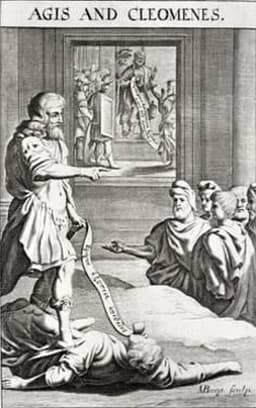
Cleomenes III
Emperor · Ancient
52.4Total

Napoleon Bonaparte
General · Modern
70.9Total
Basic Information
Born
-260
1769
Died
-219
1821
Era
Ancient
Modern
Nationality
Sparta
France
Occupation
Emperor
General
Civilization
Western
Western
Score Comparison
Military (10%)
52.5
94.0
Political (20%)
45.0
72.0
Influence (20%)
52.5
40.0
Legacy (20%)
45.0
80.0
Leadership (15%)
68.0
78.0
Strategy (15%)
58.0
90.0
TOTAL
52.4
70.9
Cleomenes III — Complete Timeline
229 BC
Cleomenean WarWar◆ Major
Cleomenes III initiated a war against the Achaean League to restore Spartan hegemony in the Peloponnese. He won several battles, including the Battle of Mount Lycaeum and the Battle of Ladoceia, capturing many cities and expanding Spartan territory.
Cleomenean WarAchaean LeagueExpansion
Impact: regional
227 BC
Social Reforms in SpartaReform
Cleomenes III implemented radical reforms to revive Sparta's military strength. He abolished the ephorate, redistributed land, cancelled debts, and expanded the citizen body by enfranchising perioeci and helots. These reforms aimed to restore the Lycurgan system.
Spartan ReformLand RedistributionSocial Change
Impact: nationalprogressive
222 BC
Battle of SellasiaWar
Cleomenes III was decisively defeated by the combined forces of the Achaean League and Macedon under Antigonus III Doson at Sellasia. He fled to Egypt, and Sparta was forced to join the Hellenic League, ending his reforms and Spartan independence.
Cleomenean WarBattleDefeat
Impact: regionaltragic
219 BC
Death in ExilePolitical Action◆ Major
Cleomenes III was exiled in Egypt under the protection of Ptolemy III. After Ptolemy's death, he was placed under house arrest by Ptolemy IV. He attempted to lead a revolt in Alexandria, failed, and committed suicide.
ExileEgyptSuicide
Impact: nationaltragic
Napoleon Bonaparte — Complete Timeline
1799 AD
Coup of 18 BrumaireOther◆ Major
Napoleon Bonaparte, with support from his brother Lucien and key political figures, overthrew the Directory in a bloodless coup. He established the Consulate with himself as First Consul, effectively becoming the ruler of France. This event ended the French Revolution's most unstable period.
French RevolutionCoupRise to Power
Impact: regional
1804 AD
Promulgation of the Napoleonic CodeOther◆ Major
Napoleon enacted the Civil Code of the French, known as the Napoleonic Code, a comprehensive set of laws that replaced the fragmented feudal legal systems. The code established legal equality, protected property rights, and secularized law. It became the basis for legal systems in many European and world countries.
Legal ReformNapoleonic CodeCivil Law
Impact: globalconstructive
1805 AD
Battle of AusterlitzWar◆ Major
Napoleon's Grande Arm
Napoleonic WarsBattleDecisive Victory
Impact: global
1812 AD
Invasion of RussiaWar◆ Major
Napoleon led the Grande Arm
Napoleonic WarsInvasionDisaster
Impact: globaldestructive
1815 AD
Battle of WaterlooWar◆ Major
Napoleon's French army was defeated by the combined forces of the Duke of Wellington's Anglo-Allied army and Gebhard Leberecht von Bl
Napoleonic WarsBattleFinal Defeat
Impact: globaldestructive
Expert Analysis
cleomenes-iii-vs-napoleon-bonaparte
# The Tragedy of Two Reformers: Napoleon and Cleomenes III
On a June morning in 1815, Napoleon Bonaparte watched his Imperial Guard march up the muddy slope of Mont-Saint-Jean, their eagles glinting in the rain. Twenty-three centuries earlier, another king had led his Spartans into a similar valley near Sellasia, convinced that radical reform had restored his people’s ancient steel. Both men believed they could revive a dying order through sheer will. Both were wrong—but their failures reveal vastly different worlds, ambitions, and destinies.
Origins
Napoleon was born in 1769 on Corsica, an island recently annexed by France. His family was minor nobility, but they were outsiders in a kingdom defined by ancient privilege. The French Revolution—which erupted when he was twenty—shattered the old world and created a ladder for talent. Napoleon climbed it with breathtaking speed. He was a child of the Enlightenment, a reader of Rousseau and Voltaire, but also a soldier forged in the crucible of revolutionary war.
Cleomenes III, born around 260 BC, was a king of Sparta—but Sparta by his time was a shadow. The city that had once defeated Athens and stood against Persia was now a provincial power, its citizen army reduced to a few hundred men, its land monopolized by a wealthy elite. Cleomenes inherited a throne, but he inherited a crisis. His world was not one of revolutionary upheaval but of slow decay, where reform meant looking backward to the legendary laws of Lycurgus.
Rise to Power
Napoleon’s rise was meteoric. In 1796, at twenty-six, he was given command of the Army of Italy. Within a year, he had smashed the Austrian Empire, carved out republics in northern Italy, and returned to Paris covered in glory. His political genius matched his military talent: in 1799, he staged a coup and made himself First Consul. By 1804, he crowned himself Emperor in Notre-Dame, placing the crown on his own head—a gesture that said everything about his belief in his own destiny.
Cleomenes rose differently. He became king in 235 BC at about twenty-five, but he was not the sole ruler—Sparta had two kings, and the real power lay with the ephors, five annually elected magistrates who guarded tradition. For years, Cleomenes bided his time, watching Sparta’s humiliation in border wars. Then, in 227 BC, he struck. He murdered the ephors, abolished their office, and exiled his co-king. He was now sole ruler, with a mandate to remake Sparta—by force, if necessary.
Leadership & Governance
Napoleon governed an empire that stretched from Spain to Poland. His Napoleonic Code standardized law across Europe, abolishing feudal privileges and establishing merit-based advancement. He built roads, founded banks, and reformed education. His administrative system was rational, efficient, and centralized—a machine designed for conquest and control. Yet his political score of 75.0 reflects a deeper truth: he was a brilliant administrator but a poor diplomat, treating other nations as enemies to be conquered rather than partners to be persuaded.
Cleomenes’ reforms were more radical but narrower. He canceled debts, redistributed land, and granted citizenship to 4,000 perioikoi (non-citizen free men). He restored the old agoge—the brutal training system that had made Sparta feared—and trained a new army of citizen-soldiers. His political score of 62.5 suggests a reformer who understood the problem but not the constraints: he could remake Sparta, but he could not make its neighbors accept a resurgent Sparta.
Triumph & Tragedy
Napoleon’s greatest triumphs were military. At Austerlitz in 1805, he destroyed a combined Russian and Austrian army, a victory so complete that it forced Austria out of the war. His strategic score of 93.0 is among the highest in history. But his tragedy was hubris. The invasion of Russia in 1812 cost him half a million men; the disaster at Leipzig in 1813 broke his empire. He returned from exile in 1815, only to be crushed at Waterloo by Wellington and Blücher. He died in 1821 on Saint Helena, a prisoner of the British.
Cleomenes’ triumph was the Cleomenean War, which began in 229 BC. He won victory after victory against the Achaean League, capturing cities and spreading reform. But his tragedy was the Battle of Sellasia in 222 BC. The combined forces of the Achaean League and Macedon, under Antigonus III Doson, outnumbered him and outmaneuvered him. His new army was annihilated. He fled to Egypt, where he was initially protected by Ptolemy III. After Ptolemy’s death, however, he was placed under house arrest. In 219 BC, he attempted a desperate uprising in Alexandria; when it failed, he took his own life.
Character & Destiny
Napoleon was driven by an insatiable hunger for glory. “I live only for posterity,” he once said, and he meant it. His character was a paradox: a rational reformer who believed in the Enlightenment, yet an emperor who crowned himself and made his brothers kings. His destiny was to be the man who both spread and betrayed the French Revolution—a titan who remade Europe but could not stop making war.
Cleomenes was driven by a different hunger: the desire to restore Sparta to what it had been. “The laws of Lycurgus are the only source of Spartan greatness,” he believed. His character was that of a revolutionary traditionalist—a man who used murder and exile to revive ancient virtue. His destiny was to be the last Spartan king who mattered, a reformer whose reforms died with him.
Legacy
Napoleon’s legacy is immense. The Napoleonic Code influences legal systems across Europe and beyond. His military innovations—the corps system, the emphasis on speed and decisive battle—shaped warfare for a century. He is remembered as a genius and a tyrant, a liberator and a conqueror. His legacy score of 78.0 reflects both his achievements and his failures: he changed the world, but he also caused untold suffering.
Cleomenes’ legacy is smaller but poignant. He is remembered as Sparta’s last great reformer, a king who tried to turn back the clock. His reforms did not survive, but they inspired later thinkers who dreamed of radical equality. His legacy score of 63.1 is a reminder that some reformers fail not because they are wrong, but because their world has moved beyond them.
Conclusion
Napoleon and Cleomenes III both tried to revive a dying order—Napoleon the revolutionary dream of merit and law, Cleomenes the Spartan dream of discipline and equality. Both failed, but their failures illuminate the limits of individual will. Napoleon could conquer Europe but could not pacify it; Cleomenes could reform Sparta but could not defend it. In the end, they were both prisoners of their time—Napoleon of his own ambition, Cleomenes of a past that could not be resurrected. Their stories remind us that even the greatest reformers cannot escape the world they inherit.
Rankings
🥇
Napoleon BonaparteLeader
Mil: 94.0Pol: 72.0Inf: 40.0
70.9
🥈
Cleomenes III
Mil: 52.5Pol: 45.0Inf: 52.5
52.4
+18.5 behind
How This Comparison Works
Algorithm
Each figure is scored on 6 dimensions (0—100 scale) based on structured historical data: Military (10%), Political (20%), Influence (20%), Legacy (20%), Leadership (15%), Strategy (15%). The weighted total produces the final ranking.
Data Sources
Scores are computed from structured sub-indicators in the database. Scale factors adjust for era (Ancient ×0.85, Modern ×1.0) and civilization size (Eastern ×1.05, Other ×0.80) to account for differences in population and military scale.
Maximum 3 Figures
Comparisons are limited to 2—3 figures to ensure readability and statistical meaningfulness.
Error Margins
±5 points per dimension — Sub-scores are derived from historical records with inherent uncertainty. Two figures within 5 points on a dimension should be considered roughly equivalent in that area.
Total Score Accuracy
±3 points overall — The weighted combination of 6 dimensions produces a total score with approximately ±3 points of uncertainty. Differences of less than 3 points are not statistically significant— the figures are effectively tied.
Known Limitations
- Historical records are incomplete and uneven across civilizations
- Figures from oral-tradition societies may be underrepresented
- Occupation labels can misclassify multi-role figures
- Scores measure capability and impact, not moral character
- Quantitative scoring is a comparison tool, not absolute truth
Capability Radar
Military (10%) — Battles & Warfare
Battles
55
95
Win Rate
60
90
Expansion
40
95
Political (20%) — Governance & Reform
Reform
75
95
Diplomacy
50
80
Economy
55
85
Influence (20%) — Cultural & Global Reach
Cultural
45
85
Global
30
90
Legacy (20%) — Historical Impact
Historical
50
95
Longevity
40
90
Leadership (15%) — Power & Stability
Tenure
45
85
Stability
30
70
Strategy (15%) — Tactics & Innovation
Strategy
60
95
Tactics
65
98
Reform
70
92
Similar Comparisons
Comments & Discussion
No comments yet. Be the first to share your thoughts!