Loading...
Clement Attlee vs Leon Gambetta
Clement Attlee leads by 7.1 pts · 2 figures compared
…

Clement Attlee
Politician · Modern
68.3Total
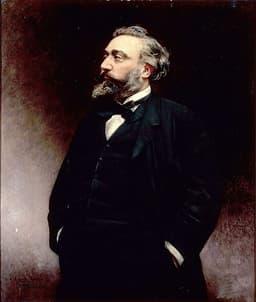
Leon Gambetta
Politician · Modern
61.2Total
Basic Information
Born
1883
1838
Died
1967
1882
Era
Modern
Modern
Nationality
United Kingdom
France
Occupation
Politician
Politician
Civilization
Western
Western
Score Comparison
Military (10%)
50.0
50.0
Political (20%)
85.0
70.0
Influence (20%)
68.0
62.0
Legacy (20%)
68.0
56.0
Leadership (15%)
82.0
79.8
Strategy (15%)
42.9
42.6
TOTAL
68.3
61.2
Clement Attlee — Complete Timeline
1945 AD
Became Prime Minister of the United KingdomPolitical Action◆ Major
Attlee led the Labour Party to a landslide victory in the general election, defeating Winston Churchill. He formed the first majority Labour government, with a mandate to implement sweeping social and economic reforms.
ElectionLabour GovernmentPost-War
Impact: nationalconstructive
1946 AD
Nationalized major industriesReform◆ Major
Attlee's government nationalized the Bank of England, coal mines, railways, road transport, and later steel and electricity. This created a mixed economy with state ownership of key industries, aiming to improve efficiency and public control.
NationalizationEconomySocialism
Impact: nationalconstructive
1947 AD
Granted independence to IndiaPolitical Action
Attlee's government passed the Indian Independence Act, ending British rule in India. The subcontinent was partitioned into India and Pakistan, leading to massive population transfers and violence. This marked the beginning of the end of the British Empire.
DecolonizationIndiaPartition
Impact: global
1948 AD
Established the National Health Service (NHS)Reform
Attlee's government passed the National Health Service Act, creating a publicly funded healthcare system providing free medical care to all residents. The NHS became a cornerstone of the British welfare state and a model for other countries.
HealthcareWelfare StateNHS
Impact: nationalprogressive
Oversaw the creation of the welfare stateReform◆ Major
Attlee's government implemented the recommendations of the Beveridge Report, establishing a comprehensive system of social insurance covering unemployment, sickness, and old age. This created a safety net for all citizens, a defining feature of post-war Britain.
Welfare StateSocial SecurityBeveridge
Impact: nationalprogressive
Leon Gambetta — Complete Timeline
1870 AD
Proclamation of the Third Republic (1870)Political Action
After the fall of Napoleon III at Sedan, Gambetta proclaimed the Third Republic from the H
Third RepublicRegime Change
Impact: nationalconstructive
Escape from Paris by Balloon (1870)Political Action◆ Major
During the Siege of Paris, Gambetta escaped the city in a hot air balloon to organize resistance in the provinces. He raised new armies and continued the war effort against Prussia.
Franco-Prussian WarResistance
Impact: nationalconstructive
Minister of the Interior (1870-1871)Political Action◆ Major
Gambetta served as Minister of the Interior in the Government of National Defense. He directed the war effort and attempted to continue fighting after the fall of Paris.
Franco-Prussian WarGovernment
Impact: national
1871 AD
Founding of the Republican Union (1871)Political Action◆ Major
Gambetta founded the Republican Union party, which advocated for a secular, democratic republic. The party became a major force in the National Assembly.
Political PartyRepublicanism
Impact: nationalconstructive
1879 AD
President of the Chamber of Deputies (1879-1882)Political Action◆ Major
Gambetta was elected President of the Chamber of Deputies, a powerful position in the Third Republic. He used it to advance republican reforms.
Third RepublicParliament
Impact: national
1881 AD
Prime Minister of France (1881-1882)Political Action◆ Major
Gambetta became Prime Minister, forming the 'Grand Ministry' of republican unity. His government lasted only 73 days due to opposition to his proposed constitutional reforms.
Third RepublicPrime Minister
Impact: national
Expert Analysis
Origins
Clement Attlee was born in 1883 in London to a middle-class family. His father was a solicitor, and Attlee attended Haileybury and University College, Oxford, where he studied history. After practicing law, he became a social worker in London's East End, which shaped his socialist views. He served in World War I, reaching the rank of major, and entered politics as a Labour MP in 1922.
Léon Gambetta was born in 1838 in Cahors, France, to a grocer father and an Italian mother. He studied law in Paris and became a lawyer. His eloquence and republican convictions propelled him into politics. He was elected to the Legislative Body in 1869 as a staunch opponent of Napoleon III's regime.
Rise to Power
Attlee's rise was gradual. He served as a junior minister in Ramsay MacDonald's government and became Labour leader in 1935 after George Lansbury's resignation. During World War II, he served as Deputy Prime Minister under Winston Churchill, managing domestic affairs. In 1945, Labour won a landslide victory, making Attlee Prime Minister with a mandate for sweeping reforms.
Gambetta's rise was meteoric. After the fall of the Second Empire in 1870, he proclaimed the Third Republic in Paris. As Minister of the Interior in the Government of National Defense, he organized resistance against Prussia. His dramatic escape from besieged Paris by hot air balloon in October 1870 to raise armies in the provinces cemented his reputation as a republican hero.
Leadership & Governance
Attlee's governance was methodical and legislative. His government passed the National Health Service Act (1946), nationalized key industries (Bank of England, coal, railways, steel), and implemented the welfare state based on the Beveridge Report. He managed a cabinet of strong personalities like Ernest Bevin and Aneurin Bevan, maintaining party unity. His political score of 85.0 reflects his ability to enact transformative legislation.
Gambetta's leadership was charismatic and rhetorical. He dominated the Chamber of Deputies as a voice for republicanism, secularism, and social reform. He founded the Republican Union party, which pushed for amnesty for Communards, freedom of the press, and educational reforms. However, his tenure as Prime Minister in 1881-1882 lasted only 73 days, as his grand ambitions clashed with parliamentary realities. His political score of 70.0 is lower due to this instability.
Triumph & Tragedy
Attlee's greatest triumph was the creation of the National Health Service, which provided free healthcare to all. He also oversaw the peaceful decolonization of India and the establishment of the welfare state. His failures include the inability to prevent the partition of India, which led to violence, and the economic difficulties of post-war Britain. His total score of 68.3 reflects balanced achievements and challenges.
Gambetta's triumph was saving the Third Republic after the Franco-Prussian War. His energy and organization of provincial armies prolonged resistance. However, his tragedy was the failure to achieve lasting political power. His government fell quickly, and he died in 1882 at age 44, possibly from a ruptured appendix, leaving his vision incomplete. His total score of 61.2 indicates a promising but truncated career.
Character & Destiny
Attlee was reserved, modest, and bureaucratic. He led by consensus and detailed planning. His character was suited to post-war reconstruction, where steady administration was needed. He scored 82.0 in leadership for his quiet but firm control.
Gambetta was passionate, eloquent, and impulsive. His oratory inspired masses but alienated allies. His character was suited to revolutionary moments, not the mundane compromises of governance. He scored 79.8 in leadership for his ability to rally support in crises.
Legacy
Attlee's legacy is the British welfare state and the NHS, which remain central to British society. His nationalizations shaped the post-war consensus that lasted until the 1970s. In India, he is remembered for granting independence.
Gambetta's legacy is the consolidation of the Third Republic, which lasted until 1940. He championed secularism and republican institutions. His influence is seen in France's enduring republican tradition.
Conclusion
Clement Attlee had greater impact. His total score of 68.3 versus Gambetta's 61.2 reflects more enduring achievements. Attlee's welfare state and NHS transformed British society and remain intact. Gambetta's work, while crucial, was foundational but less tangible. Attlee's methodical governance produced lasting institutions, whereas Gambetta's charismatic leadership yielded fleeting power. Therefore, Attlee is the more consequential figure.
Rankings
🥇
Clement AttleeLeader
Mil: 50.0Pol: 85.0Inf: 68.0
68.3
🥈
Leon Gambetta
Mil: 50.0Pol: 70.0Inf: 62.0
61.2
+7.1 behind
How This Comparison Works
Algorithm
Each figure is scored on 6 dimensions (0—100 scale) based on structured historical data: Military (10%), Political (20%), Influence (20%), Legacy (20%), Leadership (15%), Strategy (15%). The weighted total produces the final ranking.
Data Sources
Scores are computed from structured sub-indicators in the database. Scale factors adjust for era (Ancient ×0.85, Modern ×1.0) and civilization size (Eastern ×1.05, Other ×0.80) to account for differences in population and military scale.
Maximum 3 Figures
Comparisons are limited to 2—3 figures to ensure readability and statistical meaningfulness.
Error Margins
±5 points per dimension — Sub-scores are derived from historical records with inherent uncertainty. Two figures within 5 points on a dimension should be considered roughly equivalent in that area.
Total Score Accuracy
±3 points overall — The weighted combination of 6 dimensions produces a total score with approximately ±3 points of uncertainty. Differences of less than 3 points are not statistically significant— the figures are effectively tied.
Known Limitations
- Historical records are incomplete and uneven across civilizations
- Figures from oral-tradition societies may be underrepresented
- Occupation labels can misclassify multi-role figures
- Scores measure capability and impact, not moral character
- Quantitative scoring is a comparison tool, not absolute truth
Capability Radar
Military (10%) — Battles & Warfare
Battles
28
28
Win Rate
31
31
Expansion
32
32
Political (20%) — Governance & Reform
Reform
90
70
Diplomacy
75
65
Economy
70
55
Influence (20%) — Cultural & Global Reach
Cultural
60
45
Global
70
55
Legacy (20%) — Historical Impact
Historical
80
60
Longevity
70
50
Leadership (15%) — Power & Stability
Tenure
65
60
Stability
80
50
Strategy (15%) — Tactics & Innovation
Strategy
40
35
Tactics
42
43
Reform
43
46
Similar Comparisons
Comments & Discussion
No comments yet. Be the first to share your thoughts!