Loading...
This comparison has not been analyzed yet.
One-time AI generation (~1 minute). Scores and timeline are already available below.
Claus von Stauffenberg vs Maximilian von Spee
Claus von Stauffenberg leads by 7.0 pts · 2 figures compared
…
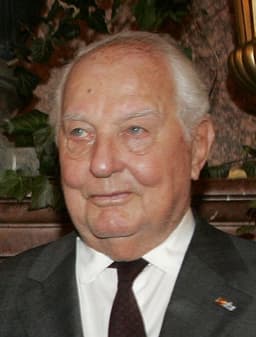
Claus von Stauffenberg
General · Modern
48.4Total

Maximilian von Spee
General · Modern
41.4Total
Basic Information
Born
1907
1861
Died
1944
1914
Era
Modern
Modern
Nationality
Germany
Germany
Occupation
General
General
Civilization
Western
Western
Score Comparison
Military (10%)
50.0
46.7
Political (20%)
32.2
25.0
Influence (20%)
61.0
53.3
Legacy (20%)
54.0
43.3
Leadership (15%)
35.4
30.0
Strategy (15%)
45.0
43.3
TOTAL
48.4
41.4
Claus von Stauffenberg — Complete Timeline
1943 AD
Severely Wounded in North AfricaWar◆ Major
Stauffenberg was severely wounded in Tunisia on April 7, 1943, during an Allied air attack. He lost his left eye, his right hand, and two fingers on his left hand. These injuries later allowed him to carry the bomb briefcase into Hitler's briefing.
World War IINorth AfricaInjury
Impact: nationaltragic
1944 AD
Placed the Bomb at the Wolf's LairPolitical Action
Stauffenberg attended a military briefing at Hitler's Wolf's Lair headquarters on July 20, 1944, carrying a briefcase containing a bomb. He placed the briefcase near Hitler and left the room. The bomb exploded, but Hitler survived with minor injuries.
July 20 PlotAssassination AttemptWolf's Lair
Impact: global
Executed at BendlerblockPolitical Action◆ Major
After the failure of the coup, Stauffenberg was arrested at the Bendlerblock in Berlin. He was executed by firing squad on the night of July 20, 1944, along with Olbricht and others. His last words were reported as 'Long live sacred Germany.'
July 20 PlotExecutionBendlerblock
Impact: nationaltragic
Maximilian von Spee — Complete Timeline
1914 AD
Battle of CoronelWar◆ Major
Spee commanded the German East Asia Squadron in a naval battle off the coast of Chile. His force sank two British cruisers, HMS Good Hope and HMS Monmouth, with no German losses. It was the first British naval defeat in a century.
World War INaval BattlePacific
Impact: regional
Battle of the Falkland IslandsWar◆ Major
Spee's squadron attempted to raid the British coaling station at Port Stanley, but was intercepted by a superior British force including battlecruisers. Spee and most of his ships were sunk. He died in the battle.
World War INaval BattleSouth Atlantic
Impact: regionaltragic
Bombardment of PapeeteWar
Spee's squadron bombarded the French colonial port of Papeete in Tahiti. The French sank their own gunboat to prevent capture. Spee seized coal and supplies before departing. The raid delayed his voyage to South America.
World War INaval RaidPacific
destructive
This comparison has not been analyzed yet.
One-time AI generation (~1 minute). Scores and timeline are already available below.
Rankings
🥇
Claus von StauffenbergLeader
Mil: 50.0Pol: 32.2Inf: 61.0
48.4
🥈
Maximilian von Spee
Mil: 46.7Pol: 25.0Inf: 53.3
41.4
+7.0 behind
How This Comparison Works
Algorithm
Each figure is scored on 6 dimensions (0—100 scale) based on structured historical data: Military (10%), Political (20%), Influence (20%), Legacy (20%), Leadership (15%), Strategy (15%). The weighted total produces the final ranking.
Data Sources
Scores are computed from structured sub-indicators in the database. Scale factors adjust for era (Ancient ×0.85, Modern ×1.0) and civilization size (Eastern ×1.05, Other ×0.80) to account for differences in population and military scale.
Maximum 3 Figures
Comparisons are limited to 2—3 figures to ensure readability and statistical meaningfulness.
Error Margins
±5 points per dimension — Sub-scores are derived from historical records with inherent uncertainty. Two figures within 5 points on a dimension should be considered roughly equivalent in that area.
Total Score Accuracy
±3 points overall — The weighted combination of 6 dimensions produces a total score with approximately ±3 points of uncertainty. Differences of less than 3 points are not statistically significant— the figures are effectively tied.
Known Limitations
- Historical records are incomplete and uneven across civilizations
- Figures from oral-tradition societies may be underrepresented
- Occupation labels can misclassify multi-role figures
- Scores measure capability and impact, not moral character
- Quantitative scoring is a comparison tool, not absolute truth
Capability Radar
Military (10%) — Battles & Warfare
Battles
20
40
Win Rate
15
35
Expansion
5
10
Political (20%) — Governance & Reform
Reform
20
5
Diplomacy
25
15
Economy
5
5
Influence (20%) — Cultural & Global Reach
Cultural
45
15
Global
50
15
Legacy (20%) — Historical Impact
Historical
55
30
Longevity
50
20
Leadership (15%) — Power & Stability
Tenure
10
10
Stability
5
10
Strategy (15%) — Tactics & Innovation
Strategy
35
40
Tactics
40
55
Reform
10
10
Similar Comparisons
Comments & Discussion
No comments yet. Be the first to share your thoughts!