Loading...
This comparison has not been analyzed yet.
One-time AI generation (~1 minute). Scores and timeline are already available below.
Chlothar II vs Edward of Portugal
Chlothar II leads by 1.0 pts · 2 figures compared
…
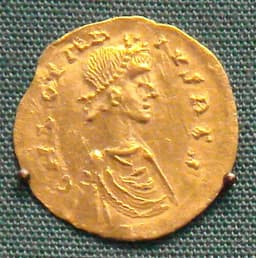
Chlothar II
Emperor · Medieval
52.6Total

Edward of Portugal
Emperor · Medieval
51.6Total
Basic Information
Born
584
1391
Died
629
1438
Era
Medieval
Medieval
Nationality
Frankish Empire
Portugal
Occupation
Emperor
Emperor
Civilization
Western
Western
Score Comparison
Military (10%)
45.0
50.0
Political (20%)
54.7
45.1
Influence (20%)
51.8
54.1
Legacy (20%)
45.8
45.8
Leadership (15%)
74.0
65.7
Strategy (15%)
43.7
50.0
TOTAL
52.6
51.6
Chlothar II — Complete Timeline
613 AD
Battle of the AisneWar◆ Major
Chlothar II's forces defeated the combined armies of Brunhilda and Sigebert II near the Aisne River. The battle was decisive, leading to the collapse of Austrasian resistance and allowing Chlothar to reunite the Frankish kingdoms.
MerovingianBattleCivil War
Impact: regional
Reunification of the Frankish KingdomsPolitical Action
Chlothar II defeated Brunhilda and her grandson Sigebert II at the Battle of the Aisne, capturing and executing Brunhilda. He then united Neustria, Austrasia, and Burgundy under his sole rule, becoming the sole king of the Franks.
MerovingianUnificationBrunhilda
Impact: regional
Execution of BrunhildaPolitical Action◆ Major
After his victory, Chlothar II ordered the execution of Brunhilda, the aged queen of Austrasia. She was tortured for three days, then tied to a wild horse and dragged to her death. This act ended the long feud between the Neustrian and Austrasian branches.
MerovingianExecutionBrunhilda
Impact: regionaltragic
614 AD
Edict of ParisReform◆ Major
Chlothar II issued the Edict of Paris, a major reform that granted concessions to the nobility and the Church. It limited royal power by confirming the rights of bishops and nobles, and established that counts should be appointed from the local aristocracy.
MerovingianReformNobility
Impact: regionalconstructive
Edward of Portugal — Complete Timeline
1433 AD
Accession as King of PortugalPolitical Action◆ Major
Edward succeeded his father John I as King of Portugal. He inherited a prosperous kingdom but faced challenges including the ongoing exploration efforts sponsored by his brother Henry the Navigator and tensions with the nobility.
SuccessionPortugal
Impact: national
1437 AD
Expedition to TangierWar◆ Major
Edward authorized a disastrous expedition to capture Tangier in Morocco, led by his brother Henry the Navigator. The Portuguese forces were defeated, and Edward's younger brother Ferdinand was taken hostage, leading to a national crisis.
CrusadeMoroccoDefeat
Impact: nationaldestructive
1438 AD
Publication of the 'Leal Conselheiro'Cultural
Edward wrote the 'Leal Conselheiro' (Loyal Counselor), a philosophical and moral treatise for the nobility. This work reflects his humanist education and established him as a philosopher-king, influencing Portuguese literature and political thought.
LiteraturePhilosophyHumanism
Impact: nationalconstructive
Death from plagueOther◆ Major
Edward died of the plague at age 47, leaving his young son Afonso V as king. His death triggered a regency crisis, as his widow Eleanor of Aragon and his brother Pedro disputed control, leading to political instability in Portugal.
DeathPlagueRegency Crisis
Impact: nationaltragic
This comparison has not been analyzed yet.
One-time AI generation (~1 minute). Scores and timeline are already available below.
Rankings
🥇
Chlothar IILeader
Mil: 45.0Pol: 54.7Inf: 51.8
52.6
🥈
Edward of Portugal
Mil: 50.0Pol: 45.1Inf: 54.1
51.6
+1.0 behind
How This Comparison Works
Algorithm
Each figure is scored on 6 dimensions (0—100 scale) based on structured historical data: Military (10%), Political (20%), Influence (20%), Legacy (20%), Leadership (15%), Strategy (15%). The weighted total produces the final ranking.
Data Sources
Scores are computed from structured sub-indicators in the database. Scale factors adjust for era (Ancient ×0.85, Modern ×1.0) and civilization size (Eastern ×1.05, Other ×0.80) to account for differences in population and military scale.
Maximum 3 Figures
Comparisons are limited to 2—3 figures to ensure readability and statistical meaningfulness.
Error Margins
±5 points per dimension — Sub-scores are derived from historical records with inherent uncertainty. Two figures within 5 points on a dimension should be considered roughly equivalent in that area.
Total Score Accuracy
±3 points overall — The weighted combination of 6 dimensions produces a total score with approximately ±3 points of uncertainty. Differences of less than 3 points are not statistically significant— the figures are effectively tied.
Known Limitations
- Historical records are incomplete and uneven across civilizations
- Figures from oral-tradition societies may be underrepresented
- Occupation labels can misclassify multi-role figures
- Scores measure capability and impact, not moral character
- Quantitative scoring is a comparison tool, not absolute truth
Capability Radar
Military (10%) — Battles & Warfare
Battles
20
20
Win Rate
25
25
Expansion
40
10
Political (20%) — Governance & Reform
Reform
45
40
Diplomacy
55
50
Economy
40
35
Influence (20%) — Cultural & Global Reach
Cultural
30
45
Global
20
20
Legacy (20%) — Historical Impact
Historical
40
40
Longevity
35
35
Leadership (15%) — Power & Stability
Tenure
60
55
Stability
50
30
Strategy (15%) — Tactics & Innovation
Strategy
30
25
Tactics
15
30
Reform
10
15
Similar Comparisons
Comments & Discussion
No comments yet. Be the first to share your thoughts!