Loading...
Chester A. Arthur vs Hipolito Mejia
Chester A. Arthur leads by 7.7 pts · 2 figures compared
…

Chester A. Arthur
Politician · Modern
53.2Total
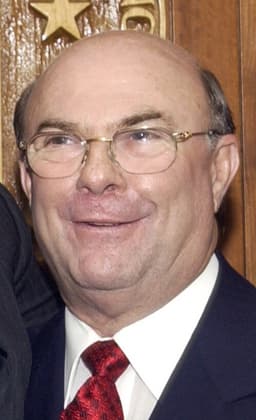
Hipolito Mejia
Politician · Modern
45.5Total
Basic Information
Born
1829
1941
Died
1886
—
Era
Modern
Modern
Nationality
United States
Dominican Republic
Occupation
Politician
Politician
Civilization
Western
Western
Score Comparison
Military (10%)
50.0
49.9
Political (20%)
60.0
39.4
Influence (20%)
51.8
47.1
Legacy (20%)
45.0
37.5
Leadership (15%)
72.0
62.2
Strategy (15%)
42.5
40.8
TOTAL
53.2
45.5
Chester A. Arthur — Complete Timeline
1881 AD
Assumption of the Presidency after Garfield's AssassinationPolitical Action◆ Major
Arthur became the 21st president upon Garfield's death. His ascension was marked by a desire to distance himself from the Stalwart faction of the Republican Party, which had supported him as vice president.
Presidential SuccessionRepublican Party
Impact: national
1882 AD
Veto of the Chinese Exclusion ActPolitical Action◆ Major
Arthur vetoed the Chinese Exclusion Act, which would have banned Chinese immigration for 20 years. He argued it violated the Burlingame Treaty. Congress later passed a revised version with a 10-year ban, which Arthur signed.
Immigration PolicyChinese Exclusion
Impact: national
1883 AD
Signing of the Pendleton Civil Service Reform ActReform
Arthur signed the Pendleton Act into law, establishing a merit-based system for federal employment. The act created the Civil Service Commission and required competitive exams for many government positions, reducing the influence of patronage and political machines.
Civil Service ReformGovernment Reform
Impact: nationalconstructive
Hipolito Mejia — Complete Timeline
2000 AD
Election as PresidentPolitical Action◆ Major
Mejía was elected president of the Dominican Republic as the candidate of the Dominican Revolutionary Party (PRD). He campaigned on a platform of agricultural development and social spending.
Dominican RepublicElectionPRD
Impact: nationalconstructive
2003 AD
Banking Crisis of 2003Other
The collapse of Banco Intercontinental (Baninter) due to massive fraud triggered a severe banking crisis. The government's bailout cost an estimated 20% of GDP, causing a deep recession and inflation.
Dominican RepublicBanking CrisisEconomy
Impact: nationaltragic
2004 AD
Defeat in the 2004 Presidential ElectionPolitical Action◆ Major
Mejía was defeated in his re-election bid by Leonel Fernández of the Dominican Liberation Party (PLD). The election was largely a referendum on Mejía's handling of the banking crisis.
Dominican RepublicElectionDefeat
Impact: national
Expert Analysis
Origins
**Chester A. Arthur** was born in 1829 in Fairfield, Vermont, to a Baptist minister father and a mother of English descent. He studied at Union College, graduating in 1848, and later studied law, being admitted to the bar in 1854. Arthur began his legal career in New York City, where he became involved in Republican politics and served as a lawyer for the New York City legal department. His early career was marked by association with the Stalwart faction of the Republican Party, led by Senator Roscoe Conkling.
**Hipolito Mejia** was born in 1941 in Santiago, Dominican Republic, to a farming family. He studied agronomy at the University of Santo Domingo and later specialized in agricultural economics. Mejia worked as a farmer and agricultural technician before entering politics. He was a member of the Dominican Revolutionary Party (PRD), a center-left party. His background as a farmer shaped his political identity, earning him the nickname "the farmer president."
Rise to Power
Arthur rose to prominence through the New York Republican machine. He was appointed by President Ulysses S. Grant as Collector of the Port of New York in 1871, a powerful patronage position. He held this post until 1878, when President Rutherford B. Hayes removed him as part of civil service reform efforts. Arthur's loyalty to the Stalwart faction led to his nomination as Vice President under James A. Garfield in 1880, a compromise choice. Upon Garfield's assassination in 1881, Arthur became the 21st President.
Mejia rose through the PRD ranks, serving as a congressman and senator. He was elected Vice President under President Leonel Fernandez in 1996, but they had conflicts, leading to Mejia's resignation in 1999. In the 2000 presidential election, Mejia ran as the PRD candidate and won with 49.9% of the vote, defeating the PLD candidate Danilo Medina. His campaign focused on agricultural development and social programs.
Leadership & Governance
Arthur surprised many by embracing civil service reform, breaking with his Stalwart past. He signed the Pendleton Civil Service Reform Act in 1883, which established a merit-based system for federal employment, creating the Civil Service Commission. This was a direct response to the assassination of Garfield by a disgruntled office seeker. Arthur also vetoed the Chinese Exclusion Act in 1882, which would have banned Chinese immigration for 20 years, arguing it violated the Burlingame Treaty. However, Congress overrode his veto. He also signed the Immigration Act of 1882, which imposed a head tax on immigrants and excluded certain categories.
Mejia's presidency was dominated by the banking crisis of 2003, triggered by the collapse of Banco Intercontinental (Baninter) due to massive fraud. The government's bailout cost an estimated 20% of GDP, leading to a severe recession, inflation, and devaluation of the peso. Mejia's response included a bailout and austerity measures, but his approval ratings plummeted. He also pursued agricultural policies, such as subsidizing rice and other crops, but the crisis overshadowed his governance. His leadership scored 62.2, reflecting his hands-on approach but poor economic management.
Triumph & Tragedy
Arthur's greatest triumph was the Pendleton Act, which fundamentally changed the US civil service, reducing patronage and corruption. His veto of the Chinese Exclusion Act, though overridden, demonstrated principled stands. However, his tragedy was his health: he suffered from Bright's disease and died in 1886, a year after leaving office. His legacy is mixed, as he was seen as a competent but unremarkable president.
Mejia's triumph was his election as a farmer-president, representing rural interests. He also maintained political stability despite the crisis. But the banking crisis was his tragedy: the Baninter collapse wiped out savings, increased poverty, and led to his defeat in 2004. He scored 37.5 in legacy, reflecting the long-term damage to his reputation.
Character & Destiny
Arthur was pragmatic and adaptable, surprising contemporaries by supporting reform. His character was shaped by his legal background and political machine experience, but he rose above factionalism. His destiny was tied to Garfield's assassination, a tragedy that forced him to lead under a cloud of suspicion.
Mejia was a populist with a farmer's background, but his lack of economic expertise was exposed by the crisis. He was seen as honest but out of his depth. His destiny was sealed by the Baninter fraud, which was not of his making but for which he bore responsibility.
Legacy
Arthur's legacy is the Pendleton Act, which remains the foundation of US civil service. He is remembered as the "Father of Civil Service Reform." His political score is 60.0 and influence 51.8.
Mejia's legacy is the banking crisis and its aftermath. He is often cited as a cautionary tale of economic mismanagement. His influence score is 47.1.
Conclusion
Chester A. Arthur had a greater impact due to his lasting reform of the US civil service, which improved government efficiency and reduced corruption. While Mejia faced a severe crisis, his policies did not create lasting positive change. Arthur scored a total of 53.2 vs. Mejia's 45.5, a gap of 7.7 points. Arthur's legislative achievement continues to affect millions, whereas Mejia's crisis was a temporary setback for the Dominican Republic.
Rankings
🥇
Chester A. ArthurLeader
Mil: 50.0Pol: 60.0Inf: 51.8
53.2
🥈
Hipolito Mejia
Mil: 49.9Pol: 39.4Inf: 47.1
45.5
+7.7 behind
How This Comparison Works
Algorithm
Each figure is scored on 6 dimensions (0—100 scale) based on structured historical data: Military (10%), Political (20%), Influence (20%), Legacy (20%), Leadership (15%), Strategy (15%). The weighted total produces the final ranking.
Data Sources
Scores are computed from structured sub-indicators in the database. Scale factors adjust for era (Ancient ×0.85, Modern ×1.0) and civilization size (Eastern ×1.05, Other ×0.80) to account for differences in population and military scale.
Maximum 3 Figures
Comparisons are limited to 2—3 figures to ensure readability and statistical meaningfulness.
Error Margins
±5 points per dimension — Sub-scores are derived from historical records with inherent uncertainty. Two figures within 5 points on a dimension should be considered roughly equivalent in that area.
Total Score Accuracy
±3 points overall — The weighted combination of 6 dimensions produces a total score with approximately ±3 points of uncertainty. Differences of less than 3 points are not statistically significant— the figures are effectively tied.
Known Limitations
- Historical records are incomplete and uneven across civilizations
- Figures from oral-tradition societies may be underrepresented
- Occupation labels can misclassify multi-role figures
- Scores measure capability and impact, not moral character
- Quantitative scoring is a comparison tool, not absolute truth
Capability Radar
Military (10%) — Battles & Warfare
Battles
30
26
Win Rate
29
33
Expansion
33
36
Political (20%) — Governance & Reform
Reform
70
30
Diplomacy
40
35
Economy
40
25
Influence (20%) — Cultural & Global Reach
Cultural
20
10
Global
20
10
Legacy (20%) — Historical Impact
Historical
40
15
Longevity
30
10
Leadership (15%) — Power & Stability
Tenure
30
40
Stability
60
20
Strategy (15%) — Tactics & Innovation
Strategy
36
35
Tactics
44
39
Reform
43
43
Similar Comparisons
Comments & Discussion
No comments yet. Be the first to share your thoughts!