Loading...
Chebi Khan vs David II of Scotland
Chebi Khan leads by 1.9 pts · 2 figures compared
…

Chebi Khan
Emperor · Medieval
40.5Total
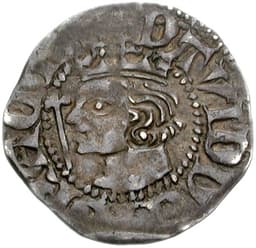
David II of Scotland
Emperor · Medieval
38.6Total
Basic Information
Born
610
1324
Died
650
1371
Era
Medieval
Medieval
Nationality
Eastern Turkic Khaganate
Scotland
Occupation
Emperor
Emperor
Civilization
Eastern
Western
Score Comparison
Military (10%)
50.0
20.0
Political (20%)
29.3
30.7
Influence (20%)
47.1
47.9
Legacy (20%)
37.5
39.2
Leadership (15%)
39.0
38.1
Strategy (15%)
41.0
45.0
TOTAL
40.5
38.6
Chebi Khan — Complete Timeline
646 AD
Rebellion against Tang ChinaWar◆ Major
Chebi Khan led a rebellion of the Eastern Turkic tribes against Tang Chinese control. He briefly restored the Eastern Turkic Khaganate, rallying support from remnants of the former khaganate and other steppe tribes.
RebellionTang DynastyEastern Turkic Khaganate
Impact: regionaldestructive
648 AD
Battle of the Altai MountainsWar◆ Major
Chebi Khan was defeated by Tang forces under the general Li Shiji at the Battle of the Altai Mountains. His army was destroyed, and he was forced to flee into the mountains, ending the brief restoration.
BattleTang DynastyDefeat
Impact: regionaldestructive
650 AD
Capture and deathPolitical Action◆ Major
Chebi Khan was captured by Tang forces and executed. His death marked the final end of the Eastern Turkic Khaganate, as Tang China consolidated control over the steppe and established the Protectorate General to Pacify the North.
CaptureDeathTang Dynasty
Impact: regionaltragic
David II of Scotland — Complete Timeline
1329 AD
Coronation as King of ScotsPolitical Action◆ Major
David II was crowned King of Scots at Scone Abbey at age five, following the death of his father Robert the Bruce. The coronation was overseen by regents, as David was a minor, and it continued the Bruce dynasty's rule.
CoronationRegencyBruce Dynasty
Impact: national
1346 AD
Battle of Neville's CrossWar◆ Major
David II led a Scottish invasion of England but was defeated at Neville's Cross near Durham. He was wounded and captured by English forces, remaining a prisoner for eleven years. The defeat weakened Scotland and led to English occupation of southern Scotland.
BattleDefeatCapture
Impact: nationaldestructive
Imprisonment in EnglandOther◆ Major
David II was held captive in England for eleven years after his capture at Neville's Cross. He was imprisoned in the Tower of London and later at Odiham Castle, while Scotland was governed by regents and paid a large ransom for his release.
ImprisonmentRansomRegency
Impact: nationaltragic
1357 AD
Treaty of BerwickPolitical Action◆ Major
David II was released from English captivity after the Treaty of Berwick was signed. Scotland agreed to pay a ransom of 100,000 marks over ten years for his freedom, placing a heavy financial burden on the kingdom.
TreatyRansomRelease
Impact: nationaldestructive
1363 AD
Proposal to Make Edward III HeirPolitical Action
David II proposed to the Scottish Parliament that Edward III of England or his son be named heir to the Scottish throne if David died without children. The proposal was rejected by Parliament, who feared English domination.
SuccessionProposalParliament
Impact: nationaldestructive
Expert Analysis
Origins
Chebi Khan, born around 610 CE, was a member of the Ashina clan, the ruling dynasty of the Eastern Turkic Khaganate. Little is known of his early life, but he emerged as a leader during a period of Tang Chinese dominance over the steppes. His formative experiences were shaped by the collapse of the first Eastern Turkic Khaganate in 630 CE, which led to direct Tang control over Turkic tribes. Chebi Khan grew up under this subjugation, fostering a deep resentment that would drive his later rebellion.
David II of Scotland was born on March 5, 1324, the only surviving son of King Robert the Bruce and his second wife, Elizabeth de Burgh. His father had secured Scottish independence after the Wars of Scottish Independence, but David was only five years old when his father died in 1329. He was crowned at Scone Abbey in November 1331, with Thomas Randolph, Earl of Moray, serving as regent. David's childhood was overshadowed by the ongoing conflict with England and the need to maintain the Bruce legacy.
Rise to Power
Chebi Khan rose to prominence by uniting discontented Turkic tribes against Tang China. In 679 CE, he declared himself khagan and led a rebellion that initially succeeded in driving out Tang garrisons and re-establishing the Eastern Turkic Khaganate. His authority was recognized by tribes across the Mongolian steppe, and he posed a significant challenge to Tang control. However, his power was short-lived, as the Tang emperor Gaozong dispatched the general Li Shiji to crush the revolt.
David II's rise to power was automatic upon his father's death, but his early reign was marked by regency and vulnerability. In 1332, Edward Balliol, backed by the English, invaded Scotland, defeating the Scots at the Battle of Dupplin Moor. David and his regents struggled to maintain control, and in 1333, after the Battle of Halidon Hill, David was sent to France for safety. He returned in 1341, but his authority remained contested by Balliol's supporters and the English crown.
Leadership & Governance
Chebi Khan's leadership was characterized by military mobilization and a brief restoration of Turkic independence. He likely relied on traditional tribal structures, but his governance was cut short by defeat. His political score of 29.3 reflects his inability to establish lasting institutions or secure recognition beyond the initial rebellion. In contrast, David II's governance was hampered by his long captivity and financial burdens. After his release in 1357, he struggled to pay the massive ransom of 100,000 marks required by the Treaty of Berwick. His proposal to make Edward III of England his heir, if he died without children, was deeply unpopular and reflected his pragmatic but controversial approach to securing peace. David's political score of 30.7 slightly edges out Chebi's, but both were weak rulers.
Triumph & Tragedy
Chebi Khan's greatest triumph was briefly restoring the Eastern Turkic Khaganate, a feat that demonstrated his ability to rally his people against a superior power. However, his tragedy was total defeat at the Battle of the Altai Mountains (c. 680 CE), where his army was destroyed by Li Shiji. He fled but was captured and executed, marking the final end of the Eastern Turkic Khaganate. His military score of 50.0 reflects his initial success but ultimate failure.
David II's triumph was surviving his long imprisonment and eventually returning to Scotland, maintaining the Bruce dynasty's claim. He also successfully negotiated his release through the Treaty of Berwick, albeit at great cost. His tragedy was his capture at the Battle of Neville's Cross in 1346, where he led an ill-fated invasion of England. He was wounded and spent eleven years in captivity, during which Scotland was effectively under English influence. His military score of 20.0 reflects his poor battlefield performance.
Character & Destiny
Chebi Khan was determined and defiant, willing to challenge Tang hegemony despite the odds. His rebellion was a last gasp of Turkic independence, and his execution sealed the fate of his people under Tang rule. His character, characterized by pride and resistance, led to his downfall but also to a brief moment of glory. David II was more cautious and pragmatic, perhaps shaped by his years as a hostage. His proposal to name an English heir was seen as treasonous by many Scots, but it reflected his desire for stability. His destiny was to be a king in name more than in power, overshadowed by his father's legacy.
Legacy
Chebi Khan's legacy is that of a failed rebel who briefly revived a fallen khaganate. He is remembered in Turkic history as a symbol of resistance, but his impact was minimal; the Eastern Turks were fully absorbed into Tang China after his death. His overall legacy score of 37.5 indicates limited lasting influence. David II's legacy is more complex. He is often viewed as a weak king who failed to build on his father's victories. However, he did maintain Scottish independence, albeit through diplomacy and ransom rather than war. His legacy score of 39.2 is slightly higher, reflecting his role in the continuity of the Scottish monarchy.
Conclusion
While Chebi Khan scored slightly higher overall (40.5 vs. 38.6), David II's impact on Scottish history is arguably greater. Chebi's rebellion was a brief flash that ended in annihilation, with no enduring state or institutions. David II, despite his flaws, kept Scotland independent and passed the crown to his nephew Robert II, founding the Stewart dynasty. Chebi Khan's total score advantage of 1.9 points is deceptive; David's influence on the long-term trajectory of Scotland outweighs Chebi's ephemeral restoration. Therefore, David II had a more significant historical impact, even if his personal scores are lower.
Rankings
🥇
Chebi KhanLeader
Mil: 50.0Pol: 29.3Inf: 47.1
40.5
🥈
David II of Scotland
Mil: 20.0Pol: 30.7Inf: 47.9
38.6
+1.9 behind
How This Comparison Works
Algorithm
Each figure is scored on 6 dimensions (0—100 scale) based on structured historical data: Military (10%), Political (20%), Influence (20%), Legacy (20%), Leadership (15%), Strategy (15%). The weighted total produces the final ranking.
Data Sources
Scores are computed from structured sub-indicators in the database. Scale factors adjust for era (Ancient ×0.85, Modern ×1.0) and civilization size (Eastern ×1.05, Other ×0.80) to account for differences in population and military scale.
Maximum 3 Figures
Comparisons are limited to 2—3 figures to ensure readability and statistical meaningfulness.
Error Margins
±5 points per dimension — Sub-scores are derived from historical records with inherent uncertainty. Two figures within 5 points on a dimension should be considered roughly equivalent in that area.
Total Score Accuracy
±3 points overall — The weighted combination of 6 dimensions produces a total score with approximately ±3 points of uncertainty. Differences of less than 3 points are not statistically significant— the figures are effectively tied.
Known Limitations
- Historical records are incomplete and uneven across civilizations
- Figures from oral-tradition societies may be underrepresented
- Occupation labels can misclassify multi-role figures
- Scores measure capability and impact, not moral character
- Quantitative scoring is a comparison tool, not absolute truth
Capability Radar
Military (10%) — Battles & Warfare
Battles
20
5
Win Rate
25
5
Expansion
20
5
Political (20%) — Governance & Reform
Reform
10
10
Diplomacy
20
15
Economy
10
10
Influence (20%) — Cultural & Global Reach
Cultural
10
10
Global
10
5
Legacy (20%) — Historical Impact
Historical
15
15
Longevity
10
10
Leadership (15%) — Power & Stability
Tenure
15
30
Stability
10
15
Strategy (15%) — Tactics & Innovation
Strategy
20
5
Tactics
20
5
Reform
10
5
Similar Comparisons
Comments & Discussion
No comments yet. Be the first to share your thoughts!