Loading...
Charles Taylor vs Mochtar Lubis
Mochtar Lubis leads by 0.8 pts · 2 figures compared
…

Charles Taylor
Politician · Modern
43.1Total
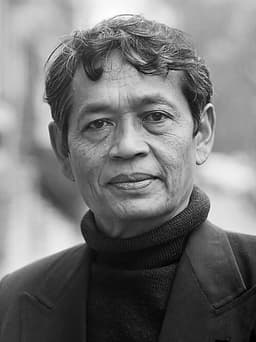
Mochtar Lubis
Politician · Modern
43.9Total
Basic Information
Born
1948
1922
Died
—
—
Era
Modern
Modern
Nationality
Liberia
Indonesia
Occupation
Politician
Politician
Civilization
Other
Eastern
Score Comparison
Military (10%)
45.0
17.8
Political (20%)
26.4
30.8
Influence (20%)
51.0
56.4
Legacy (20%)
39.2
44.2
Leadership (15%)
55.3
62.2
Strategy (15%)
38.3
30.6
TOTAL
43.1
43.9
Charles Taylor — Complete Timeline
1989 AD
Formation of the National Patriotic Front of Liberia (NPFL)Political Action
Charles Taylor formed the NPFL in Ivory Coast and launched an invasion into Liberia, beginning the First Liberian Civil War. The NPFL quickly gained control of much of the country, challenging Samuel Doe's government.
Civil WarRebellionNPFL
Impact: regionaldestructive
1997 AD
Election as President of LiberiaPolitical Action◆ Major
Taylor won the 1997 Liberian general election with 75% of the vote, running on a platform of peace and reconciliation. The election was held after the end of the First Civil War, but Taylor's victory was widely seen as a choice between him and a return to war.
ElectionPresidencyPeace
Impact: national
2003 AD
Indictment by the Special Court for Sierra LeonePolitical Action
The Special Court for Sierra Leone (SCSL) indicted Taylor for war crimes and crimes against humanity for his role in supporting the Revolutionary United Front (RUF) in Sierra Leone's civil war. The indictment marked the first time a sitting African head of state was charged with such crimes.
War CrimesIndictmentInternational Justice
Impact: globaldestructive
Resignation and exilePolitical Action◆ Major
Under international pressure and facing a rebel siege of Monrovia, Taylor resigned the presidency and went into exile in Nigeria. His departure ended the Second Liberian Civil War and allowed for a peace agreement.
ResignationExilePeace
Impact: regional
2012 AD
Conviction for war crimesPolitical Action
The Special Court for Sierra Leone convicted Taylor of 11 counts of war crimes, crimes against humanity, and other serious violations of international humanitarian law. He was sentenced to 50 years in prison, the first former head of state convicted since Nuremberg.
War CrimesConvictionInternational Justice
Impact: globaldestructive
Mochtar Lubis — Complete Timeline
1949 AD
Founding of Indonesia Raya NewspaperCultural◆ Major
Mochtar Lubis co-founded the daily newspaper Indonesia Raya, which became a prominent voice for independent journalism in Indonesia. The paper was known for its critical reporting and was eventually banned by the government.
JournalismNewspaperPress Freedom
Impact: nationalconstructive
1956 AD
Imprisonment under SukarnoPolitical Action◆ Major
Mochtar Lubis was arrested by the Sukarno government for his critical journalism, accused of subversion. He was imprisoned without trial for several years, becoming a symbol of press freedom under authoritarian rule.
ImprisonmentPress FreedomSukarno
Impact: nationaldestructive
1963 AD
Publication of 'Twilight in Jakarta'Cultural
Mochtar Lubis published his novel 'Twilight in Jakarta' (Senja di Jakarta), a critical portrayal of corruption and social inequality in Indonesia. The book was banned in Indonesia but gained international recognition.
LiteratureBanned BookSocial Criticism
Impact: national
1974 AD
Imprisonment under SuhartoPolitical Action◆ Major
Mochtar Lubis was again arrested, this time by the Suharto regime, following the Malari incident. He was detained for his alleged involvement in protests against the government, highlighting the continued repression of dissent.
ImprisonmentMalari IncidentSuharto
Impact: nationaldestructive
Expert Analysis
Origins
Charles Taylor was born on January 28, 1948, in Arthington, Liberia, to a family of Americo-Liberian descent. His father was a teacher and his mother a nurse. Taylor studied at Bentley College in the United States, earning a degree in economics. He returned to Liberia and worked in the government of Samuel Doe before fleeing to the United States after being accused of embezzling government funds. He was imprisoned in the U.S. but escaped in 1985.
Mochtar Lubis was born on March 7, 1922, in Padang, West Sumatra, Dutch East Indies (now Indonesia). His father was a civil servant. Lubis studied at the Dutch-run medical school in Jakarta but left to become a journalist. He began his career at the Asia Raya newspaper during the Japanese occupation and later co-founded the Indonesia Raya newspaper in 1949.
Rise to Power
Taylor formed the National Patriotic Front of Liberia (NPFL) in Ivory Coast in 1989 and launched an invasion into Liberia, beginning the First Liberian Civil War. The NPFL quickly gained control of much of the country, and Taylor became a dominant warlord. After a series of peace agreements, Taylor won the 1997 Liberian general election with 75% of the vote, running on a platform of peace and reconciliation. He assumed the presidency on August 2, 1997.
Lubis rose to prominence as a journalist and editor. His newspaper Indonesia Raya became known for its critical reporting on corruption and government policies. Lubis was a vocal advocate for press freedom and democracy. He was arrested in 1957 under President Sukarno's regime for alleged subversion and imprisoned without trial for several years. He was again arrested in 1974 under President Suharto following the Malari incident, detained for his alleged involvement in protests. Despite these setbacks, Lubis remained a respected figure in Indonesian journalism.
Leadership & Governance
Taylor's leadership was characterized by authoritarian rule and involvement in regional conflicts. He supported the Revolutionary United Front (RUF) in Sierra Leone, trading arms for diamonds. His governance in Liberia was marked by corruption and human rights abuses. He scored 55.3 in Leadership and 38.3 in Strategy, reflecting his ability to maintain power through force but poor long-term planning.
Lubis, though not a political leader, influenced governance through his journalism. He advocated for transparency and accountability. His Leadership score of 62.2 reflects his moral courage and influence despite lacking formal political power. He scored 30.8 in Political, indicating limited direct political impact.
Triumph & Tragedy
Taylor's greatest success was winning the presidency and ending the civil war temporarily. However, his greatest failure was his conviction for war crimes, scoring 39.2 in Legacy. He was indicted by the Special Court for Sierra Leone in 2003 and convicted in 2012 for 11 counts of war crimes and crimes against humanity, including acts of terrorism, murder, and rape.
Lubis's triumph was his unwavering commitment to press freedom, exemplified by his novel 'Twilight in Jakarta' (1963), which criticized corruption. His tragedy was the suppression of his voice through imprisonment. He scored 44.2 in Legacy, reflecting his lasting impact on Indonesian journalism and human rights.
Character & Destiny
Taylor's character was marked by ambition and ruthlessness. He was willing to destabilize an entire region for personal gain. His destiny was shaped by his conviction and imprisonment, a fall from power. He scored 51.0 in Influence, showing his reach but ultimately destructive.
Lubis was principled and resilient. He faced persecution but continued his work. His destiny was to be a symbol of resistance against authoritarianism. He scored 56.4 in Influence, higher than Taylor, due to his moral authority.
Legacy
Taylor's legacy is that of a war criminal. His actions contributed to the deaths of thousands and the destabilization of West Africa. He scored 39.2 in Legacy, largely negative.
Lubis's legacy is more positive. He is remembered as a champion of press freedom. His work inspired future journalists in Indonesia. He scored 44.2 in Legacy, higher than Taylor.
Conclusion
Mochtar Lubis had a greater overall impact, scoring 43.9 to Taylor's 43.1. While Taylor held more power, his legacy is tainted by violence and crime. Lubis's moral influence and contributions to journalism have had a lasting positive effect. Despite his lower political score, Lubis's higher Leadership (62.2 vs 55.3) and Legacy (44.2 vs 39.2) demonstrate his superior impact.
Rankings
🥇
Mochtar LubisLeader
Mil: 17.8Pol: 30.8Inf: 56.4
43.9
🥈
Charles Taylor
Mil: 45.0Pol: 26.4Inf: 51.0
43.1
+0.8 behind
How This Comparison Works
Algorithm
Each figure is scored on 6 dimensions (0—100 scale) based on structured historical data: Military (10%), Political (20%), Influence (20%), Legacy (20%), Leadership (15%), Strategy (15%). The weighted total produces the final ranking.
Data Sources
Scores are computed from structured sub-indicators in the database. Scale factors adjust for era (Ancient ×0.85, Modern ×1.0) and civilization size (Eastern ×1.05, Other ×0.80) to account for differences in population and military scale.
Maximum 3 Figures
Comparisons are limited to 2—3 figures to ensure readability and statistical meaningfulness.
Error Margins
±5 points per dimension — Sub-scores are derived from historical records with inherent uncertainty. Two figures within 5 points on a dimension should be considered roughly equivalent in that area.
Total Score Accuracy
±3 points overall — The weighted combination of 6 dimensions produces a total score with approximately ±3 points of uncertainty. Differences of less than 3 points are not statistically significant— the figures are effectively tied.
Known Limitations
- Historical records are incomplete and uneven across civilizations
- Figures from oral-tradition societies may be underrepresented
- Occupation labels can misclassify multi-role figures
- Scores measure capability and impact, not moral character
- Quantitative scoring is a comparison tool, not absolute truth
Capability Radar
Military (10%) — Battles & Warfare
Battles
35
12
Win Rate
30
18
Expansion
30
18
Political (20%) — Governance & Reform
Reform
10
30
Diplomacy
25
20
Economy
10
10
Influence (20%) — Cultural & Global Reach
Cultural
15
40
Global
20
30
Legacy (20%) — Historical Impact
Historical
25
35
Longevity
10
30
Leadership (15%) — Power & Stability
Tenure
45
0
Stability
5
10
Strategy (15%) — Tactics & Innovation
Strategy
35
26
Tactics
40
26
Reform
20
28
Similar Comparisons
Comments & Discussion
No comments yet. Be the first to share your thoughts!