Loading...
This comparison has not been analyzed yet.
One-time AI generation (~1 minute). Scores and timeline are already available below.
Charles Michel vs Said Musa
Charles Michel leads by 2.2 pts · 2 figures compared
…

Charles Michel
Politician · Modern
51.7Total
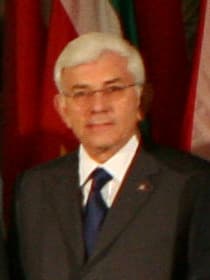
Said Musa
Politician · Modern
49.5Total
Basic Information
Born
1975
1944
Died
—
—
Era
Modern
Modern
Nationality
Belgium
Belize
Occupation
Politician
Politician
Civilization
Western
Other
Score Comparison
Military (10%)
48.4
17.7
Political (20%)
48.0
68.0
Influence (20%)
54.9
49.4
Legacy (20%)
40.8
39.2
Leadership (15%)
65.0
74.0
Strategy (15%)
60.0
43.1
TOTAL
51.7
49.5
Charles Michel — Complete Timeline
2019 AD
Elected President of the European CouncilPolitical Action◆ Major
Charles Michel was elected President of the European Council, succeeding Donald Tusk. He became the youngest person to hold the office, tasked with chairing EU summits and representing the EU externally.
EU LeadershipEuropean CouncilSummit
Impact: regionalconstructive
2020 AD
Led EU Response to COVID-19 PandemicPolitical Action◆ Major
Michel coordinated EU leaders' response to the COVID-19 pandemic, including travel restrictions, vaccine procurement, and economic recovery. He chaired multiple video summits and pushed for a coordinated approach among member states.
COVID-19EU CoordinationHealth Crisis
Impact: regional
Negotiated EU Budget and Recovery FundPolitical Action◆ Major
Michel brokered a deal among EU leaders on the
EU BudgetRecovery FundNegotiation
Impact: regionalconstructive
2022 AD
Visited Kyiv During Russian InvasionPolitical Action
Michel traveled to Kyiv to meet President Zelenskyy, demonstrating EU solidarity with Ukraine during the Russian invasion. The visit underscored EU support for Ukraine's sovereignty and its candidate status for EU membership.
UkraineEU SolidarityWar
Impact: regionalconstructive
2023 AD
Called for EU Enlargement to Western BalkansPolitical Action
Michel advocated for accelerating EU enlargement to include Western Balkan countries, proposing a 2030 target date. He argued that enlargement was a strategic investment in European stability and security.
EU EnlargementWestern BalkansStrategy
Impact: regionalprogressive
Said Musa — Complete Timeline
1998 AD
Elected Prime Minister of BelizePolitical Action◆ Major
Said Musa led the People's United Party to victory in the 1998 general election, becoming prime minister. He was the first Belizean prime minister of Palestinian descent.
ElectionBelizePUP
Impact: nationalconstructive
1999 AD
Implemented Economic ReformsReform◆ Major
Musa's government introduced economic reforms including privatization of state enterprises and tax incentives for foreign investment. These policies aimed to stimulate growth but increased national debt.
Economic ReformPrivatizationBelize
Impact: national
2003 AD
Re-elected in 2003Political Action◆ Major
Musa won a second term in the 2003 general election, continuing his focus on infrastructure and social programs. His government faced criticism over rising crime and corruption.
ElectionBelizePUP
Impact: nationalconstructive
2005 AD
Faced Corruption AllegationsPolitical Action◆ Major
Musa's government was embroiled in corruption scandals, including allegations of misuse of public funds. Protests erupted in 2005, demanding accountability and reforms.
CorruptionScandalBelize
Impact: nationaldestructive
2008 AD
Lost 2008 General ElectionPolitical Action◆ Major
Musa's PUP was defeated by the United Democratic Party in the 2008 general election, ending his ten-year tenure. He stepped down as party leader after the loss.
ElectionBelizeDefeat
Impact: national
This comparison has not been analyzed yet.
One-time AI generation (~1 minute). Scores and timeline are already available below.
Rankings
🥇
Charles MichelLeader
Mil: 48.4Pol: 48.0Inf: 54.9
51.7
🥈
Said Musa
Mil: 17.7Pol: 68.0Inf: 49.4
49.5
+2.2 behind
How This Comparison Works
Algorithm
Each figure is scored on 6 dimensions (0—100 scale) based on structured historical data: Military (10%), Political (20%), Influence (20%), Legacy (20%), Leadership (15%), Strategy (15%). The weighted total produces the final ranking.
Data Sources
Scores are computed from structured sub-indicators in the database. Scale factors adjust for era (Ancient ×0.85, Modern ×1.0) and civilization size (Eastern ×1.05, Other ×0.80) to account for differences in population and military scale.
Maximum 3 Figures
Comparisons are limited to 2—3 figures to ensure readability and statistical meaningfulness.
Error Margins
±5 points per dimension — Sub-scores are derived from historical records with inherent uncertainty. Two figures within 5 points on a dimension should be considered roughly equivalent in that area.
Total Score Accuracy
±3 points overall — The weighted combination of 6 dimensions produces a total score with approximately ±3 points of uncertainty. Differences of less than 3 points are not statistically significant— the figures are effectively tied.
Known Limitations
- Historical records are incomplete and uneven across civilizations
- Figures from oral-tradition societies may be underrepresented
- Occupation labels can misclassify multi-role figures
- Scores measure capability and impact, not moral character
- Quantitative scoring is a comparison tool, not absolute truth
Capability Radar
Military (10%) — Battles & Warfare
Battles
45
25
Win Rate
51
25
Expansion
51
29
Political (20%) — Governance & Reform
Reform
30
45
Diplomacy
55
50
Economy
35
45
Influence (20%) — Cultural & Global Reach
Cultural
20
20
Global
40
15
Legacy (20%) — Historical Impact
Historical
25
20
Longevity
20
15
Leadership (15%) — Power & Stability
Tenure
40
40
Stability
40
50
Strategy (15%) — Tactics & Innovation
Strategy
55
30
Tactics
57
35
Reform
61
36
Similar Comparisons
Comments & Discussion
No comments yet. Be the first to share your thoughts!