Loading...
This comparison has not been analyzed yet.
One-time AI generation (~1 minute). Scores and timeline are already available below.
Charles IV of Luxembourg vs Vlad the Impaler
Charles IV of Luxembourg leads by 13.2 pts · 2 figures compared
…
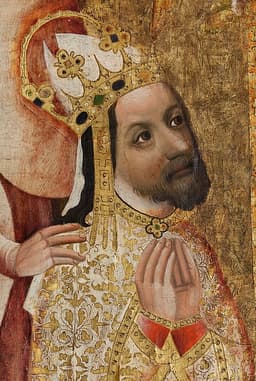
Charles IV of Luxembourg
Emperor · Medieval
66.6Total
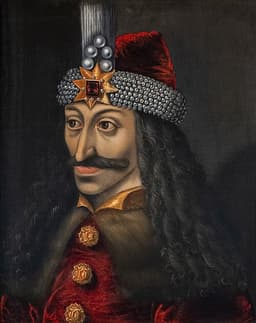
Vlad the Impaler
Emperor · Medieval
53.4Total
Basic Information
Born
1316
1431
Died
1378
1476
Era
Medieval
Medieval
Nationality
Holy Roman Empire
Wallachia
Occupation
Emperor
Emperor
Civilization
Western
Western
Score Comparison
Military (10%)
45.0
40.0
Political (20%)
70.3
27.9
Influence (20%)
72.0
82.0
Legacy (20%)
72.0
55.0
Leadership (15%)
78.0
38.1
Strategy (15%)
38.6
52.5
TOTAL
66.6
53.4
Charles IV of Luxembourg — Complete Timeline
1346 AD
Election as King of GermanyPolitical Action◆ Major
Charles, Margrave of Moravia and grandson of Henry VII, was elected King of Germany by a faction of electors opposed to Louis IV. His election was supported by Pope Clement VI, leading to a double kingship.
ElectionDouble Kingship
Impact: national
1348 AD
Foundation of the University of PragueCultural◆ Major
Charles IV founded the University of Prague (Charles University), the first university in Central Europe. It became a major center of learning and culture, attracting scholars from across Europe.
University FoundationEducation
Impact: regionalconstructive
1355 AD
Coronation as Holy Roman EmperorPolitical Action◆ Major
Charles IV was crowned Holy Roman Emperor in Rome by a papal legate. His coronation was the first by a pope in decades and marked a reconciliation between the empire and papacy.
CoronationImperial-Papal Reconciliation
Impact: globalconstructive
1356 AD
Promulgation of the Golden Bull of 1356Reform
Charles IV issued the Golden Bull, a constitutional document that regulated the election of the German king by seven prince-electors. It established a fixed electoral college and reduced papal influence, remaining in effect until 1806.
Constitutional ReformGolden Bull
Impact: globalconstructive
Vlad the Impaler — Complete Timeline
1448 AD
First Reign as Voivode of WallachiaPolitical Action
Vlad III assumed the throne of Wallachia for the first time, with Ottoman support, after the death of his father Vlad Dracul. His reign lasted only two months before he was deposed by John Hunyadi of Hungary.
ReignWallachiaOttoman
Impact: national
1457 AD
Impalement Campaign in WallachiaPolitical Action◆ Major
Vlad executed thousands of boyars, merchants, and peasants through impalement to consolidate power and eliminate opposition. This brutal method became his hallmark, earning him the posthumous name 'the Impaler' and inspiring the Dracula legend.
RepressionBrutalityDracula
Impact: nationaldestructive
1462 AD
Night Attack at TârgovișteWar◆ Major
Vlad launched a surprise night attack on the Ottoman camp of Sultan Mehmed II near T
BattleOttomanWallachia
Impact: regional
Imprisonment by Matthias CorvinusPolitical Action◆ Major
After being captured by Hungarian forces, Vlad was imprisoned by King Matthias Corvinus of Hungary for about 12 years. He was held in captivity at Visegr
ImprisonmentHungaryPropaganda
Impact: nationaltragic
1476 AD
Death in Battle against the OttomansWar◆ Major
Vlad was killed in combat near Bucharest while fighting against Ottoman forces, possibly betrayed by his own men. His head was sent to Constantinople as a trophy, ending his third and final reign as Voivode of Wallachia.
DeathBattleOttoman
Impact: nationaltragic
This comparison has not been analyzed yet.
One-time AI generation (~1 minute). Scores and timeline are already available below.
Rankings
🥇
Charles IV of LuxembourgLeader
Mil: 45.0Pol: 70.3Inf: 72.0
66.6
🥈
Vlad the Impaler
Mil: 40.0Pol: 27.9Inf: 82.0
53.4
+13.2 behind
How This Comparison Works
Algorithm
Each figure is scored on 6 dimensions (0—100 scale) based on structured historical data: Military (10%), Political (20%), Influence (20%), Legacy (20%), Leadership (15%), Strategy (15%). The weighted total produces the final ranking.
Data Sources
Scores are computed from structured sub-indicators in the database. Scale factors adjust for era (Ancient ×0.85, Modern ×1.0) and civilization size (Eastern ×1.05, Other ×0.80) to account for differences in population and military scale.
Maximum 3 Figures
Comparisons are limited to 2—3 figures to ensure readability and statistical meaningfulness.
Error Margins
±5 points per dimension — Sub-scores are derived from historical records with inherent uncertainty. Two figures within 5 points on a dimension should be considered roughly equivalent in that area.
Total Score Accuracy
±3 points overall — The weighted combination of 6 dimensions produces a total score with approximately ±3 points of uncertainty. Differences of less than 3 points are not statistically significant— the figures are effectively tied.
Known Limitations
- Historical records are incomplete and uneven across civilizations
- Figures from oral-tradition societies may be underrepresented
- Occupation labels can misclassify multi-role figures
- Scores measure capability and impact, not moral character
- Quantitative scoring is a comparison tool, not absolute truth
Capability Radar
Military (10%) — Battles & Warfare
Battles
25
45
Win Rate
30
40
Expansion
20
25
Political (20%) — Governance & Reform
Reform
90
20
Diplomacy
85
30
Economy
80
15
Influence (20%) — Cultural & Global Reach
Cultural
75
75
Global
60
65
Legacy (20%) — Historical Impact
Historical
80
70
Longevity
70
75
Leadership (15%) — Power & Stability
Tenure
85
35
Stability
80
10
Strategy (15%) — Tactics & Innovation
Strategy
25
55
Tactics
20
70
Reform
15
30
Similar Comparisons
Comments & Discussion
No comments yet. Be the first to share your thoughts!