Loading...
Charles IV of France vs Guy of Lusignan
Charles IV of France leads by 3.4 pts · 2 figures compared
…
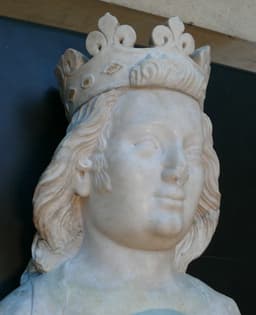
Charles IV of France
Emperor · Medieval
42.8Total
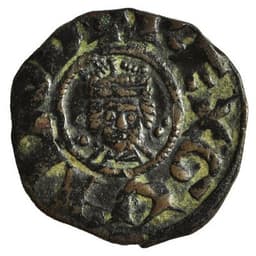
Guy of Lusignan
Emperor · Medieval
39.4Total
Basic Information
Born
1294
1150
Died
1328
1194
Era
Medieval
Medieval
Nationality
France
Jerusalem
Occupation
Emperor
Emperor
Civilization
Western
Western
Score Comparison
Military (10%)
20.0
21.2
Political (20%)
35.1
30.7
Influence (20%)
50.2
51.0
Legacy (20%)
45.0
45.0
Leadership (15%)
48.4
31.2
Strategy (15%)
45.0
39.6
TOTAL
42.8
39.4
Charles IV of France — Complete Timeline
1328 AD
Death Without Male HeirOther
Charles IV died without a male heir, ending the direct Capetian line. His death triggered a succession dispute between Philip of Valois and Edward III of England, leading to the Hundred Years' War.
Succession CrisisHundred Years' WarCapetian
Impact: globaltragic
Guy of Lusignan — Complete Timeline
1187 AD
Battle of HattinWar
Guy of Lusignan led the Crusader army to a disastrous defeat at the Battle of Hattin against Saladin. The army was surrounded and destroyed, leading to the capture of Guy and the fall of Jerusalem.
Crusader StatesBattleDefeatSaladin
Impact: regionaltragic
Loss of JerusalemWar
Following the Battle of Hattin, Saladin captured Jerusalem in October 1187. Guy's defeat directly led to the loss of the city, which had been under Christian control since 1099.
Crusader StatesSiegeSaladin
Impact: regionaltragic
1188 AD
Release from CaptivityPolitical Action◆ Major
Guy was released from captivity by Saladin in 1188. He was allowed to return to the Crusader states, but his reputation was ruined, and he was unable to regain his former authority.
Crusader StatesCaptivity
Impact: regional
1189 AD
Siege of AcreWar◆ Major
Guy of Lusignan led the siege of Acre, which began in 1189. The siege lasted two years and involved the forces of the Third Crusade. Guy's role was overshadowed by the arrival of Richard the Lionheart and Philip Augustus.
CrusadeSiege
Impact: regional
1192 AD
Sale of CyprusPolitical Action◆ Major
After the Third Crusade, Guy purchased the island of Cyprus from the Knights Templar. He became the first Lusignan ruler of Cyprus, establishing a dynasty that lasted until 1489.
Crusader StatesCyprusDynasty
Impact: regional
Expert Analysis
Origins
Charles IV of France was born in 1294, the third son of King Philip IV. As a younger son, he was not initially destined for the throne. He received a typical royal education, focusing on governance and chivalry, but was overshadowed by his older brothers. His mother, Joan I of Navarre, provided connections to the Navarrese crown. Charles's early life was marked by the political machinations of his father's court, including the suppression of the Knights Templar.
Guy of Lusignan was born around 1150 into the powerful Lusignan family of Poitou, France. His family had a history of crusading. Guy arrived in the Holy Land in the 1170s, seeking fortune. He married Sibylla, sister of King Baldwin IV of Jerusalem, in 1180, a move orchestrated by the court to counter the influence of Raymond of Tripoli. Guy lacked prior experience in the Levant and had to navigate the complex politics of the Crusader states.
Rise to Power
Charles IV became king of France in 1322 after the death of his brother Philip V, who left no male heirs. Charles's reign was largely overshadowed by his father's legacy and ongoing tensions with England. His key turning point was his death in 1328 without a male heir, ending the direct Capetian line. This event led to the succession dispute between Philip of Valois and Edward III of England, igniting the Hundred Years' War.
Guy of Lusignan rose to power through marriage. When King Baldwin IV died in 1185, the throne passed to Baldwin V, a child, who died in 1186. Sibylla then claimed the throne and crowned Guy as her co-ruler. This bypassed the claim of Raymond of Tripoli, who was acting as regent. Guy's elevation was controversial and divided the nobility, weakening the kingdom.
Leadership & Governance
Charles IV's governance was autocratic but cautious. He continued his father's centralizing policies but faced financial difficulties. He attempted to assert French authority in Flanders and Aquitaine but avoided major conflict. His rule was marked by legal reforms and support for the papacy at Avignon. However, his lack of a male heir was a catastrophic failure of dynastic planning. Charles scored 48.4 in leadership and 35.1 in political acumen, indicating a ruler who maintained stability but failed to secure the succession.
Guy of Lusignan's leadership was disastrous. As king, he was indecisive and easily influenced by his advisors, particularly Raynald of Châtillon. His governance was weak, failing to unite the fractious barons. His military strategy at Hattin was flawed: he marched his army through waterless terrain, leading to dehydration and defeat. His leadership score of 31.2 reflects his catastrophic decision-making. His political score of 30.7 shows his inability to manage the kingdom's internal divisions.
Triumph & Tragedy
Charles IV's greatest success was maintaining French royal authority during his reign, despite financial strains. He successfully negotiated the marriage of his daughter to the future king of Navarre. However, his greatest failure was his inability to produce a male heir, which directly caused the Hundred Years' War, a conflict that devastated France for over a century. His legacy score of 45.0 reflects this mixed outcome.
Guy of Lusignan's tragedy was total. His defeat at the Battle of Hattin in 1187 led to the loss of Jerusalem, a city held by Crusaders since 1099. He was captured and later released, but his reputation was ruined. His only triumph was the purchase of Cyprus in 1192, where he established a dynasty that lasted until 1489. However, his legacy is overwhelmingly negative, marked by the collapse of the Crusader kingdom. His legacy score of 45.0 matches Charles's, but for different reasons.
Character & Destiny
Charles IV was pragmatic and cautious, but his character was overshadowed by his father's. He lacked the ruthlessness to secure his dynasty's future. His death without an heir was a failure of foresight. Historians view him as a transitional figure, a placeholder whose reign had little lasting impact beyond triggering war. His total score of 42.8 reflects this mediocrity.
Guy of Lusignan was ambitious but incompetent. He was easily manipulated and made poor strategic decisions. His character—prideful yet indecisive—led directly to the disaster at Hattin. He was a king out of his depth, and his destiny was to be remembered as the man who lost Jerusalem. His total score of 39.4 is lower than Charles's, reflecting his catastrophic impact.
Legacy
Charles IV's legacy is the Hundred Years' War. His death created a succession crisis that lasted until 1453. The war reshaped European politics, leading to the rise of national identities and military innovations. Charles himself is often overlooked, but his dynastic failure had enormous consequences. His influence score of 50.2 is moderate.
Guy of Lusignan's legacy is the loss of Jerusalem and the end of the first Crusader kingdom. His actions triggered the Third Crusade, which failed to retake the city. However, his purchase of Cyprus created a Lusignan kingdom that endured for centuries. His influence score of 51.0 is slightly higher than Charles's, but his negative impact is greater.
Conclusion
Between these two medieval rulers, Charles IV of France had a greater impact on history, despite his lower influence score. His dynastic failure triggered the Hundred Years' War, a conflict that reshaped Europe and led to the decline of feudalism. Guy of Lusignan's defeat at Hattin was catastrophic but localized to the Crusader states. Charles's actions affected millions over a century, while Guy's loss, though significant, was contained. With a total score of 42.8 against Guy's 39.4, Charles IV emerges as the more consequential figure, though neither was a great leader.
Rankings
🥇
Charles IV of FranceLeader
Mil: 20.0Pol: 35.1Inf: 50.2
42.8
🥈
Guy of Lusignan
Mil: 21.2Pol: 30.7Inf: 51.0
39.4
+3.4 behind
How This Comparison Works
Algorithm
Each figure is scored on 6 dimensions (0—100 scale) based on structured historical data: Military (10%), Political (20%), Influence (20%), Legacy (20%), Leadership (15%), Strategy (15%). The weighted total produces the final ranking.
Data Sources
Scores are computed from structured sub-indicators in the database. Scale factors adjust for era (Ancient ×0.85, Modern ×1.0) and civilization size (Eastern ×1.05, Other ×0.80) to account for differences in population and military scale.
Maximum 3 Figures
Comparisons are limited to 2—3 figures to ensure readability and statistical meaningfulness.
Error Margins
±5 points per dimension — Sub-scores are derived from historical records with inherent uncertainty. Two figures within 5 points on a dimension should be considered roughly equivalent in that area.
Total Score Accuracy
±3 points overall — The weighted combination of 6 dimensions produces a total score with approximately ±3 points of uncertainty. Differences of less than 3 points are not statistically significant— the figures are effectively tied.
Known Limitations
- Historical records are incomplete and uneven across civilizations
- Figures from oral-tradition societies may be underrepresented
- Occupation labels can misclassify multi-role figures
- Scores measure capability and impact, not moral character
- Quantitative scoring is a comparison tool, not absolute truth
Capability Radar
Military (10%) — Battles & Warfare
Battles
5
15
Win Rate
5
5
Expansion
5
10
Political (20%) — Governance & Reform
Reform
30
10
Diplomacy
30
15
Economy
30
10
Influence (20%) — Cultural & Global Reach
Cultural
10
20
Global
20
25
Legacy (20%) — Historical Impact
Historical
40
40
Longevity
30
30
Leadership (15%) — Power & Stability
Tenure
40
30
Stability
20
5
Strategy (15%) — Tactics & Innovation
Strategy
5
10
Tactics
5
10
Reform
5
5
Similar Comparisons
Comments & Discussion
No comments yet. Be the first to share your thoughts!