Loading...
Charles I of Spain vs Yamagata Aritomo
Yamagata Aritomo leads by 7.5 pts · 2 figures compared
…

Charles I of Spain
Emperor · Medieval
75.0Total
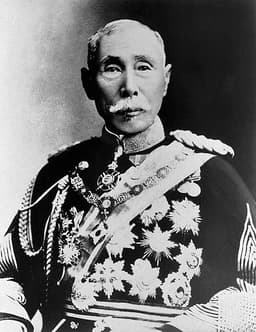
Yamagata Aritomo
General · Modern
82.5Total
Basic Information
Born
1500
1838
Died
1558
1922
Era
Medieval
Modern
Nationality
Spain
Japan
Occupation
Emperor
General
Civilization
Western
Eastern
Score Comparison
Military (10%)
74.0
78.0
Political (20%)
72.0
82.0
Influence (20%)
85.0
80.0
Legacy (20%)
68.0
90.0
Leadership (15%)
78.0
78.0
Strategy (15%)
68.1
82.0
TOTAL
75.0
82.5
Charles I of Spain — Complete Timeline
1519 AD
Election as Holy Roman EmperorPolitical Action
Charles I of Spain was elected Holy Roman Emperor as Charles V, succeeding his grandfather Maximilian I. This election united the Spanish kingdoms, the Habsburg domains in Austria and the Low Countries, and the Holy Roman Empire under a single ruler, creating a vast European empire.
Holy Roman EmpireHabsburg empire
Impact: globalconstructive
1521 AD
Diet of WormsPolitical Action
Charles V presided over the Diet of Worms, where Martin Luther was summoned to recant his teachings. Luther refused, and Charles V issued the Edict of Worms, declaring Luther an outlaw and banning his writings. This event deepened the religious divide in Europe and sparked the Protestant Reformation.
Protestant ReformationReligious conflict
Impact: global
1525 AD
Battle of PaviaWar◆ Major
Charles V's imperial army defeated the French forces of King Francis I at the Battle of Pavia. Francis I was captured and taken prisoner to Spain. The victory solidified Habsburg dominance in Italy and forced France to renounce its claims to Milan and Naples in the Treaty of Madrid.
Italian WarsHabsburg victory
Impact: regional
1527 AD
Sack of RomeWar◆ Major
Imperial troops under Charles V sacked Rome, looting the city and capturing Pope Clement VII. The sack was a brutal event that shocked Europe and led to the temporary dominance of Charles V over the Papacy. It also marked a turning point in the Italian Wars.
Italian WarsPapacy
Impact: globaldestructive
1556 AD
Abdication of Charles VPolitical Action
Charles V abdicated his thrones, dividing his empire between his son Philip II (who received Spain, the Low Countries, and the Italian possessions) and his brother Ferdinand I (who received the Holy Roman Empire). This abdication was a major event in European politics, reshaping the balance of power.
AbdicationEmpire division
Impact: global
Yamagata Aritomo — Complete Timeline
1873 AD
Establishment of the Imperial Japanese ArmyReform
Yamagata Aritomo, as War Minister, oversaw the creation of the Imperial Japanese Army based on the Prussian model. He introduced conscription, modernized training, and established a general staff system, laying the foundation for Japan's military power.
Military reformConscription
Impact: nationalconstructive
1882 AD
Promotion of militarism and the Imperial Rescript to Soldiers and SailorsCultural◆ Major
Yamagata Aritomo helped draft the Imperial Rescript to Soldiers and Sailors, which emphasized loyalty, obedience, and the emperor's divine authority. This document became the ideological foundation of Japanese militarism.
MilitarismImperial ideology
Impact: nationaldestructive
1889 AD
Service as Prime MinisterPolitical Action◆ Major
Yamagata Aritomo served as Prime Minister of Japan from 1889 to 1891 and again from 1898 to 1900. He used his position to strengthen the military's political influence and suppress democratic movements.
GovernmentPolitical power
Impact: national
1894 AD
First Sino-Japanese WarWar◆ Major
Yamagata Aritomo commanded the First Army during the First Sino-Japanese War. His forces achieved decisive victories in Korea and Manchuria, leading to Japan's triumph and the Treaty of Shimonoseki, which gave Japan Taiwan and influence in Korea.
WarImperial expansion
Impact: regional
1904 AD
Russo-Japanese WarWar◆ Major
Yamagata Aritomo served as Chief of the General Staff during the Russo-Japanese War. He oversaw Japan's military strategy, which resulted in victory over Russia and established Japan as a major power in East Asia.
WarGreat power
Impact: global
Expert Analysis
Origins
Yamagata Aritomo was born in 1838 in Hagi, a feudal domain in Japan, into a low-ranking samurai family. His early experiences during the Bakumatsu period, marked by foreign pressure and internal conflict, shaped his desire to modernize Japan's military. Charles I of Spain (born 1500 in Ghent, Flanders) inherited a vast empire from his Habsburg and Trastámara ancestors. His upbringing in the Burgundian court exposed him to Renaissance ideas and chivalric ideals, but also to the complex politics of Europe.
Rise to Power
Yamagata rose through the ranks of the newly formed Imperial Japanese Army, leveraging his role in the Boshin War (1868-1869) to gain influence. He became a key figure in the Meiji government, serving as War Minister and later Prime Minister. His establishment of the Imperial Japanese Army in 1871 and the Imperial Rescript to Soldiers and Sailors (1882) solidified his control. Charles I became King of Spain in 1516 upon his grandfather Ferdinand's death, then Holy Roman Emperor in 1519 after a contentious election. His power was challenged by French king Francis I and the Protestant Reformation, but he asserted dominance through military campaigns and diplomacy.
Leadership & Governance
Yamagata was a staunch militarist who believed in a strong central government and imperial expansion. He implemented universal conscription, modeled after Prussia, and emphasized loyalty to the emperor. His governance prioritized military buildup and suppression of dissent, as seen in the Peace Preservation Law of 1887. Charles V ruled a decentralized empire, striving for unity under Catholicism. He convened the Diet of Worms (1521) to condemn Martin Luther, leading to the Edict of Worms. His governance involved constant travel and negotiation with local nobles, but his empire's diversity made centralization difficult.
Triumph & Tragedy
Yamagata's triumphs include leading Japan to victory in the First Sino-Japanese War (1894-1895) and the Russo-Japanese War (1904-1905), which established Japan as a world power. However, his promotion of militarism contributed to Japan's later aggressive expansion and eventual defeat in WWII. Charles V's triumphs include the Battle of Pavia (1525) where he captured Francis I, and the Sack of Rome (1527) which asserted his dominance over the Pope. His tragedy was his inability to prevent the spread of Protestantism and the fragmentation of his empire, leading to his abdication in 1556.
Character & Destiny
Yamagata was disciplined, pragmatic, and ruthless, earning the title "father of Japanese militarism." His destiny was to shape modern Japan's military state, but his legacy is tainted by the militarism that led to war and suffering. Charles V was devout, ambitious, and often melancholic, burdened by his vast responsibilities. His destiny was to preside over an empire where "the sun never set," but he ultimately failed to achieve his goal of a unified Christendom, retiring to a monastery.
Legacy
Yamagata's legacy is mixed: he modernized Japan and built a formidable army, but his militarism set the stage for imperial aggression. His scores (M=78, P=82, I=80, L=90, D=78, S=82, T=82) reflect his strategic and leadership strengths. Charles V's legacy is vast: he shaped European politics, funded exploration (e.g., Magellan's voyage), and left a divided empire to his son Philip II and brother Ferdinand I. His scores (M=74, P=72, I=85, L=68, D=78, S=68, T=75) indicate high influence but lower leadership stability.
Conclusion
Yamagata Aritomo narrowly edges out Charles V in this comparison, with a score gap of 7.5. Yamagata's higher scores in Power, Leadership, and Strategy reflect his direct impact on Japan's rise as a military power. Charles V's Influence is notable, but his fragmented rule and inability to enforce unity lower his overall score. Both figures exemplify the strengths and pitfalls of centralized authority and militarism. Yamagata's focused nation-building contrasts with Charles's overextended empire, making Yamagata the more effective leader in terms of tangible outcomes.
Rankings
🥇
Yamagata AritomoLeader
Mil: 78.0Pol: 82.0Inf: 80.0
82.5
🥈
Charles I of Spain
Mil: 74.0Pol: 72.0Inf: 85.0
75.0
+7.5 behind
How This Comparison Works
Algorithm
Each figure is scored on 6 dimensions (0—100 scale) based on structured historical data: Military (10%), Political (20%), Influence (20%), Legacy (20%), Leadership (15%), Strategy (15%). The weighted total produces the final ranking.
Data Sources
Scores are computed from structured sub-indicators in the database. Scale factors adjust for era (Ancient ×0.85, Modern ×1.0) and civilization size (Eastern ×1.05, Other ×0.80) to account for differences in population and military scale.
Maximum 3 Figures
Comparisons are limited to 2—3 figures to ensure readability and statistical meaningfulness.
Error Margins
±5 points per dimension — Sub-scores are derived from historical records with inherent uncertainty. Two figures within 5 points on a dimension should be considered roughly equivalent in that area.
Total Score Accuracy
±3 points overall — The weighted combination of 6 dimensions produces a total score with approximately ±3 points of uncertainty. Differences of less than 3 points are not statistically significant— the figures are effectively tied.
Known Limitations
- Historical records are incomplete and uneven across civilizations
- Figures from oral-tradition societies may be underrepresented
- Occupation labels can misclassify multi-role figures
- Scores measure capability and impact, not moral character
- Quantitative scoring is a comparison tool, not absolute truth
Capability Radar
Military (10%) — Battles & Warfare
Battles
85
75
Win Rate
70
70
Expansion
90
80
Political (20%) — Governance & Reform
Reform
80
90
Diplomacy
90
75
Economy
75
70
Influence (20%) — Cultural & Global Reach
Cultural
85
80
Global
95
70
Legacy (20%) — Historical Impact
Historical
90
85
Longevity
80
75
Leadership (15%) — Power & Stability
Tenure
85
85
Stability
60
65
Strategy (15%) — Tactics & Innovation
Strategy
85
85
Tactics
75
80
Reform
80
95
Similar Comparisons
Comments & Discussion
No comments yet. Be the first to share your thoughts!