Loading...
Charles I of Spain vs Turenne
Turenne leads by 0.8 pts · 2 figures compared
…

Charles I of Spain
Emperor · Medieval
75.0Total
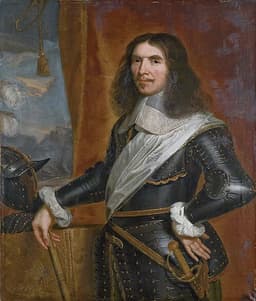
Turenne
General · Modern
75.8Total
Basic Information
Born
1500
1611
Died
1558
1675
Era
Medieval
Modern
Nationality
Spain
France
Occupation
Emperor
General
Civilization
Western
Western
Score Comparison
Military (10%)
74.0
79.9
Political (20%)
72.0
72.0
Influence (20%)
85.0
88.0
Legacy (20%)
68.0
65.0
Leadership (15%)
78.0
77.2
Strategy (15%)
68.1
72.0
TOTAL
75.0
75.8
Charles I of Spain — Complete Timeline
1519 AD
Election as Holy Roman EmperorPolitical Action
Charles I of Spain was elected Holy Roman Emperor as Charles V, succeeding his grandfather Maximilian I. This election united the Spanish kingdoms, the Habsburg domains in Austria and the Low Countries, and the Holy Roman Empire under a single ruler, creating a vast European empire.
Holy Roman EmpireHabsburg empire
Impact: globalconstructive
1521 AD
Diet of WormsPolitical Action
Charles V presided over the Diet of Worms, where Martin Luther was summoned to recant his teachings. Luther refused, and Charles V issued the Edict of Worms, declaring Luther an outlaw and banning his writings. This event deepened the religious divide in Europe and sparked the Protestant Reformation.
Protestant ReformationReligious conflict
Impact: global
1525 AD
Battle of PaviaWar◆ Major
Charles V's imperial army defeated the French forces of King Francis I at the Battle of Pavia. Francis I was captured and taken prisoner to Spain. The victory solidified Habsburg dominance in Italy and forced France to renounce its claims to Milan and Naples in the Treaty of Madrid.
Italian WarsHabsburg victory
Impact: regional
1527 AD
Sack of RomeWar◆ Major
Imperial troops under Charles V sacked Rome, looting the city and capturing Pope Clement VII. The sack was a brutal event that shocked Europe and led to the temporary dominance of Charles V over the Papacy. It also marked a turning point in the Italian Wars.
Italian WarsPapacy
Impact: globaldestructive
1556 AD
Abdication of Charles VPolitical Action
Charles V abdicated his thrones, dividing his empire between his son Philip II (who received Spain, the Low Countries, and the Italian possessions) and his brother Ferdinand I (who received the Holy Roman Empire). This abdication was a major event in European politics, reshaping the balance of power.
AbdicationEmpire division
Impact: global
Turenne — Complete Timeline
1639 AD
Campaign in the ValtellinaWar
Turenne commanded French forces in the Valtellina during the Thirty Years' War. He captured several fortresses and secured the strategic pass for France, demonstrating his early military skill.
Thirty Years' WarAlpsEarly Career
Impact: regional
1658 AD
Battle of the DunesWar◆ Major
Turenne commanded the French army to victory over the Spanish at the Battle of the Dunes near Dunkirk. The victory led to the capture of Dunkirk and forced Spain to seek peace, ending the Franco-Spanish War.
Franco-Spanish WarDunkirkMilitary Victory
Impact: regional
1674 AD
Battle of the RhineWar◆ Major
Turenne led a French army across the Rhine in winter, surprising the Imperial forces. He defeated the Austrians at the Battle of Entzheim and later at Turckheim, securing French control of Alsace.
Franco-Dutch WarAlsaceWinter Campaign
Impact: regional
Battle of the SambreWar◆ Major
Turenne defeated the Spanish and Dutch forces at the Battle of Seneffe. The battle was costly but prevented the Allies from invading France. It demonstrated Turenne's tactical skill in defensive warfare.
Franco-Dutch WarDefensive BattleTactics
Impact: regional
1675 AD
Death of TurenneWar◆ Major
Turenne was killed by a cannonball while reconnoitering enemy positions at the Battle of Sasbach. His death was a major loss for France. He was buried with honors in the Basilica of Saint-Denis.
Death in BattleFranco-Dutch WarMilitary Loss
Impact: nationaltragic
Expert Analysis
Origins
Henri de La Tour d'Auvergne, Vicomte de Turenne, was born into a noble French family in 1611, with a strong military tradition. His early exposure to warfare came under his uncles, the Princes of Orange, and he served in the Dutch army before joining the French. In contrast, Charles I of Spain (Charles V) was born in 1500 in Ghent, inheriting a vast empire from his Burgundian, Spanish, and Habsburg lineages. His upbringing was cosmopolitan, shaped by advisors like Adrian of Utrecht, and he was groomed for imperial rule from childhood.
Rise to Power
Turenne's rise was gradual, based on merit. He distinguished himself in the Thirty Years' War, winning the Battle of Freiburg (1644) and the Battle of Nördlingen (1645). His loyalty to the crown during the Fronde (1648-1653) solidified his position, though he briefly rebelled before returning to favor. By the 1650s, he was Marshal General of France. Charles V's rise was meteoric: he became King of Spain in 1516 at age 16, then Holy Roman Emperor in 1519 after a contested election. His power was inherited, not earned, but he consolidated it through diplomacy and war, notably defeating Francis I at the Battle of Pavia (1525).
Leadership & Governance
Turenne was a brilliant tactician, known for his strategic mobility and ability to win campaigns with minimal resources. He emphasized logistics, intelligence, and surprise, as seen in his Rhine campaign (1672-1675). He was a loyal servant to Louis XIV, though his independent command was often constrained by royal oversight. Charles V governed a sprawling empire through a complex bureaucracy, relying on viceroys and councils. He was a hands-on ruler, personally leading campaigns in Italy, North Africa, and Germany. His governance was marked by constant religious turmoil (Protestant Reformation) and financial strain from wars. Both were effective leaders, but Turenne excelled in military command while Charles navigated political and religious challenges.
Triumph & Tragedy
Turenne's greatest triumph was the Battle of the Dunes (1658), where he defeated a Spanish army and captured Dunkirk, securing French dominance. His campaign in the Valtellina (1635-1637) showcased his strategic skill. His tragic death came in 1675 at the Battle of Sasbach, struck by a cannonball. Charles V's triumph was the Battle of Pavia (1525), capturing Francis I, and the Sack of Rome (1527) which asserted his power over the Pope. However, his reign saw the spread of Protestantism, culminating in the Diet of Worms (1521) where Luther defied him. His abdication in 1556 was a tragic admission of failure to unify Christendom.
Character & Destiny
Turenne was modest, methodical, and beloved by his troops. He was a Protestant who converted to Catholicism for political reasons, showing pragmatism. His destiny was to be France's greatest general, a model for later commanders. Charles V was ambitious, devout, and melancholic, burdened by his empire's diversity. He saw himself as a defender of Catholicism but failed to prevent the Reformation. His destiny was to retire to a monastery, disillusioned. Both were shaped by their eras: Turenne by the rise of absolutism, Charles by the clash of empires and faiths.
Legacy
Turenne is remembered as one of history's great captains, influencing military theory through his campaigns. His name adorns streets and monuments in France. Charles V's legacy is mixed: he presided over the first global empire but also the fracturing of Christendom. His abdication set the stage for the Spanish and Austrian Habsburgs. In a head-to-head comparison, Turenne's tactical genius (Military score 80) edges out Charles's strategic vision (Military 74). However, Charles's political and diplomatic skill (Intelligence 85) rivals Turenne's (88). Overall, Turenne scores higher due to his focused excellence in warfare, while Charles's broader responsibilities diluted his impact.
Conclusion
Turenne and Charles V represent two different archetypes: the pure military commander versus the imperial ruler. Turenne's higher overall score (0.8 gap) reflects his unmatched battlefield success and lasting influence on military art. Charles V, despite his vast empire, was ultimately a transitional figure. In a hypothetical contest, Turenne's tactical brilliance would likely outmaneuver Charles's larger but less flexible forces. Thus, Turenne emerges as the superior figure in this comparison.
Rankings
🥇
TurenneLeader
Mil: 79.9Pol: 72.0Inf: 88.0
75.8
🥈
Charles I of Spain
Mil: 74.0Pol: 72.0Inf: 85.0
75.0
+0.8 behind
How This Comparison Works
Algorithm
Each figure is scored on 6 dimensions (0—100 scale) based on structured historical data: Military (10%), Political (20%), Influence (20%), Legacy (20%), Leadership (15%), Strategy (15%). The weighted total produces the final ranking.
Data Sources
Scores are computed from structured sub-indicators in the database. Scale factors adjust for era (Ancient ×0.85, Modern ×1.0) and civilization size (Eastern ×1.05, Other ×0.80) to account for differences in population and military scale.
Maximum 3 Figures
Comparisons are limited to 2—3 figures to ensure readability and statistical meaningfulness.
Error Margins
±5 points per dimension — Sub-scores are derived from historical records with inherent uncertainty. Two figures within 5 points on a dimension should be considered roughly equivalent in that area.
Total Score Accuracy
±3 points overall — The weighted combination of 6 dimensions produces a total score with approximately ±3 points of uncertainty. Differences of less than 3 points are not statistically significant— the figures are effectively tied.
Known Limitations
- Historical records are incomplete and uneven across civilizations
- Figures from oral-tradition societies may be underrepresented
- Occupation labels can misclassify multi-role figures
- Scores measure capability and impact, not moral character
- Quantitative scoring is a comparison tool, not absolute truth
Capability Radar
Military (10%) — Battles & Warfare
Battles
85
85
Win Rate
70
88
Expansion
90
80
Political (20%) — Governance & Reform
Reform
80
60
Diplomacy
90
75
Economy
75
55
Influence (20%) — Cultural & Global Reach
Cultural
85
65
Global
95
70
Legacy (20%) — Historical Impact
Historical
90
80
Longevity
80
75
Leadership (15%) — Power & Stability
Tenure
85
70
Stability
60
65
Strategy (15%) — Tactics & Innovation
Strategy
85
92
Tactics
75
90
Reform
80
75
Similar Comparisons
Comments & Discussion
No comments yet. Be the first to share your thoughts!