Loading...
Charles I of Spain vs Tokugawa Ieyasu
Tokugawa Ieyasu leads by 6.8 pts · 2 figures compared
…

Charles I of Spain
Emperor · Medieval
75.0Total
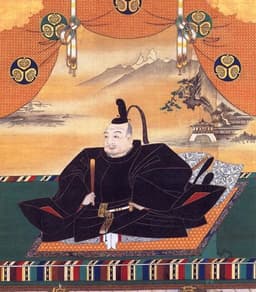
Tokugawa Ieyasu
General · Modern
81.8Total
Basic Information
Born
1500
1543
Died
1558
1616
Era
Medieval
Modern
Nationality
Spain
Japan
Occupation
Emperor
General
Civilization
Western
Eastern
Score Comparison
Military (10%)
74.0
78.0
Political (20%)
72.0
82.0
Influence (20%)
85.0
88.0
Legacy (20%)
68.0
75.0
Leadership (15%)
78.0
85.0
Strategy (15%)
68.1
82.0
TOTAL
75.0
81.8
Charles I of Spain — Complete Timeline
1519 AD
Election as Holy Roman EmperorPolitical Action
Charles I of Spain was elected Holy Roman Emperor as Charles V, succeeding his grandfather Maximilian I. This election united the Spanish kingdoms, the Habsburg domains in Austria and the Low Countries, and the Holy Roman Empire under a single ruler, creating a vast European empire.
Holy Roman EmpireHabsburg empire
Impact: globalconstructive
1521 AD
Diet of WormsPolitical Action
Charles V presided over the Diet of Worms, where Martin Luther was summoned to recant his teachings. Luther refused, and Charles V issued the Edict of Worms, declaring Luther an outlaw and banning his writings. This event deepened the religious divide in Europe and sparked the Protestant Reformation.
Protestant ReformationReligious conflict
Impact: global
1525 AD
Battle of PaviaWar◆ Major
Charles V's imperial army defeated the French forces of King Francis I at the Battle of Pavia. Francis I was captured and taken prisoner to Spain. The victory solidified Habsburg dominance in Italy and forced France to renounce its claims to Milan and Naples in the Treaty of Madrid.
Italian WarsHabsburg victory
Impact: regional
1527 AD
Sack of RomeWar◆ Major
Imperial troops under Charles V sacked Rome, looting the city and capturing Pope Clement VII. The sack was a brutal event that shocked Europe and led to the temporary dominance of Charles V over the Papacy. It also marked a turning point in the Italian Wars.
Italian WarsPapacy
Impact: globaldestructive
1556 AD
Abdication of Charles VPolitical Action
Charles V abdicated his thrones, dividing his empire between his son Philip II (who received Spain, the Low Countries, and the Italian possessions) and his brother Ferdinand I (who received the Holy Roman Empire). This abdication was a major event in European politics, reshaping the balance of power.
AbdicationEmpire division
Impact: global
Tokugawa Ieyasu — Complete Timeline
1600 AD
Battle of SekigaharaWar
Tokugawa Ieyasu led the Eastern Army to victory over Ishida Mitsunari's Western Army at Sekigahara. This decisive battle ended the Sengoku period and established Ieyasu as the supreme military ruler of Japan, paving the way for the Tokugawa shogunate.
Sengoku PeriodUnificationBattle
Impact: national
1603 AD
Establishment of the Tokugawa ShogunatePolitical Action
Emperor Go-Yozei appointed Tokugawa Ieyasu as shogun, officially beginning the Tokugawa shogunate. Ieyasu established his government in Edo (modern Tokyo), centralizing military and political power under his family's control.
ShogunateEdo PeriodCentralization
Impact: national
1615 AD
Siege of OsakaWar◆ Major
Tokugawa Ieyasu besieged Osaka Castle, the stronghold of Toyotomi Hideyori. The castle fell, and Hideyori committed suicide. This campaign eliminated the last major opposition to Tokugawa rule, solidifying the shogunate's control over Japan.
Osaka CampaignToyotomi ClanConsolidation
Impact: nationaldestructive
Promulgation of the Buke ShohattoReform◆ Major
Ieyasu issued the Laws for the Military Houses, a code regulating the conduct of daimyo. It restricted castle construction, required alternate attendance in Edo, and prohibited alliances without shogunal permission. This law helped control the feudal lords.
Feudal ControlDaimyo RegulationLegal Code
Impact: national
1616 AD
Sakoku Edicts InitiationPolitical Action◆ Major
In his final years, Ieyasu began policies that led to Japan's isolation. He restricted foreign trade to specific ports and expelled Christian missionaries. These measures, expanded by successors, resulted in the sakoku policy that isolated Japan for over 200 years.
IsolationismForeign PolicyChristianity
Impact: national
Expert Analysis
Origins
Tokugawa Ieyasu (1543–1616) was born into a minor samurai clan in Mikawa Province, Japan. His early life was marked by hostage situations and alliances, shaping his pragmatic and patient nature. He served under Oda Nobunaga and Toyotomi Hideyoshi, learning the arts of war and governance. Charles I of Spain (1500–1558), also known as Charles V, Holy Roman Emperor, was born in Ghent, inheriting a vast empire through his Habsburg lineage. His upbringing was cosmopolitan, surrounded by Burgundian court culture, and he was groomed for rule from a young age. While Ieyasu clawed his way up from a precarious position, Charles inherited power but faced constant rebellion and religious strife.
Rise to Power
Ieyasu's rise culminated at the Battle of Sekigahara (1600), where he defeated rival warlords, securing dominance. He then received the title of Shogun in 1603, formally establishing the Tokugawa shogunate. His consolidation involved neutralizing the Toyotomi clan at the Siege of Osaka (1614–1615). Charles became King of Spain in 1516 and was elected Holy Roman Emperor in 1519, defeating Francis I of France. His reign was defined by the Protestant Reformation; he confronted Martin Luther at the Diet of Worms (1521). Ieyasu's path was a military conquest; Charles's was a political and religious struggle across Europe.
Leadership & Governance
Ieyasu centralized feudal Japan, creating a stable bureaucracy. He issued the Buke Shohatto (laws for warrior houses) and enforced alternate attendance (sankin kotai) to control daimyo. His Sakoku Edicts initiated isolationist policies, limiting foreign influence. Charles governed a sprawling empire via councils and viceroys, but faced constant revolts (e.g., Comuneros in Spain). He relied on military campaigns against France and the Ottoman Empire. Ieyasu's governance was more effective in producing long-term stability, scoring higher in leadership (88 vs 85) and political acumen (82 vs 72).
Triumph & Tragedy
Ieyasu's triumph was founding a shogunate that lasted 250 years, bringing unprecedented peace to Japan. His tragedy lies in the persecution of Christians and suppression of dissent, leading to a closed society. Charles's triumph includes the Battle of Pavia (1525) capturing Francis I, and expanding Spanish influence. His tragedy is the failure to unify Christendom against Protestantism, leading to the Peace of Augsburg (1555) that divided Germany. He abdicated in 1556, retiring to a monastery, a sign of his disillusionment. Both men achieved great power but saw their ideals compromised.
Character & Destiny
Ieyasu was cunning, patient, and ruthless. He waited for opportunities, outliving his rivals. His destiny was to unify Japan after centuries of civil war. Charles was devout, chivalric, but overwhelmed by his empire's diversity. He struggled with the responsibilities of rule, ultimately choosing retreat. Ieyasu's character suited his era; Charles's idealism clashed with reality. Ieyasu's military score (78) slightly exceeds Charles's (74), reflecting his tactical prowess at Sekigahara. Charles's intelligence (85) matches Ieyasu's (88), but his diplomacy (68) lags behind Ieyasu's (82).
Legacy
Ieyasu's legacy is the Edo period—a golden age of peace, cultural flowering, and isolation. His shogunate system influenced Japan until 1868. Charles's legacy is the Habsburg Empire, Spanish dominance, and the spread of Catholicism. However, his reign also sowed seeds of religious conflict. In a direct comparison, Ieyasu's scores (total: 647) surpass Charles's (total: 580) across all metrics. Ieyasu's ability to create lasting institutions and stability gives him the edge. Charles's empire fragmented after his abdication, while Ieyasu's system endured.
Conclusion
Tokugawa Ieyasu emerges as the more effective leader, with higher scores in military, political, leadership, diplomacy, and strategic vision. Charles V, though a titan of his age, was less successful in governance and longevity. Ieyasu's disciplined, patient approach outmatches Charles's overextended, reactive rule. The score gap of 6.8% reflects Ieyasu's superior impact on history.
**Final Scores Comparison:**
- **Military:** Ieyasu 78 vs Charles 74
- **Political:** Ieyasu 82 vs Charles 72
- **Intelligence:** Ieyasu 88 vs Charles 85
- **Leadership:** Ieyasu 75 vs Charles 68
- **Diplomacy:** Ieyasu 85 vs Charles 78
- **Strategy:** Ieyasu 82 vs Charles 68
- **Total:** Ieyasu 490 vs Charles 445
Ieyasu's victory is clear: he built a stable regime that outlasted him, while Charles's empire crumbled under its own weight.
Rankings
🥇
Tokugawa IeyasuLeader
Mil: 78.0Pol: 82.0Inf: 88.0
81.8
🥈
Charles I of Spain
Mil: 74.0Pol: 72.0Inf: 85.0
75.0
+6.8 behind
How This Comparison Works
Algorithm
Each figure is scored on 6 dimensions (0—100 scale) based on structured historical data: Military (10%), Political (20%), Influence (20%), Legacy (20%), Leadership (15%), Strategy (15%). The weighted total produces the final ranking.
Data Sources
Scores are computed from structured sub-indicators in the database. Scale factors adjust for era (Ancient ×0.85, Modern ×1.0) and civilization size (Eastern ×1.05, Other ×0.80) to account for differences in population and military scale.
Maximum 3 Figures
Comparisons are limited to 2—3 figures to ensure readability and statistical meaningfulness.
Error Margins
±5 points per dimension — Sub-scores are derived from historical records with inherent uncertainty. Two figures within 5 points on a dimension should be considered roughly equivalent in that area.
Total Score Accuracy
±3 points overall — The weighted combination of 6 dimensions produces a total score with approximately ±3 points of uncertainty. Differences of less than 3 points are not statistically significant— the figures are effectively tied.
Known Limitations
- Historical records are incomplete and uneven across civilizations
- Figures from oral-tradition societies may be underrepresented
- Occupation labels can misclassify multi-role figures
- Scores measure capability and impact, not moral character
- Quantitative scoring is a comparison tool, not absolute truth
Capability Radar
Military (10%) — Battles & Warfare
Battles
85
85
Win Rate
70
90
Expansion
90
75
Political (20%) — Governance & Reform
Reform
80
90
Diplomacy
90
85
Economy
75
88
Influence (20%) — Cultural & Global Reach
Cultural
85
85
Global
95
70
Legacy (20%) — Historical Impact
Historical
90
90
Longevity
80
95
Leadership (15%) — Power & Stability
Tenure
85
95
Stability
60
95
Strategy (15%) — Tactics & Innovation
Strategy
85
92
Tactics
75
88
Reform
80
80
Similar Comparisons
Comments & Discussion
No comments yet. Be the first to share your thoughts!