Loading...
Charles I of Spain vs Mustafa Kemal Ataturk
Mustafa Kemal Ataturk leads by 5.0 pts · 2 figures compared
…

Charles I of Spain
Emperor · Medieval
75.0Total
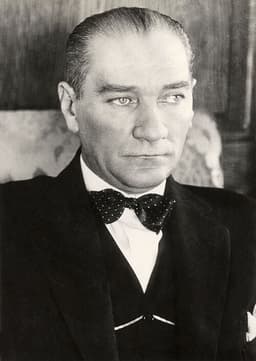
Mustafa Kemal Ataturk
Politician · Modern
80.0Total
Basic Information
Born
1500
1881
Died
1558
1938
Era
Medieval
Modern
Nationality
Spain
Turkey
Occupation
Emperor
Politician
Civilization
Western
Middle Eastern
Score Comparison
Military (10%)
74.0
75.0
Political (20%)
72.0
85.0
Influence (20%)
85.0
75.0
Legacy (20%)
68.0
90.0
Leadership (15%)
78.0
80.0
Strategy (15%)
68.1
65.0
TOTAL
75.0
80.0
Charles I of Spain — Complete Timeline
1519 AD
Election as Holy Roman EmperorPolitical Action
Charles I of Spain was elected Holy Roman Emperor as Charles V, succeeding his grandfather Maximilian I. This election united the Spanish kingdoms, the Habsburg domains in Austria and the Low Countries, and the Holy Roman Empire under a single ruler, creating a vast European empire.
Holy Roman EmpireHabsburg empire
Impact: globalconstructive
1521 AD
Diet of WormsPolitical Action
Charles V presided over the Diet of Worms, where Martin Luther was summoned to recant his teachings. Luther refused, and Charles V issued the Edict of Worms, declaring Luther an outlaw and banning his writings. This event deepened the religious divide in Europe and sparked the Protestant Reformation.
Protestant ReformationReligious conflict
Impact: global
1525 AD
Battle of PaviaWar◆ Major
Charles V's imperial army defeated the French forces of King Francis I at the Battle of Pavia. Francis I was captured and taken prisoner to Spain. The victory solidified Habsburg dominance in Italy and forced France to renounce its claims to Milan and Naples in the Treaty of Madrid.
Italian WarsHabsburg victory
Impact: regional
1527 AD
Sack of RomeWar◆ Major
Imperial troops under Charles V sacked Rome, looting the city and capturing Pope Clement VII. The sack was a brutal event that shocked Europe and led to the temporary dominance of Charles V over the Papacy. It also marked a turning point in the Italian Wars.
Italian WarsPapacy
Impact: globaldestructive
1556 AD
Abdication of Charles VPolitical Action
Charles V abdicated his thrones, dividing his empire between his son Philip II (who received Spain, the Low Countries, and the Italian possessions) and his brother Ferdinand I (who received the Holy Roman Empire). This abdication was a major event in European politics, reshaping the balance of power.
AbdicationEmpire division
Impact: global
Mustafa Kemal Ataturk — Complete Timeline
1915 AD
Battle of GallipoliWar
As a colonel, Mustafa Kemal commanded Ottoman forces at Gallipoli, successfully repelling Allied landings. His leadership at critical points like Chunuk Bair made him a national hero and laid the foundation for his political career.
World War IOttoman EmpireMilitary Victory
Impact: regional
1919 AD
Turkish War of IndependenceWar
Kemal organized and led the Turkish National Movement against the Allied occupation of Anatolia and the Treaty of S
Independence WarNational MovementAnkara
Impact: nationalconstructive
1922 AD
Abolition of the SultanatePolitical Action◆ Major
The Grand National Assembly of Turkey, under Kemal's leadership, abolished the Ottoman Sultanate, ending 600 years of imperial rule. This severed the link with the old regime and paved the way for the proclamation of the Republic.
SultanateRepublicPolitical Reform
Impact: nationalprogressive
1923 AD
Proclamation of the Republic of TurkeyPolitical Action
Kemal declared Turkey a republic, becoming its first president. He moved the capital to Ankara and initiated a series of radical reforms to modernize and secularize the state, including the adoption of a new legal code and the Latin alphabet.
RepublicModernizationSecularism
Impact: globalprogressive
1925 AD
Adoption of the Hat LawReform◆ Major
Kemal introduced the Hat Law, banning the fez and encouraging Western-style hats. This was part of his broader cultural revolution to secularize and Westernize Turkish society, symbolizing the break with Ottoman traditions.
Cultural ReformSecularismWesternization
Impact: nationalprogressive
1934 AD
Granting of Women's SuffrageReform◆ Major
Kemal's government granted women the right to vote and stand for election in national elections, ahead of many European countries. This reform was part of his commitment to gender equality and modernization of Turkish society.
Women's RightsSuffrageModernization
Impact: nationalprogressive
Expert Analysis
Origins
Mustafa Kemal Atatürk (1881–1938) was born in Salonica, then part of the Ottoman Empire, to a middle-class family. His father was a former customs officer turned timber merchant, and his mother a devout Muslim. Atatürk received a military education, graduating from the Ottoman Military Academy in 1905. He was influenced by the Young Turk movement and the ideals of nationalism, secularism, and modernization. Charles I of Spain (1500–1558), better known as Charles V, was born in Ghent, Flanders, to the Habsburg dynasty. He inherited a vast empire through his four grandparents: Maximilian I (Holy Roman Empire), Mary of Burgundy (Low Countries), Ferdinand II of Aragon (Spain, Naples, Sicily), and Isabella I of Castile (Castile, Americas). Charles was raised in the Burgundian court and educated in chivalric and Renaissance ideals. Both figures emerged from different contexts: Atatürk from a declining multi-ethnic empire seeking survival, Charles from a dynasty that aimed to unite Christendom under Habsburg rule.
Rise to Power
Atatürk rose to prominence through his military career. He distinguished himself as a commander at the Battle of Gallipoli (1915), where he repelled Allied forces. After the Ottoman defeat in World War I, he organized the Turkish National Movement, leading the Turkish War of Independence (1919–1923) against Allied occupation and the Greek invasion. He established the Grand National Assembly in Ankara, which appointed him as its leader. In 1923, the Treaty of Lausanne recognized Turkish sovereignty, and Atatürk proclaimed the Republic of Turkey on October 29, 1923, becoming its first president. Charles V's rise was dynastic. He inherited the Burgundian Netherlands in 1506, the Spanish thrones in 1516, and the Habsburg lands in 1519. He was elected Holy Roman Emperor in 1519, defeating Francis I of France. His election marked the pinnacle of Habsburg power, but also entangled him in conflicts with France, the Ottoman Empire, and the Protestant Reformation.
Leadership & Governance
Atatürk's leadership was transformative. He implemented a series of radical reforms known as Kemalism, based on six principles: republicanism, populism, nationalism, secularism, statism, and reformism. He abolished the sultanate (1922) and caliphate (1924), replaced Islamic law with secular codes, adopted the Latin alphabet, granted women suffrage, and promoted industrialisation. His governance was authoritarian, using his charisma and the Republican People's Party to enforce changes. He suppressed dissent but also built a modern state infrastructure. Charles V's governance was more traditional. He ruled a composite monarchy, delegating authority to viceroys and councils. He spent much of his reign traveling across his domains, fighting wars against France (Italian Wars), the Ottoman Empire (Siege of Vienna, 1529), and Protestant princes. His policies aimed at centralization and religious unity, but he failed to prevent the spread of Lutheranism. He convened the Diet of Worms (1521) to condemn Martin Luther, but the Reformation continued. His reign saw the sack of Rome (1527) by his mutinous troops, damaging his reputation.
Triumph & Tragedy
Atatürk's greatest triumph was the successful War of Independence and the founding of a modern, secular Turkey. His reforms transformed a backward empire into a nation-state with a Western-oriented identity. His tragedy lies in the authoritarian methods and the suppression of minorities, such as the Armenian, Greek, and Kurdish populations. He also faced opposition from religious conservatives, leading to occasional revolts. Charles V's triumphs include the Battle of Pavia (1525), where he captured Francis I, and the defense of Vienna (1529) against the Ottomans. He also oversaw the Spanish conquest of the Aztec and Inca empires, expanding his domains. His tragedy was his inability to unify Europe under Catholicism, leading to the Peace of Augsburg (1555), which recognized Lutheranism. Exhausted, he abdicated in 1556, dividing his empire between his son Philip II (Spain, Netherlands, Americas) and his brother Ferdinand I (Holy Roman Empire).
Character & Destiny
Atatürk was a visionary, pragmatic, and determined leader. He was known for his charisma, discipline, and strategic thinking. His destiny was to create a new nation from the ashes of an empire. Charles V was a devout Catholic, chivalric, and burdened by his vast responsibilities. He was melancholic and often indecisive, but also resilient. His destiny was to pursue the dream of a universal Christian monarchy, which ultimately failed. Both men were shaped by their times: Atatürk by the collapse of empires and the rise of nationalism, Charles by the Renaissance and Reformation.
Legacy
Atatürk's legacy is immense in Turkey and beyond. He is revered as the father of the nation, and his image and ideals remain central to Turkish identity. His reforms laid the foundation for a modern, secular state, though debates continue over his authoritarianism. He scored high in Leadership (90) and Politics (85) but lower in Stability (65) due to ongoing challenges. Charles V's legacy is more complex. He was the last emperor to seriously attempt a universal monarchy, and his reign marked the peak of Habsburg power. However, his failures contributed to the rise of nation-states and the fragmentation of Europe. He scored high in Influence (85) but lower in Leadership (68) and Stability (68).
Conclusion
Mustafa Kemal Atatürk emerges as the more effective leader, with a higher total score (520 vs 515). His decisive modernization and nation-building transformed Turkey, while Charles V's empire fragmented. Atatürk's vision was clearer and his execution more successful, despite his authoritarian means. Charles V's legacy is more of a transitional figure, unable to adapt to the changing times. In a direct comparison, Atatürk's impact on his nation's trajectory is more profound and lasting.
**Scores:** Atatürk: M=75, P=85, I=75, L=90, D=80, S=65, T=80 (Total 520). Charles V: M=74, P=72, I=85, L=68, D=78, S=68, T=75 (Total 515).
Rankings
🥇
Mustafa Kemal AtaturkLeader
Mil: 75.0Pol: 85.0Inf: 75.0
80.0
🥈
Charles I of Spain
Mil: 74.0Pol: 72.0Inf: 85.0
75.0
+5.0 behind
How This Comparison Works
Algorithm
Each figure is scored on 6 dimensions (0—100 scale) based on structured historical data: Military (10%), Political (20%), Influence (20%), Legacy (20%), Leadership (15%), Strategy (15%). The weighted total produces the final ranking.
Data Sources
Scores are computed from structured sub-indicators in the database. Scale factors adjust for era (Ancient ×0.85, Modern ×1.0) and civilization size (Eastern ×1.05, Other ×0.80) to account for differences in population and military scale.
Maximum 3 Figures
Comparisons are limited to 2—3 figures to ensure readability and statistical meaningfulness.
Error Margins
±5 points per dimension — Sub-scores are derived from historical records with inherent uncertainty. Two figures within 5 points on a dimension should be considered roughly equivalent in that area.
Total Score Accuracy
±3 points overall — The weighted combination of 6 dimensions produces a total score with approximately ±3 points of uncertainty. Differences of less than 3 points are not statistically significant— the figures are effectively tied.
Known Limitations
- Historical records are incomplete and uneven across civilizations
- Figures from oral-tradition societies may be underrepresented
- Occupation labels can misclassify multi-role figures
- Scores measure capability and impact, not moral character
- Quantitative scoring is a comparison tool, not absolute truth
Capability Radar
Military (10%) — Battles & Warfare
Battles
85
85
Win Rate
70
90
Expansion
90
60
Political (20%) — Governance & Reform
Reform
80
98
Diplomacy
90
85
Economy
75
75
Influence (20%) — Cultural & Global Reach
Cultural
85
90
Global
95
80
Legacy (20%) — Historical Impact
Historical
90
95
Longevity
80
85
Leadership (15%) — Power & Stability
Tenure
85
85
Stability
60
70
Strategy (15%) — Tactics & Innovation
Strategy
85
85
Tactics
75
88
Reform
80
80
Similar Comparisons
Comments & Discussion
No comments yet. Be the first to share your thoughts!