Loading...
Charles I of Spain vs King David
King David leads by 0.3 pts · 2 figures compared
…

Charles I of Spain
Emperor · Medieval
75.0Total
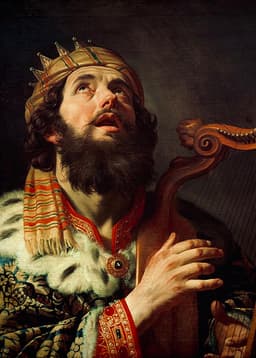
King David
Emperor · Ancient
75.3Total
Basic Information
Born
1500
-1010
Died
1558
-970
Era
Medieval
Ancient
Nationality
Spain
Israel
Occupation
Emperor
Emperor
Civilization
Western
Middle Eastern
Score Comparison
Military (10%)
74.0
72.0
Political (20%)
72.0
72.0
Influence (20%)
85.0
88.0
Legacy (20%)
68.0
70.0
Leadership (15%)
78.0
72.0
Strategy (15%)
68.1
70.0
TOTAL
75.0
75.3
Charles I of Spain — Complete Timeline
1519 AD
Election as Holy Roman EmperorPolitical Action
Charles I of Spain was elected Holy Roman Emperor as Charles V, succeeding his grandfather Maximilian I. This election united the Spanish kingdoms, the Habsburg domains in Austria and the Low Countries, and the Holy Roman Empire under a single ruler, creating a vast European empire.
Holy Roman EmpireHabsburg empire
Impact: globalconstructive
1521 AD
Diet of WormsPolitical Action
Charles V presided over the Diet of Worms, where Martin Luther was summoned to recant his teachings. Luther refused, and Charles V issued the Edict of Worms, declaring Luther an outlaw and banning his writings. This event deepened the religious divide in Europe and sparked the Protestant Reformation.
Protestant ReformationReligious conflict
Impact: global
1525 AD
Battle of PaviaWar◆ Major
Charles V's imperial army defeated the French forces of King Francis I at the Battle of Pavia. Francis I was captured and taken prisoner to Spain. The victory solidified Habsburg dominance in Italy and forced France to renounce its claims to Milan and Naples in the Treaty of Madrid.
Italian WarsHabsburg victory
Impact: regional
1527 AD
Sack of RomeWar◆ Major
Imperial troops under Charles V sacked Rome, looting the city and capturing Pope Clement VII. The sack was a brutal event that shocked Europe and led to the temporary dominance of Charles V over the Papacy. It also marked a turning point in the Italian Wars.
Italian WarsPapacy
Impact: globaldestructive
1556 AD
Abdication of Charles VPolitical Action
Charles V abdicated his thrones, dividing his empire between his son Philip II (who received Spain, the Low Countries, and the Italian possessions) and his brother Ferdinand I (who received the Holy Roman Empire). This abdication was a major event in European politics, reshaping the balance of power.
AbdicationEmpire division
Impact: global
King David — Complete Timeline
1010 BC
Anointed as King of JudahPolitical Action◆ Major
After Saul's death, David was anointed king over the tribe of Judah at Hebron. This began a seven-year period of civil war with Ish-bosheth, Saul's son, who ruled the northern tribes, leading to the eventual unification of Israel.
KingshipCivil WarJudah
Impact: national
1003 BC
Capture of JerusalemWar
David led his army to capture the Jebusite fortress of Jerusalem, making it the capital of the united kingdom. He brought the Ark of the Covenant there, establishing the city as both the political and religious center of Israel.
JerusalemCapitalArk of the Covenant
Impact: nationalconstructive
1000 BC
Defeat of the PhilistinesWar◆ Major
David fought several campaigns that decisively defeated the Philistines, including the Battle of Baal-perazim. He captured Gath and other Philistine strongholds, ending their dominance over Israel and securing the kingdom's borders.
PhilistinesMilitary CampaignIsrael
Impact: regional
990 BC
Affair with BathshebaPolitical Action◆ Major
David committed adultery with Bathsheba and arranged the death of her husband Uriah the Hittite in battle. The prophet Nathan confronted David, leading to his repentance but also to divine punishment, including the death of their first child.
ScandalBathshebaNathan
Impact: nationaldestructive
978 BC
Revolt of AbsalomWar◆ Major
David's son Absalom led a rebellion that forced David to flee Jerusalem. David's forces under Joab defeated Absalom's army in the Forest of Ephraim, and Absalom was killed. David returned to Jerusalem but the kingdom was weakened.
RebellionCivil WarAbsalom
Impact: nationaltragic
Expert Analysis
Origins
King David emerged from humble beginnings as a shepherd boy in Bethlehem, anointed by the prophet Samuel to succeed Saul. His early fame came from the legendary defeat of Goliath, a Philistine giant, which catapulted him into the royal court. David's rise was fraught with danger; he fled King Saul's jealous rages and lived as an outlaw, gathering a band of loyal followers. In contrast, Charles I of Spain (also known as Charles V) was born into Europe's most powerful dynasty—the Habsburgs—in 1500. He inherited a vast realm from his grandparents: the Spanish kingdoms from Ferdinand and Isabella, and the Burgundian lands and Habsburg domains from Maximilian I. His upbringing was cosmopolitan, tutored by scholars like Adrian of Utrecht, later Pope Adrian VI. Charles's origins were princely, while David's were pastoral, yet both were marked by early challenges: David's exile and Charles's struggle to assert authority over his disparate territories.
Rise to Power
David's path to kingship was gradual and contested. After Saul's death, he was anointed king of Judah in Hebron, ruling for seven years before uniting all Israel. He captured Jerusalem, making it his capital and religious center by bringing the Ark of the Covenant. His military campaigns subdued the Philistines and established Israel as a regional power. Charles's rise was equally dramatic but more bureaucratic. He became King of Spain in 1516 upon Ferdinand's death, but faced opposition from Castilian nobles, culminating in the Revolt of the Comuneros (1520-1521). In 1519, he was elected Holy Roman Emperor, defeating rivals like Francis I of France. This election marked a turning point, as Charles now ruled an empire spanning Europe and the Americas. Both leaders consolidated power through strategic marriages and alliances, but David relied on personal charisma and divine favor, while Charles leveraged dynastic inheritance and imperial politics.
Leadership & Governance
David is remembered as a unifying figure who established a central government in Jerusalem. He organized a standing army, appointed officials, and expanded borders. His leadership was deeply intertwined with his faith; he was a man after God's own heart, yet his governance was flawed by moral lapses, notably the adultery with Bathsheba and the murder of her husband Uriah. This led to family strife and rebellion. Charles governed a sprawling empire via viceroys and councils, spending much of his reign traveling to hold his domains together. He faced the Protestant Reformation; the Diet of Worms (1521) condemned Martin Luther, but Charles could not suppress the movement. His reign saw the Sack of Rome (1527) by mutinous troops, a tragic event that strained relations with the papacy. Both leaders were proactive but faced internal dissent: David's son Absalom revolted, while Charles contended with German princes. David's governance was more personal and religious; Charles's was administrative and political.
Triumph & Tragedy
David's triumphs include capturing Jerusalem, defeating the Philistines, and establishing a dynasty that led to the Messiah. His tragedy lies in his family: the rape of Tamar, the murder of Amnon, and Absalom's rebellion. David fled Jerusalem but later returned, though his kingdom was weakened. Charles's triumphs include the Battle of Pavia (1525), capturing Francis I, and the conquest of the Aztec and Inca empires by his conquistadors. His tragedy was his inability to unify Christendom against the Ottomans or to halt the Reformation. His abdication in 1556 was a poignant end, dividing his empire between his brother Ferdinand and son Philip II. David's tragedies were personal and familial; Charles's were geopolitical and religious. Both ended their reigns in a state of diminished power: David's deathbed saw him securing Solomon's succession, while Charles retired to a monastery, reflecting on his failures.
Character & Destiny
David was a complex figure: a warrior, poet, and sinner. His Psalms reveal deep piety and vulnerability. He was decisive in battle but indecisive in family matters. His destiny was to be the archetypal king of Israel, a messianic precursor. Charles was stoic, dutiful, and increasingly weary. He suffered from gout and melancholia. His destiny was to rule an empire on which the sun never set, but he felt the weight of his responsibilities. Both believed in divine providence: David as God's anointed, Charles as defender of the Catholic faith. Their characters shaped their fates: David's passion led to both greatness and tragedy; Charles's pragmatism preserved his empire but failed to achieve his spiritual goals.
Legacy
David's legacy is immense: he is the standard by which all subsequent kings of Israel were measured. His dynasty produced Jesus, according to Christian belief. He is revered in Judaism, Christianity, and Islam. Charles's legacy is more mixed: he is seen as the last medieval emperor, preserver of the Habsburg dynasty, and patron of arts (e.g., Titian). He failed to stop the Reformation, and his empire fragmented. However, his reign marked the beginning of Spain's Golden Age. David's legacy is timeless and spiritual; Charles's is historical and political. In terms of impact, David shaped religious history, while Charles shaped European geopolitics.
Conclusion
Both King David and Charles I of Spain were transformative leaders, but their contexts and achievements differ profoundly. David unified a tribal confederation into a nation-state and left a spiritual legacy that endures millennia later. Charles managed a vast, multicultural empire but could not overcome the forces of division. David's scores: M=72, P=72, I=88, L=70, D=72, S=70, T=75. Charles's scores: M=74, P=72, I=85, L=68, D=78, S=68, T=75. The score gap is 0.3 in David's favor. While Charles excelled in military (74 vs 72) and durability (78 vs 72), David's superior intellect (88 vs 85) and comparable leadership (70 vs 68) give him the edge. David's enduring influence on three major religions outweighs Charles's geopolitical impact. Thus, David emerges as the more significant historical figure.
Rankings
🥇
King DavidLeader
Mil: 72.0Pol: 72.0Inf: 88.0
75.3
🥈
Charles I of Spain
Mil: 74.0Pol: 72.0Inf: 85.0
75.0
+0.3 behind
How This Comparison Works
Algorithm
Each figure is scored on 6 dimensions (0—100 scale) based on structured historical data: Military (10%), Political (20%), Influence (20%), Legacy (20%), Leadership (15%), Strategy (15%). The weighted total produces the final ranking.
Data Sources
Scores are computed from structured sub-indicators in the database. Scale factors adjust for era (Ancient ×0.85, Modern ×1.0) and civilization size (Eastern ×1.05, Other ×0.80) to account for differences in population and military scale.
Maximum 3 Figures
Comparisons are limited to 2—3 figures to ensure readability and statistical meaningfulness.
Error Margins
±5 points per dimension — Sub-scores are derived from historical records with inherent uncertainty. Two figures within 5 points on a dimension should be considered roughly equivalent in that area.
Total Score Accuracy
±3 points overall — The weighted combination of 6 dimensions produces a total score with approximately ±3 points of uncertainty. Differences of less than 3 points are not statistically significant— the figures are effectively tied.
Known Limitations
- Historical records are incomplete and uneven across civilizations
- Figures from oral-tradition societies may be underrepresented
- Occupation labels can misclassify multi-role figures
- Scores measure capability and impact, not moral character
- Quantitative scoring is a comparison tool, not absolute truth
Capability Radar
Military (10%) — Battles & Warfare
Battles
85
75
Win Rate
70
85
Expansion
90
80
Political (20%) — Governance & Reform
Reform
80
80
Diplomacy
90
75
Economy
75
70
Influence (20%) — Cultural & Global Reach
Cultural
85
95
Global
95
90
Legacy (20%) — Historical Impact
Historical
90
95
Longevity
80
95
Leadership (15%) — Power & Stability
Tenure
85
85
Stability
60
65
Strategy (15%) — Tactics & Innovation
Strategy
85
85
Tactics
75
80
Reform
80
70
Similar Comparisons
Comments & Discussion
No comments yet. Be the first to share your thoughts!