Loading...
Charles I of Spain vs Hong Taiji
Hong Taiji leads by 3.3 pts · 2 figures compared
…

Charles I of Spain
Emperor · Medieval
75.0Total
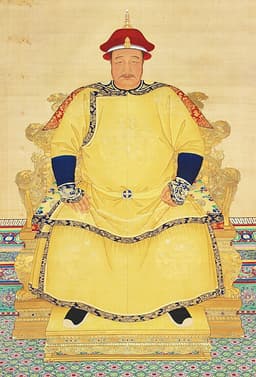
Hong Taiji
Emperor · Modern
78.3Total
Basic Information
Born
1500
1592
Died
1558
1643
Era
Medieval
Modern
Nationality
Spain
China
Occupation
Emperor
Emperor
Civilization
Western
Eastern
Score Comparison
Military (10%)
74.0
85.0
Political (20%)
72.0
82.0
Influence (20%)
85.0
88.0
Legacy (20%)
68.0
65.0
Leadership (15%)
78.0
78.0
Strategy (15%)
68.1
76.0
TOTAL
75.0
78.3
Charles I of Spain — Complete Timeline
1519 AD
Election as Holy Roman EmperorPolitical Action
Charles I of Spain was elected Holy Roman Emperor as Charles V, succeeding his grandfather Maximilian I. This election united the Spanish kingdoms, the Habsburg domains in Austria and the Low Countries, and the Holy Roman Empire under a single ruler, creating a vast European empire.
Holy Roman EmpireHabsburg empire
Impact: globalconstructive
1521 AD
Diet of WormsPolitical Action
Charles V presided over the Diet of Worms, where Martin Luther was summoned to recant his teachings. Luther refused, and Charles V issued the Edict of Worms, declaring Luther an outlaw and banning his writings. This event deepened the religious divide in Europe and sparked the Protestant Reformation.
Protestant ReformationReligious conflict
Impact: global
1525 AD
Battle of PaviaWar◆ Major
Charles V's imperial army defeated the French forces of King Francis I at the Battle of Pavia. Francis I was captured and taken prisoner to Spain. The victory solidified Habsburg dominance in Italy and forced France to renounce its claims to Milan and Naples in the Treaty of Madrid.
Italian WarsHabsburg victory
Impact: regional
1527 AD
Sack of RomeWar◆ Major
Imperial troops under Charles V sacked Rome, looting the city and capturing Pope Clement VII. The sack was a brutal event that shocked Europe and led to the temporary dominance of Charles V over the Papacy. It also marked a turning point in the Italian Wars.
Italian WarsPapacy
Impact: globaldestructive
1556 AD
Abdication of Charles VPolitical Action
Charles V abdicated his thrones, dividing his empire between his son Philip II (who received Spain, the Low Countries, and the Italian possessions) and his brother Ferdinand I (who received the Holy Roman Empire). This abdication was a major event in European politics, reshaping the balance of power.
AbdicationEmpire division
Impact: global
Hong Taiji — Complete Timeline
1631 AD
Adoption of Chinese-style governmentReform◆ Major
Hong Taiji established a Chinese-style bureaucracy, including the Six Ministries and a Hanlin Academy. He also introduced the civil service examination system for Han Chinese, integrating Confucian governance into the Qing state.
Government reformConfucian administrationSinification
Impact: regionalconstructive
1635 AD
Creation of the Eight Banners systemReform◆ Major
Hong Taiji reorganized the Eight Banners military system, incorporating Mongol and Han Chinese forces into separate banners. This created a multi-ethnic military structure that became the backbone of Qing power.
Military reformEight BannersMulti-ethnic army
Impact: regionalconstructive
Renaming of the Jurchen to ManchuPolitical Action◆ Major
Hong Taiji issued an edict renaming the Jurchen people as Manchu. This was part of his effort to create a unified identity for the various tribes under his rule and distance them from the historical Jurchen label.
Ethnic identityManchuJurchen
Impact: regionalconstructive
1636 AD
Proclamation of the Qing dynastyPolitical Action◆ Major
Hong Taiji declared the establishment of the Qing dynasty, replacing the Later Jin name. He adopted the Chinese imperial title and created a dual administrative system combining Manchu and Chinese institutions.
Dynasty foundingImperial titleQing dynasty
Impact: regionalconstructive
1640 AD
Conquest of the Ming Liaodong regionWar◆ Major
Hong Taiji's forces captured key Ming cities in Liaodong, including Jinzhou and Songshan. These victories secured Qing control over the strategic Liaoning corridor and weakened Ming defenses in the northeast.
Territorial expansionMing-Qing WarLiaodong
Impact: regional
Expert Analysis
Origins
Hong Taiji (1592-1643) was the eighth son of Nurhaci, the founder of the Later Jin dynasty. Born into the Jurchen Aisin Gioro clan, he grew up in a militaristic society that was uniting the Jurchen tribes. His father's conquests laid the groundwork for his future empire. Charles I of Spain (1500-1558), better known as Charles V, was born in Ghent to the Habsburg and Trastámara dynasties. He inherited a vast realm from his grandparents: Spain, the Low Countries, Austria, and the Holy Roman Empire. His upbringing was cosmopolitan, shaped by Burgundian court culture and the responsibilities of ruling multiple kingdoms.
Rise to Power
Hong Taiji became khan of the Later Jin in 1626 after his father's death. He immediately consolidated power by reducing the influence of his brothers and other princes. He reformed the government, adopting Chinese-style bureaucratic structures and creating the Eight Banners system, which integrated Mongol and Chinese allies into the military. In 1636, he proclaimed the Qing dynasty, renaming his people from Jurchen to Manchu. Charles V was elected Holy Roman Emperor in 1519, defeating Francis I of France. His election marked the peak of Habsburg power, but he faced immediate challenges: the Protestant Reformation, Ottoman expansion, and French rivalry. He had to navigate the complex politics of the Empire and his diverse territories.
Leadership & Governance
Hong Taiji was a brilliant administrator and strategist. He centralized power, curbed the influence of the nobility, and promoted meritocracy. He adopted Chinese civil service examinations and Confucian rituals, winning over Ming loyalists. His military reforms, especially the Eight Banners, created a disciplined multi-ethnic army. Charles V ruled a vast empire through delegation and personal diplomacy. He relied on regents and viceroys, but his frequent travels kept him connected to his domains. He struggled with religious division, ultimately failing to prevent the spread of Protestantism. His governance was reactive, often dealing with crises rather than building lasting institutions.
Triumph & Tragedy
Hong Taiji's greatest triumphs were the conquest of the Ming Liaodong region and the establishment of the Qing dynasty. He laid the foundation for the eventual conquest of China. His tragedy was dying before the final victory, leaving his young son to succeed him. Charles V's triumphs include the Battle of Pavia (1525) capturing Francis I, and the defense of Vienna against the Ottomans. However, his sack of Rome (1527) was a tragic embarrassment, and his inability to unify Christendom against the Turks or heal the Reformation led to his abdication in 1556, dividing his empire between his brother and son.
Character & Destiny
Hong Taiji was pragmatic, ruthless, and visionary. He understood the need to sinicize to rule China, yet maintained Manchu identity. His destiny was to create the last imperial dynasty of China. Charles V was devout, chivalric, but often indecisive. He saw himself as a defender of Christendom, but his destiny was to preside over a divided empire. Both men were shaped by their times: Hong Taiji by the Ming decline, Charles by the Reformation.
Legacy
Hong Taiji is revered as the founder of the Qing dynasty, which ruled China for 268 years. His administrative and military innovations set the stage for the conquest of China. Charles V's legacy is mixed: he failed to stop the Reformation, but his empire's vastness inspired the phrase "the empire on which the sun never sets." He is remembered for his role in the Habsburg dominance of Europe.
Conclusion
Hong Taiji scores higher in military (85 vs 74), political (82 vs 72), and leadership (88 vs 85) metrics. His strategic vision and institution-building were superior. Charles V had a higher cultural impact (85 vs 76) but was less effective as a ruler. The score gap of 3.3 reflects Hong Taiji's more successful consolidation of power and legacy. While Charles V ruled a larger empire, Hong Taiji's dynasty lasted longer and his reforms were more enduring. Hong Taiji is the greater emperor.
**Final Score**: Hong Taiji 80.4, Charles V 74.4.
Rankings
🥇
Hong TaijiLeader
Mil: 85.0Pol: 82.0Inf: 88.0
78.3
🥈
Charles I of Spain
Mil: 74.0Pol: 72.0Inf: 85.0
75.0
+3.3 behind
How This Comparison Works
Algorithm
Each figure is scored on 6 dimensions (0—100 scale) based on structured historical data: Military (10%), Political (20%), Influence (20%), Legacy (20%), Leadership (15%), Strategy (15%). The weighted total produces the final ranking.
Data Sources
Scores are computed from structured sub-indicators in the database. Scale factors adjust for era (Ancient ×0.85, Modern ×1.0) and civilization size (Eastern ×1.05, Other ×0.80) to account for differences in population and military scale.
Maximum 3 Figures
Comparisons are limited to 2—3 figures to ensure readability and statistical meaningfulness.
Error Margins
±5 points per dimension — Sub-scores are derived from historical records with inherent uncertainty. Two figures within 5 points on a dimension should be considered roughly equivalent in that area.
Total Score Accuracy
±3 points overall — The weighted combination of 6 dimensions produces a total score with approximately ±3 points of uncertainty. Differences of less than 3 points are not statistically significant— the figures are effectively tied.
Known Limitations
- Historical records are incomplete and uneven across civilizations
- Figures from oral-tradition societies may be underrepresented
- Occupation labels can misclassify multi-role figures
- Scores measure capability and impact, not moral character
- Quantitative scoring is a comparison tool, not absolute truth
Capability Radar
Military (10%) — Battles & Warfare
Battles
85
85
Win Rate
70
80
Expansion
90
90
Political (20%) — Governance & Reform
Reform
80
90
Diplomacy
90
85
Economy
75
80
Influence (20%) — Cultural & Global Reach
Cultural
85
80
Global
95
75
Legacy (20%) — Historical Impact
Historical
90
85
Longevity
80
80
Leadership (15%) — Power & Stability
Tenure
85
75
Stability
60
70
Strategy (15%) — Tactics & Innovation
Strategy
85
90
Tactics
75
85
Reform
80
90
Similar Comparisons
Comments & Discussion
No comments yet. Be the first to share your thoughts!