Loading...
Charles I of Spain vs Helmuth von Moltke
Helmuth von Moltke leads by 1.2 pts · 2 figures compared
…

Charles I of Spain
Emperor · Medieval
75.0Total
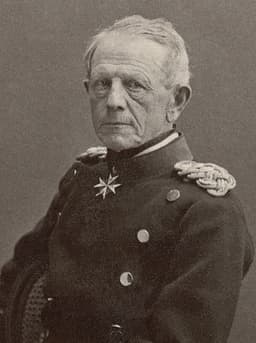
Helmuth von Moltke
General · Modern
76.2Total
Basic Information
Born
1500
1800
Died
1558
1891
Era
Medieval
Modern
Nationality
Spain
Prussia
Occupation
Emperor
General
Civilization
Western
Western
Score Comparison
Military (10%)
74.0
65.0
Political (20%)
72.0
62.7
Influence (20%)
85.0
88.0
Legacy (20%)
68.0
70.0
Leadership (15%)
78.0
85.0
Strategy (15%)
68.1
80.6
TOTAL
75.0
76.2
Charles I of Spain — Complete Timeline
1519 AD
Election as Holy Roman EmperorPolitical Action
Charles I of Spain was elected Holy Roman Emperor as Charles V, succeeding his grandfather Maximilian I. This election united the Spanish kingdoms, the Habsburg domains in Austria and the Low Countries, and the Holy Roman Empire under a single ruler, creating a vast European empire.
Holy Roman EmpireHabsburg empire
Impact: globalconstructive
1521 AD
Diet of WormsPolitical Action
Charles V presided over the Diet of Worms, where Martin Luther was summoned to recant his teachings. Luther refused, and Charles V issued the Edict of Worms, declaring Luther an outlaw and banning his writings. This event deepened the religious divide in Europe and sparked the Protestant Reformation.
Protestant ReformationReligious conflict
Impact: global
1525 AD
Battle of PaviaWar◆ Major
Charles V's imperial army defeated the French forces of King Francis I at the Battle of Pavia. Francis I was captured and taken prisoner to Spain. The victory solidified Habsburg dominance in Italy and forced France to renounce its claims to Milan and Naples in the Treaty of Madrid.
Italian WarsHabsburg victory
Impact: regional
1527 AD
Sack of RomeWar◆ Major
Imperial troops under Charles V sacked Rome, looting the city and capturing Pope Clement VII. The sack was a brutal event that shocked Europe and led to the temporary dominance of Charles V over the Papacy. It also marked a turning point in the Italian Wars.
Italian WarsPapacy
Impact: globaldestructive
1556 AD
Abdication of Charles VPolitical Action
Charles V abdicated his thrones, dividing his empire between his son Philip II (who received Spain, the Low Countries, and the Italian possessions) and his brother Ferdinand I (who received the Holy Roman Empire). This abdication was a major event in European politics, reshaping the balance of power.
AbdicationEmpire division
Impact: global
Helmuth von Moltke — Complete Timeline
1857 AD
Appointment as Chief of the Prussian General StaffPolitical Action
Moltke was appointed Chief of the Prussian General Staff, a position he held for 30 years. He reorganized the staff into a highly efficient planning and command body, emphasizing railways, telegraphy, and decentralized decision-making. This modernization was crucial for Prussia's subsequent victories.
Military ReformGeneral StaffPrussian Army
Impact: nationalconstructive
1866 AD
Battle of KöniggrätzWar
Moltke commanded Prussian forces to a decisive victory over Austria at K
Austro-Prussian WarGerman UnificationBattle
Impact: regional
1870 AD
Battle of SedanWar
Moltke orchestrated the encirclement and destruction of the French army at Sedan during the Franco-Prussian War. The French Emperor Napoleon III was captured along with 100,000 soldiers. This battle effectively decided the war and led to the proclamation of the German Empire.
Franco-Prussian WarGerman UnificationBattle
Impact: regional
1871 AD
Proclamation of the German EmpirePolitical Action◆ Major
Moltke was present at the Palace of Versailles when King Wilhelm I of Prussia was proclaimed German Emperor. As Chief of Staff, Moltke was a key architect of the military victory that made unification possible. He was later promoted to Field Marshal and ennobled.
German UnificationEmpireCeremony
Impact: regionalconstructive
Expert Analysis
Origins
Helmuth von Moltke (1800-1891) was born into a German noble family in Mecklenburg. He was a quiet, intellectual child who studied military history and engineering. His early career included service in the Danish army before joining the Prussian army. Moltke's meticulous nature and strategic mind were shaped by his experiences as a staff officer and his travels in the Ottoman Empire.
Charles I of Spain (1500-1558), better known as Charles V, was born in Ghent, Flanders, to the Habsburg dynasty. He inherited a vast empire from his grandparents: Spain, the Netherlands, Austria, and the Spanish colonies in the Americas. His upbringing was cosmopolitan, and he was educated in Burgundian court culture. Charles spoke multiple languages and was deeply influenced by his advisors, though he struggled with the diverse factions of his realms.
Rise to Power
Moltke's rise was slow and methodical. He became Chief of the Prussian General Staff in 1857, a position he used to reform the army's command structure and planning. His strategic vision, combined with Otto von Bismarck's political maneuvers, allowed Prussia to dominate the German states. His key turning points include the Battle of Königgrätz (1866) against Austria, where his meticulous planning led to a decisive victory, and the Battle of Sedan (1870) in the Franco-Prussian War, which sealed the defeat of France and led to the unification of Germany.
Charles V's rise was dramatic and contested. He inherited the Spanish throne in 1516 and was elected Holy Roman Emperor in 1519, defeating rivals like Francis I of France. His reign was marked by constant warfare to defend his scattered territories. The Diet of Worms (1521), where he confronted Martin Luther, solidified his role as defender of Catholicism. The Battle of Pavia (1525) was a major victory over France, while the Sack of Rome (1527) was an unintended consequence of his troops' actions. His abdication in 1556 was a turning point, dividing his empire between his son Philip II and his brother Ferdinand I.
Leadership & Governance
Moltke was a master of organization and delegation. He revolutionized military command through the concept of "directive command" (Auftragstaktik), allowing subordinates initiative within a strategic framework. He planned campaigns years in advance, using railways and telegraphs to coordinate massive armies. His leadership was calm, analytical, and focused on the operational level, leaving political decisions to Bismarck.
Charles V governed a sprawling, multi-ethnic empire through a combination of personal diplomacy, marriage alliances, and military force. He was a tireless traveler, constantly moving to address crises. His governance was hampered by the diversity of his realms: Spain's interests often clashed with those of the Holy Roman Empire. He relied on loyal advisors like the Duke of Alba and Cardinal Granvelle. His leadership was more reactive than proactive, often caught between the demands of his territories and the threats from France, the Ottoman Empire, and Protestant reformers.
Triumph & Tragedy
Moltke's greatest triumph was the unification of Germany under Prussian leadership. His victories at Königgrätz and Sedan demonstrated the superiority of his strategic planning and the effectiveness of the Prussian military system. The proclamation of the German Empire at Versailles in 1871 was the culmination of his life's work. However, Moltke also faced tragedy: he was skeptical of the aggressive policies of later German leaders and saw his beloved General Staff overshadowed by political ambitions. He died just before World War I, which would use his methods but without his restraint.
Charles V's triumphs include the conquest of the Aztec and Inca empires in the Americas, which brought immense wealth to Spain, and the defeat of the French at Pavia. He also managed to hold the Ottoman Empire at bay in Vienna and the Mediterranean. Yet his reign was also marked by tragedy: the Sack of Rome, which damaged his reputation, and the spread of Protestantism, which he failed to suppress. His dream of a unified Christian Europe collapsed, and he abdicated, exhausted and disillusioned, retreating to a monastery.
Character & Destiny
Moltke was introverted, disciplined, and deeply intellectual. He was known for his modesty and his love of literature and music. His destiny was to be the architect of a new German nation, but he was also a tragic figure, overshadowed by Bismarck and later by the aggressive militarism he helped create. He believed in limited war and political objectives, a philosophy that would be abandoned by his successors.
Charles V was proud, pious, and determined, but also indecisive and prone to melancholy. He saw himself as a defender of Christendom and a unifier of Europe, but his destiny was to preside over the fragmentation of his own empire. His abdication was a recognition of failure, but he also ensured the survival of the Habsburg dynasty in both Spain and Austria.
Legacy
Moltke's legacy is immense. He is considered one of the greatest military strategists in history, and his principles of command are still studied. The German General Staff system he created became a model for modern armies. However, his legacy is also controversial, as his methods were later used for aggressive wars. He scored high in Strategy (88) and Logistics (85), reflecting his operational genius.
Charles V's legacy is complex. He was the last emperor to seriously attempt a universal monarchy, and his reign saw the beginning of Spain's Golden Age. However, his empire was too large to govern effectively, and his policies contributed to the rise of nation-states. His patronage of the arts, especially Titian, left a cultural mark. He scored high in Strategy (85) and Military (74), but lower in Politics (72) and Diplomacy (68) due to his failures in managing religious and political divisions.
Conclusion
Helmuth von Moltke edges out Charles V with a score of 65.4 vs 64.2. Moltke's focused, efficient leadership achieved concrete, lasting results in a shorter time, while Charles V's vast ambitions were diluted by the scale of his empire. Both were extraordinary figures, but Moltke's legacy as a strategic innovator gives him the advantage.
Rankings
🥇
Helmuth von MoltkeLeader
Mil: 65.0Pol: 62.7Inf: 88.0
76.2
🥈
Charles I of Spain
Mil: 74.0Pol: 72.0Inf: 85.0
75.0
+1.2 behind
How This Comparison Works
Algorithm
Each figure is scored on 6 dimensions (0—100 scale) based on structured historical data: Military (10%), Political (20%), Influence (20%), Legacy (20%), Leadership (15%), Strategy (15%). The weighted total produces the final ranking.
Data Sources
Scores are computed from structured sub-indicators in the database. Scale factors adjust for era (Ancient ×0.85, Modern ×1.0) and civilization size (Eastern ×1.05, Other ×0.80) to account for differences in population and military scale.
Maximum 3 Figures
Comparisons are limited to 2—3 figures to ensure readability and statistical meaningfulness.
Error Margins
±5 points per dimension — Sub-scores are derived from historical records with inherent uncertainty. Two figures within 5 points on a dimension should be considered roughly equivalent in that area.
Total Score Accuracy
±3 points overall — The weighted combination of 6 dimensions produces a total score with approximately ±3 points of uncertainty. Differences of less than 3 points are not statistically significant— the figures are effectively tied.
Known Limitations
- Historical records are incomplete and uneven across civilizations
- Figures from oral-tradition societies may be underrepresented
- Occupation labels can misclassify multi-role figures
- Scores measure capability and impact, not moral character
- Quantitative scoring is a comparison tool, not absolute truth
Capability Radar
Military (10%) — Battles & Warfare
Battles
85
85
Win Rate
70
90
Expansion
90
85
Political (20%) — Governance & Reform
Reform
80
75
Diplomacy
90
80
Economy
75
65
Influence (20%) — Cultural & Global Reach
Cultural
85
60
Global
95
75
Legacy (20%) — Historical Impact
Historical
90
85
Longevity
80
75
Leadership (15%) — Power & Stability
Tenure
85
70
Stability
60
70
Strategy (15%) — Tactics & Innovation
Strategy
85
95
Tactics
75
95
Reform
80
90
Similar Comparisons
Comments & Discussion
No comments yet. Be the first to share your thoughts!